
What Garage Door Color Best Complements Your Home for Instant Curb Appeal?
Picking a garage door color that clashes with your house can hurt its look and value, but I have a reliable process to get it right.
This guide will walk you through assessing your home’s current color scheme, using practical color matching techniques, and choosing durable, weather-resistant paints and materials.
I’ve installed and maintained hundreds of garage doors, giving me firsthand knowledge of how colors perform over time.
Start Here: 7 Questions Every Homeowner Must Ask
Before you look at a single paint swatch, walk outside with this checklist. I’ve used it on hundreds of consultations to stop clients from making a costly, clashing mistake.
Answering these seven questions gives you a clear, logical starting point and keeps you from getting overwhelmed by color choices.
- What is my home’s architectural style? This dictates the “rules.” A modern farmhouse looks right with crisp white or deep charcoal. A craftsman bungalow demands earthy, natural tones like forest green or bronze. Painting a mid-century modern door a Victorian red is a fast way to hurt your curb appeal.
- What color is my roof? Your roof is massive and permanent. A warm terra cotta tile roof pairs terribly with a cool, blue-gray door. A charcoal shingle roof limits you to cooler or neutral tones. The door doesn’t match the roof, but it must not fight with it.
- What color is my siding or primary exterior material? Is it beige vinyl, red brick, or gray stucco? This is your biggest color block. You’ll be choosing a door color that relates to this, either by matching, contrasting, or complementing it.
- What color are my window frames and trim? This is your most important clue. Matching your garage door to the trim color is the most common and safest path to a cohesive look. Grab a paint chip from your trim if you can.
- What color is my front door? This is your home’s personality. Deciding if your garage door should echo this color or play a supporting role is a key strategic choice.
- What is the color and material of my driveway and walkway? A jet-black asphalt driveway or a rust-colored paver path adds visual weight. A bright white door next to a stained concrete driveway can look unbalanced. Consider them part of the overall palette.
- What are my neighborhood norms and HOA rules? Drive around. Are homes monotone or do they have accents? More importantly, dig out your HOA covenants. I’ve seen homeowners have to repaint because they chose a slate blue not on the approved list. Check first.
Key Elements of Your Home’s Exterior
Think of your home’s exterior in three layers: primary, secondary, and accent. The siding or brick is the primary color. The trim around windows and corners is the secondary color. Your front door, shutters, and garage door are the accent colors.
Material changes everything. A gray on smooth vinyl siding looks flat, but the same gray on a wood-grain textured garage door will look richer and warmer. If you’re weighing steel vs wood garage doors, texture and finish will subtly shift how colors read on your home. Brick has multiple colors within it; pick up one of the less dominant tones from the mortar or brick for your door.
Don’t forget the driveway and roof. They aren’t painted, but they are major visual elements. A large, light-colored concrete driveway can make a dark garage door look like a stark hole in the facade. Balance is the goal.
Blend In or Stand Out?
You have two main strategies: blend for cohesion, or pop for character.
Blending In (Match the Trim): This is my go-to for most homes, especially for resale. Painting your garage door the same semi-gloss white as your window trim makes it recede. The house looks larger, unified, and tidy. Use this if your garage doors are prominent or you have multiple doors.
Standing Out (Match the Front Door): This is a bold, modern move. Painting the garage door the same color as your front door creates a powerful, designed look. It works best on homes with simpler facades where the garage is near the front entry. I’d only do this with a sophisticated color, like a navy or black, not a neon lime. This approach aligns with 2024 garage door design trends that favor cohesive color palettes and clean, modern lines. Matching the garage door to the front door remains a simple, impactful way to tap into those trends without overcomplicating the facade.
For resale, bold is risky. A potential buyer might love your crimson door, but they likely won’t. If you want a pop, choose a historically appropriate, darker accent color. It reads as intentional, not trendy.
Do They Have to Match? Answering Your Biggest Questions
Let’s cut through the noise. As a pro, I hear these questions every week. The short answer is: no, nothing “has to” match. But good design follows principles that make a home look right. Here’s the real-world advice I give my clients.
Does the Garage Door Have to Match the Front Door?
No, it’s not a rule, but it’s a powerful trick. Matching them creates a coordinated, custom look. I recommend it when the doors are visually linked on the front facade.
Where it works: On a contemporary home with a single, bold front door color like Sherwin-Williams “Cyberspace.” Carrying that dark gray to the garage door ties the composition together beautifully.
Where to skip it: If your front door is a vibrant yellow or red. Making a two-car garage that same bright color is overwhelming. Instead, let the front door be the solo star. Choose a garage door color from your trim or siding palette to frame the scene.
Does the Garage Door Have to Match the House Siding?
Almost never. Matching the *field color* of your siding is usually a mistake. On a beige house, a beige garage door looks like a giant blank spot. It needs definition.
Matching the trim is almost always a safer, more elegant choice. The trim color provides that needed contrast and frames the garage door neatly. The exception is with certain siding styles. If you have board and batten siding in a single dark color, the garage door can match it directly, as the shadow lines of the battens provide the texture and break up the mass. This same approach also applies to garage paint colors for interior and exterior, helping the overall look stay cohesive.
Does a Detached Garage Have to Match the House?
You have the most freedom here. A detached garage is seen more as a separate outbuilding. While it shouldn’t clash, it doesn’t need to be a perfect twin.
My top three strategies:
- Match Trim Colors: Use the same white or cream from your house trim on the garage’s windows and corners. Then, paint the main garage body a complementary neutral from your house palette. This creates a clear family relationship.
- Use a Complementary Neutral: If your house is gray with black trim, do the detached garage in a warmer “greige” with the same black trim. It’s coordinated but distinct.
- Embrace the Shed Aesthetic: For a backyard garage, a classic barn red with white trim or a forest green can look fantastic. It acknowledges the building’s utility and gives it charming, standalone character.
Pro Pairings: Colors That Work for Common Home Styles
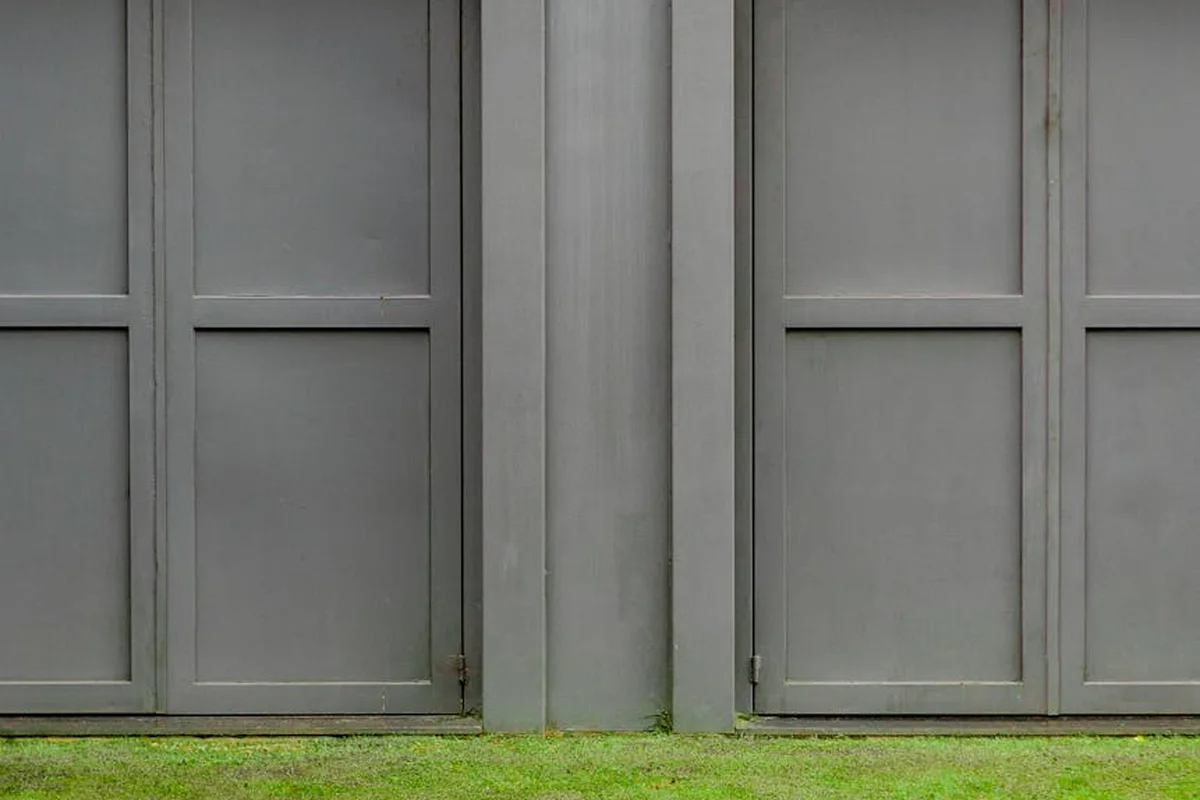
Let’s move past color theory and talk real-world pairings. The goal is to find a color that works with your home’s specific material and style for the long haul.
I focus on durable, classic combinations that will still look good in ten years, not what’s trending this season. Your garage door faces the sun, rain, and road grime daily, so its color needs to be as practical as it is pretty. This is part of the evolution of garage doors. Evolution garage doors embody that balance of enduring style and rugged practicality.
Best Garage Door Colors for Brick Houses
Brick has strong, natural color. Your job is to complement it, not compete.
- For Red Brick: Look at your mortar. If it’s gray, a deep charcoal garage door is a knockout. It ties into the mortar and gives a modern, anchored look. Avoid bright whites or beiges; they can look cheap against the rich brick.
- For Brown/Tan Brick: Creamy off-whites or warm tans work beautifully. I used Sherwin-Williams “Alabaster” on a client’s taupe-brick ranch, and it looked crisp without being stark. Steer clear of cool grays here-they can clash with the brick’s warmth.
- For White or Gray Brick: You have more freedom. A classic black door adds definition. A deeper shade of the brick’s gray creates a sophisticated, monochromatic look.
The biggest mistake I see is choosing a garage door color that fights the brick’s natural variation. Bring a brick sample to the paint store and hold swatches right against it.
Best Garage Door Colors for Sided Houses (White, Gray, Blue, etc.)
With siding, the garage door becomes a major design element. Here’s my shop-tested approach.
For White or Cream Siding:
- Black: For high contrast and modern drama. It makes the house pop.
- Navy Blue: A timeless, classic look that’s less severe than black. Think of a nice pair of dark jeans.
- Matching White: For a seamless, expansive look that makes the house feel larger.
For Gray Siding:
- Go a shade darker or lighter than your siding for a tailored appearance.
- Pull a bold color from your front door. If your door is red or navy, repeating it on the garage creates fantastic cohesion.
For Blue, Green, or Brown Sided Houses:
Let your house color be the star. Use the garage door as a neutral frame. When you choose paint for the garage door, consider color harmony with the exterior. Also factor in durability under sun and weather. A clean white, a simple black, or a warm tan (for brown houses) almost always works. I painted my own forest green shed’s door in Behr’s “Ultra Pure White,” and it looked sharp without being busy.
The Power of a Black Garage Door
Black is my secret weapon for a lot of homes. It’s not just for modern farmhouses.
A matte or satin black garage door acts like a neutral. It provides strong definition and works with almost any exterior color. It’s fantastic on white, gray, stone, and even red brick homes. I often recommend a black door when a client’s house looks a bit flat or blended together from the street. It’s especially effective when used on metal or aluminum garage doors that can benefit from a fresh coat of paint for better curb appeal.
There is one practical catch. A black door will show dust, pollen, and water spots more easily than a mid-tone color. If you live on a dirt road or under pine trees, be ready for slightly more frequent rinses with the hose.
How to Choose (and Change) Your Garage Door Color
You’ve narrowed it down. Now, let’s lock in the choice and talk execution.
Your Final Decision Checklist
Do not skip this step. Color changes completely in different light.
- Get large physical paint swatches or sample pots from the store.
- Tape them directly to your garage door.
- Look at them in morning light, afternoon sun, and evening shade over two days.
- Walk across the street. Your neighbor’s view is the one that matters most for curb appeal.
Some garage door manufacturers and paint brands have online visualizers. They’re a good starting point, but there’s no substitute for seeing the actual color on your actual house, even if you use an online calculator like this one.
How to Change Your Garage Door Color: Paint vs. Replacement
You have two paths: paint the door you have, or order a new pre-finished door.
Painting an Existing Steel Door:
- Cost & Effort: Low cost ($100-$200 in materials), high effort. A proper job takes a full weekend.
- Durability: Excellent if you use the right paint. I only use a high-quality, oil-based enamel or a 100% acrylic latex designed for doors. They hold up to weather and cleaning.
Ordering a New Pre-Finished Door:
- Cost & Effort: High cost ($1500+), low effort for you (professional installation).
- Durability: The factory-applied, baked-on finish is extremely durable and often comes with a long warranty.
For a DIY paint job, you need the right tools: a degreaser like TSP, 220-grit sandpaper, a high-density foam roller (I like the Wooster Sherlock), a 2-inch angled sash brush for trim, and your chosen enamel. The process is clean, sand, prime (if needed), and apply multiple thin coats. Don’t rush the dry time between coats.
From The Log: A Pro’s Color Testing Tip
I once had a client set on a “wheat” color. It looked perfect on the tiny swatch. To be sure, I painted a whole 2×4 foot scrap piece of siding, let it cure, and leaned it against the house for a week. Seeing that large sample in the rain and full sun showed it was too yellow for their stone facade. Testing a color at full scale in real conditions is the only way to be certain. It saved us from a costly redo.
Caring for Your Garage Door’s Finish
Picking the perfect color is a great first step, but it’s just the start. The real secret to long-lasting curb appeal is a simple maintenance routine. A clean, well-kept door in any color looks better than a neglected one in the “perfect” shade. I treat my garage door like I treat my truck-regular washes and a good coat of wax make all the difference.
Think of your garage door’s finish as a shield; keeping that shield in good repair is what protects your investment and your home’s look for years. A well-maintained door helps prevent garage door break-ins by keeping locks and hardware secure. Regular upkeep makes entry harder for would-be intruders.
Recommended Cleaning & Maintenance Products
You don’t need a garage full of specialty chemicals. For most modern doors-steel, aluminum, or fiberglass-a biannual wash is perfect. I do mine every spring and fall.
- I use a bucket of warm water with a capful of a mild car wash soap, like Meguiar’s Gold Class. Dish soap is too harsh and can strip any protective wax.
- Use a soft microfiber wash mitt or a dedicated soft-bristle brush. Never use a stiff scrub brush or abrasive pads; they’ll scratch.
- Rinse thoroughly with a garden hose. A pressure washer is overkill and can force water behind seals and trim if you’re not extremely careful.
After washing a painted steel or aluminum door, I always follow up with a protectant. Sun exposure is the number one cause of paint fading. For the last five years, I’ve used 303 Aerospace Protectant as a spray-on UV shield after each cleaning. It goes on easily, doesn’t leave a greasy residue, and truly slows the sun’s bleaching effect. One bottle lasts me multiple seasons.
For real wood doors, the game changes. A stained wood door needs to be fed, not just cleaned. I recommend an annual application of a high-quality penetrating oil. I’ve had good results with Penofin brand oils. You apply it with a brush or rag, let it soak in, and wipe off the excess. It rejuvenates the wood and repels water far better than a surface sealant that can crack and peel.
Seasonal Inspection Routine
Twice a year, when you’re washing the door, take an extra five minutes for a close-up look. This proactive habit catches small problems before they become expensive repairs.
- Walk the length of the door, inspecting each panel at eye level.
- Look closely for tiny stone chips, hairline cracks in the paint, or areas where the color looks duller than the rest.
- Pay special attention to the bottom panel and the area about a foot up from the ground. This zone gets hit with all the road spray, dirt, and moisture.
- Operate the door and check the edges that meet the weatherstripping for any wear.
If you find a chip or scratch, don’t ignore it. That exposed spot is where rust or wood rot starts. For factory-finished doors, always use the manufacturer’s exact touch-up paint kit. I keep one for my door in the garage. The color match is perfect, and it’s formulated to bond correctly with the original finish. A small touch-up now prevents a full panel repaint later.
Garage Door Color FAQ: Quick Answers from a Pro
My roof is a unique material (copper, cedar shake, etc.). How do I handle that?
Don’t try to match it. These materials have strong, natural tones. Your safest bet is to pull your garage door color from a neutral elsewhere-like your home’s trim, siding, or window frames. This ensures the door complements the roof without competing for attention, especially if you’ve stripped the paint to reveal the natural finish.
My HOA has a short approved color list. How do I choose the best one?
Get physical swatches of every approved color. Tape them to your door and observe them for 48 hours in different lights. Then, select the one that provides the best contrast or harmony with your home’s primary siding material, not the one that simply matches it.
How does my garage door color choice affect long-term maintenance?
Lighter colors (whites, beiges) show dirt and pollen faster but resist fading. Very dark colors, especially black, show water spots and dust more readily but offer a modern look. Choose with your local environment and willingness for a biannual wash in mind.
My home has mixed siding (e.g., brick bottom, siding top). What’s my anchor?
Use the permanent material as your guide. In this case, key off the brick. Choose a door color that complements the brick’s primary or mortar tone. The goal is to create a cohesive look with the most fixed element of your home’s exterior.
Should my garage door’s sheen match my home’s trim finish?
Yes, for a unified look. If your window trim is glossy, a semi-gloss door is ideal. If your trim is satin or matte, match that. Consistency in sheen is a subtle but professional detail that ties the exterior finishes together.
Are there any colors I should avoid for durability reasons?
Be cautious with intense, pure reds, yellows, and oranges. These vibrant pigments often fade faster under UV exposure. If you want a bold look, opt for deeper, more saturated versions of these hues, which tend to have better longevity.
Making Your Final Garage Door Color Choice
The most reliable path to great curb appeal is to coordinate your garage door with your home’s existing color scheme, not to match it exactly. I always tell homeowners to focus on harmonizing undertones and accent colors for a polished, intentional look. If your garage door is a metal roll-up, durability and finish matter—opt for a weather-resistant exterior paint when you paint a metal roll-up garage door. A paint with good adhesion and a low-gloss sheen helps the door blend with your home’s palette while withstanding the elements. Keep these final points in mind as you decide:
- Identify the undertone in your siding (warm, cool, or neutral) and select a garage door color from the same family.
- Your home’s trim is the most dependable color to match directly for a unified appearance.
- Always test a large paint sample on the door and view it at different times of day before committing.
Evan Gunther
Evan is a general contractor operating in Columbus, Ohio servicing, maintaining and building residential and commercial garages for over two decades. He has personally redeveloped over 100+ garages and installed and reinstalled over 230+ garage doors in his long tenure. When it comes to giving your garage a face lift or fixing common issues, Evan's the pro. Feel free to reach out to him and follow his Garage Log blog for expert, fact based advice.