
How Do I Safely Run Electrical Wiring to My Detached Garage and Install 240V Outlets?
Worried about running power to your garage without risking a fire or code violation? I will show you the exact process I use in my own shop to ensure a safe, reliable installation.
We will cover choosing the correct wire gauge using simple charts, digging a proper trench and laying conduit, connecting the circuit at your main panel and sub-panel, and mounting a 240V outlet with the right tools.
Having wired several home garages for tools like welders and compressors, I know the common pitfalls and how to avoid them.
Why Your Detached Garage Needs Its Own Power
Yes, most detached garages can have electricity, but many older ones don’t, or they just have a single light bulb. Asking if most garages have a 240v outlet? No, they usually don’t, and that’s the upgrade you’re looking at.
A modern garage is more than a parking spot; it’s a workshop, a charging station, and a project hub, all of which demand serious power. The standard 120V outlet in your living room just won’t cut it for heavy-duty equipment. Think about running a 60-gallon air compressor, like the Ingersoll Rand I use in my shop. It needs 240V. The same goes for a MIG welder, a large table saw, or a high-speed EV charger. Trying to run these on an extension cord from your house is unsafe and impractical. To safely power all that gear, consider installing a dedicated garage electrical outlet. This typically means running a 240V circuit and placing the outlet where it makes sense for your workflow.
You could run a single 15-amp circuit for lights and a garage door opener. I’ve done that for clients who just need basics. Installing a dedicated sub-panel in the garage, fed by a proper underground cable from your main house panel, is the professional solution that gives you room to grow. It allows you to have multiple 120V circuits for lights and tools, plus dedicated 240V outlets exactly where you need them. You’re not just wiring for today; you’re building capacity for the tools you’ll buy next year.
Step One: The Rules You Can’t Skip (Permits and Codes)
Before you pick up a shovel or a screwdriver, you must visit your local building department. This isn’t a suggestion. An unpermitted electrical job can void your home insurance and create a serious fire hazard. Your safety depends on doing this right.
Call them or check their website. Your exact question is: “What are the permit requirements and adopted electrical codes for running a sub-panel to a detached garage?” Most areas follow the National Electrical Code (NEC), but your town or county will have its own amendments and rules, especially when it comes to garage-specific electrical requirements. They will tell you the permit cost, the required paperwork (often a simple diagram of your plan), and the inspection schedule.
The typical process involves two inspections. First, the “rough-in” inspection happens after you’ve dug the trench and installed the conduit (the pipe that protects the wires) but before you pull any wire through it. The inspector will check the trench depth, the conduit type, and the grounding. The second, “final” inspection happens after everything is wired, connected, and the walls are closed up. The code book dictates every critical detail, from how deep to bury the cable to how many feet apart your outlets need to be.
For example, code will tell you that direct-burial cable typically needs to be 24 inches deep. If you run it inside PVC conduit for extra protection (which I always recommend), the trench depth might be 18 inches. They will also have rules on the size of your sub-panel, the type of breaker at the main panel, and the specific wire you must use. Following these rules isn’t just about passing inspection; it’s about building a system that lasts decades without trouble.
Planning Your Circuit: Amperage, Distance, and the Right Sub-Panel

Before you buy a single foot of wire, you need a plan. I treat this like a shopping list for electricity. If you don’t know what you’re powering, you’ll buy the wrong size panel and wire. This step prevents costly do-overs.
Calculate Your Total Amperage Needs
Grab a notepad and list every tool and light you plan to run. Don’t just think about today. Think about the air compressor you might buy next year or that welder you’ve been eyeing. Look for the amp rating on each tool’s nameplate. For lights, add up the total wattage and divide by 120 volts to get amps.
Here’s how I did it for my shop. I knew my big draws were a 15-amp table saw, a 12-amp dust collector, and a 20-amp 240V welder (which pulls about 9 amps per leg on a 240V circuit). I added in 5 amps for LED shop lights and 15 amps for general 120V outlets. My total came out to about 50 amps of potential load.
The key is to add up the amps of every device that could run at the same time, not just everything you own.
Choosing Your Sub-Panel Size
Your total load calculation points you to the right sub-panel. For most garages, you’re choosing between a 60-amp and a 100-amp panel.
- 60-Amp Panel: This is perfect for a basic workshop. It can handle a couple of 240V tools (like a welder or compressor) and several 120V circuits for lights and outlets. If your calculated load is under 50 amps, this is a solid, cost-effective choice.
- 100-Amp Panel: Choose this if you’re running a full woodshop with multiple 240V machines, or if you plan to add heating or cooling like a mini-split. It’s also the right move if your load calculation nears 60 amps. It gives you room to grow without worry.
I installed a 100-amp Square D Homeline panel in my garage. While a 60-amp would have worked, I wanted the extra space for future circuits. The cost difference wasn’t huge, but the peace of mind was.
Wire Sizing: The Critical Role of Distance
This is where many DIYers get tripped up. The longer the wire run, the more voltage it loses along the way, a problem called voltage drop. Your powerful table saw will run sluggishly on low voltage. To fix this, you need a thicker wire.
First, measure the exact distance from your main home panel to the new garage sub-panel. Follow the planned wire path, adding 10 feet for going up walls and into panels. For a 60-amp sub-panel at 240V, here’s a quick guide based on typical copper wire:
- Under 100 feet: #6 AWG wire is often sufficient.
- 100 to 150 feet: You likely need #4 AWG wire.
- Over 150 feet: You may need #2 AWG. At this point, it’s smart to double-check your math with an electrician or a voltage drop calculator.
The answer to “what size wire do I need?” is always a combination of the amperage of your sub-panel and the total one-way distance of the run.
For my 100-amp panel with a 90-foot run, I used 2-2-2-4 Aluminum SER cable. Aluminum is a valid, code-compliant option for this main feeder if sized correctly. It’s more affordable than copper for thick gauges, but you must use antioxidant paste on the connections. I prefer the Noalox brand for this job.
Establishing a Proper Ground at the Garage
This is a non-negotiable safety item. Your detached garage needs its own grounding electrode system-usually two 8-foot ground rods spaced at least 6 feet apart. This creates a local ground path for lightning strikes and fault currents. Adhering to garage fire code safety requirements helps ensure the installation meets current standards and reduces fire risk.
Here’s the crucial part: You run a separate ground wire (the equipment grounding conductor) from your main panel alongside your hot wires. This ground wire bonds to the ground bar in your new sub-panel. The ground rods at the garage are then also connected to that same ground bar. In garage addition construction, getting this grounding wired correctly is part of the rough-in phase. It helps ensure code compliance and safe operation in the new space.
You must keep the ground and neutral separate in the sub-panel. The neutral bar is isolated from the panel box, and only the ground wire and ground rods connect to the ground bar.
Mixing neutrals and grounds in a sub-panel is a dangerous, but common, mistake. It can make the ground wires live and is a serious shock hazard. I use a Klein Tools voltage tester to double-check my work before energizing any panel.
Underground or Overhead: Choosing Your Path for Power
You have two main choices for getting power out to your new garage space. The right choice depends on your budget, the look you want, and how much digging you’re willing to do.
The Quick Overhead Route
Running wires overhead on a mast is usually faster and has a lower material cost. I’ve done it on older property lines where the garages were close together. You’ll need to attach a mast to both your house and the garage, then string the cable between them, high enough to meet code for clearance over driveways and walkways.
The big downside is exposure. That cable is out there in the sun, wind, and ice. I’ve seen tree branches and even ladders take out overhead feeds. It also gives your property a more utilitarian, almost commercial look that most homeowners don’t prefer these days.
For an overhead run, your core materials are a service entrance cable (like 2-2-2-4 Aluminum SER), weatherheads, and mast kits with the proper standoff brackets for your siding. You’ll also need to coordinate the height and tension of the span carefully.
The Protected Underground Path
Running power underground is my standard recommendation for new builds. It’s more initial labor, but once it’s buried, it’s protected and invisible. I prefer this method because it eliminates future worries about weather damage and looks much cleaner.
The work involves digging a trench. The depth is critical, usually 18 to 24 inches deep, depending on your local electrical code. You must call 811 to have all underground utilities marked before you even think about putting a shovel in the ground.
For underground, you have two material options: direct-bury cable or cable inside a conduit. I almost always use conduit. It’s a bit more expensive, but it protects the wires and lets you pull new ones later if you ever need to upgrade.
Material Breakdown: What You’ll Need to Buy
Here’s a straightforward list of the specific parts for each method. I stick with brands like Southwire for cable and Carlon for PVC conduit because their specs are reliable and consistent.
For an Underground Run (My Preferred Method)
- Schedule 40 or 80 PVC Conduit: I use 1.5-inch diameter as a minimum for future flexibility. Schedule 80 is thicker and more impact-resistant, which I use if the trench is shallow or in a rocky area.
- Individual THWN-2 Wire: Inside the conduit, you run individual wires. For a 60-amp sub-panel (common for garages), you’ll need two hot wires (usually black and red), one neutral (white), and one ground (green). I buy these on spools and cut to length.
- Conduit Glue, Primer, and Sweep Elbows: Don’t use 90-degree hard elbows. The large, gentle sweep elbows make pulling wire infinitely easier.
- Warning Tape: A bright orange plastic tape you bury about 12 inches above the conduit. It’s a safety message for anyone digging there in the future.
For an Overhead Run
- Service Entrance Cable (SER): This is a bundled cable designed for outdoor use. For a 60-amp feed, 2-2-2-4 Aluminum SER is common and cost-effective.
- Mast Kits and Weatherheads: These are the metal pipes and hoods that protect the cable where it enters each building. Get kits rated for the cable size.
- Guy Wires and Turnbuckles (for long spans): If the span between buildings is more than a few feet, you may need these to keep the cable from sagging or swinging.
My tool kit for either job always includes a quality laser level for setting heights, a sturdy digging shovel or a rented trenching machine, and fish tape for pulling wires through conduit. Choosing underground with conduit is more work upfront, but it’s the durable, professional-grade solution that you’ll never have to think about again.
The Gearhead’s Checklist: Wire Sizing and Conduit
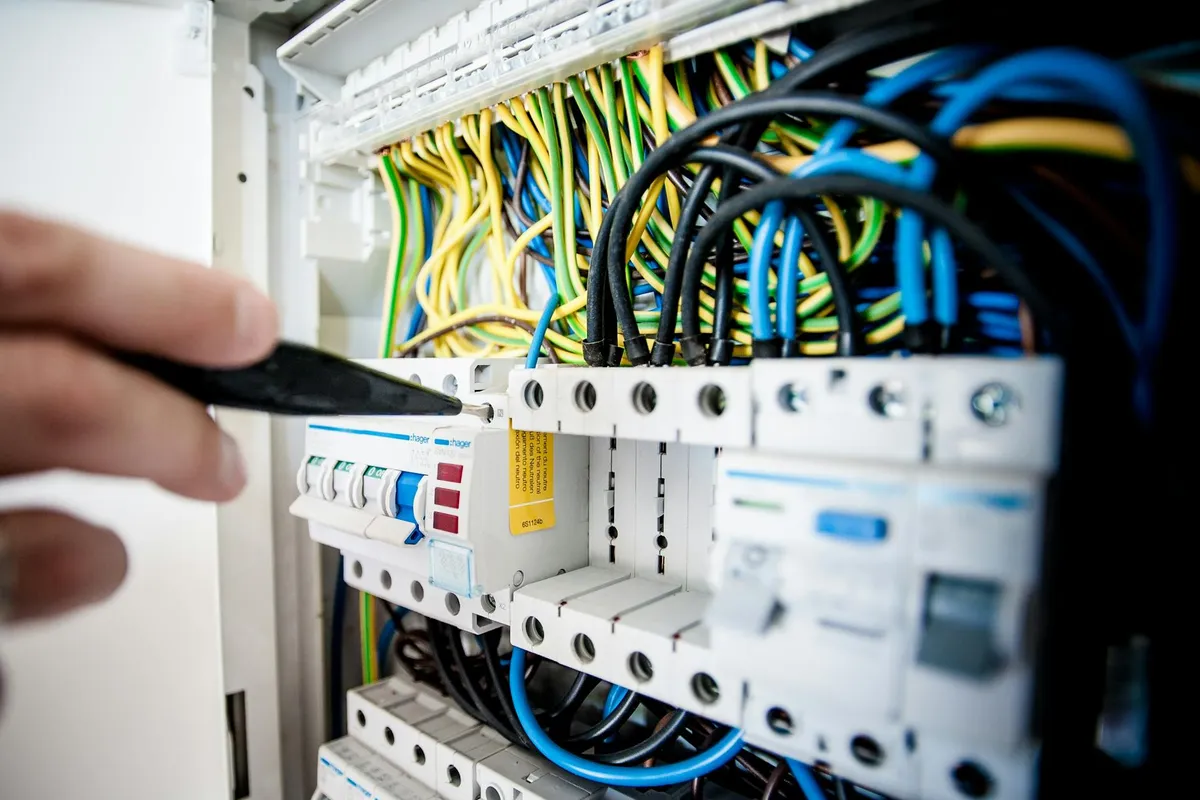
Getting the wire size wrong is the most common and expensive mistake I see. The right size depends on two things: the total amperage you need and the distance from your house to the garage. You must size the wire for the total distance, not just the straight line, to prevent dangerous voltage drop.
For a typical 60-amp sub-panel run under 100 feet, I always use #6 AWG copper THWN-2 wire. If your run is longer or you’re stepping up to 100-amp service, you’ll likely need #3 or #1/0 aluminum. Here’s a quick reference table based on what I’ve installed for clients:
| Sub-Panel Amperage | Wire Type & Material | Typical Wire Size (Up to ~100 ft) |
|---|---|---|
| 60-amp | THWN-2 in Conduit (Copper) | #6 AWG |
| 100-amp | THWN-2 in Conduit (Aluminum) | #1/0 AWG |
| 40-amp (for a single tool) | UF-B Cable (Direct Burial) | #8 AWG |
You have two main choices for the wire itself. UF-B cable is a thick, gray cable you can bury directly. I only use it for simple, short runs to a single outlet, like for a compressor. For a full sub-panel, individual THWN-2 wires pulled through conduit is the professional standard because it’s easier to replace a single wire if needed and offers better protection.
The conduit is your wire’s armor. For underground, Schedule 40 PVC is what I buy. It’s affordable and easy to glue with PVC cement. Any section above ground or where it’s exposed to physical damage (like coming up the side of the garage) needs the tougher Schedule 80 PVC or rigid metal conduit. I keep a 10-foot stick of gray Schedule 80 on hand for those exposed risers.
For a standard 240V/120V sub-panel, you need four individual wires. I buy them on spools in these specific colors: two hot wires (black and red), one neutral (white), and one ground (green or bare copper). This color code isn’t just for looks, it’s a critical safety step that tells you (and any future electrician) exactly what each wire does inside the panel.
DIY Difficulty & Time Estimate
I rate this project an 8.5 out of 10. It’s less about complex theory and more about demanding precision, heavy labor, and having steady hands inside a live electrical panel. If the thought of connecting wires to your main home breaker panel makes you nervous, stop here and call a pro.
The active, hands-on work will take a dedicated solo DIYer a solid 2 to 4 days. Day one is often just digging the trench, which is pure grunt work. I rent a walk-behind trencher from Home Depot for anything over 30 feet, it’s worth every penny. Days two and three are for gluing conduit, pulling wire (the hardest part), and mounting the sub-panel.
You can’t rush the waiting time. Your schedule depends entirely on your local inspector’s availability for the required rough-in and final inspections. If you’re pouring concrete around conduit risers, factor in a full day for that to cure before backfilling.
Do not attempt this job completely alone. A helper is essential for three key tasks: feeding and pulling the stiff, heavy wire through the conduit, safely maneuvering the sub-panel onto the wall, and the back-breaking work of trenching and backfilling. My wife has been my “wire-puller” on more than one job, and it cuts the frustration in half.
Step-by-Step: From Trench to Trimmed-Out Outlet
Break the physical work into a logical, safe sequence. The job flows best when you think from the outside in: get the line from the house to the garage first, then set up the power distribution inside the garage, and finally make the live connection at the source. Rushing or skipping steps here leads to callbacks from the inspector, or worse, a dangerous installation.
1. Digging the Trench and Running Conduit
This is the foundation of your project. Get it wrong, and you’re re-digging later. First, call 811 or your local utility locating service at least a few days before you plan to break ground. This is non-negotiable for safety.
Your local electrical code dictates trench depth, but 18 to 24 inches for PVC conduit is the standard. I always aim for the full 24 inches for Schedule 40 PVC conduit-it’s cheap insurance against a future shovel strike. The trench needs a slight slope back toward the house if possible to drain any moisture, similar to how garage pits require proper drainage.
Use a string line tied to stakes and a simple line level to keep your trench straight and at a consistent depth, which makes laying the conduit much easier. For the conduit itself, use long, gentle sweeps-they make pulling wire infinitely simpler than trying to navigate 90-degree elbows. I glue every single joint with PVC cement, wiping the excess to ensure a solid, waterproof seal. I run a pull string through the entire conduit run as I glue it, so it’s ready when I need to fish the wires.
2. Installing the Garage Sub-Panel
Mount your sub-panel box securely to the wall framing, making sure it’s perfectly level. I use a 4-foot level and heavy-duty lag screws that bite deep into the studs. This panel will hold weight and needs to be solid.
Now, pull your feeder wires from the house through the conduit. Use the pull string and a friend. For a 60-amp feeder, you’re likely pulling three wires: two hot conductors and one neutral. Land them on the correct lugs in the sub-panel: the hots on the main lugs (often labeled) and the neutral on the neutral bar. Leave plenty of extra wire-about 8 inches-for future adjustments.
The most critical and often missed step is the grounding electrode system for the detached structure. You must drive two ground rods at least 6 feet apart and connect them to the ground bar in your new sub-panel with unspliced, solid copper wire. I use a dedicated ground rod driver attachment on my rotary hammer, which is far easier than a sledgehammer. This separate grounding system is what makes the garage electrically safe and is a major inspection point.
3. Making the Connection at the Main House Panel
This is the most dangerous part of the job, where a mistake can cause fire, severe injury, or death. Your first and last step here is to shut off the main breaker that feeds the entire panel. Verify power is off with a non-contact voltage tester at multiple breakers. I use a Fluke tester I trust-never rely on a cheap, unknown brand for this.
Install a new double-pole breaker that matches the amperage of your feeder wire. For a 60-amp circuit, that’s a 60-amp, two-pole breaker. Carefully route your feeder wires into the panel, keeping them neat and out of the way of other circuits. Connect the two hot wires to the new breaker, the neutral to the main neutral bar, and the equipment ground to the main ground bar.
Finally, torque all these new connections to the specification printed on the panel or breaker. An inexpensive inch-pound torque wrench from a brand like Klein Tools removes all the guesswork and prevents loose connections that heat up over time.
4. Installing and Testing Your 240V Outlets
With power off at the new sub-panel, run a new circuit for your 240V outlet. For a welder, a NEMA 6-50 receptacle is common. For an EV charger or larger tool, you might use a NEMA 14-50, which adds a neutral wire. Use the correct gauge wire for the breaker protecting it-for a 50-amp outlet, that’s 6-gauge copper.
Mount a heavy-duty, industrial-grade outlet in a solid box. I prefer the Hubbell or Bryant brand receptacles for high-use applications; they grip plugs firmly and withstand heat better than big-box store versions. Connect the wires: the two hots to the brass screws, the ground to the green screw, and if present, the neutral to the silver screw. Ensure no bare wire is exposed.
Before you flip any breaker, your final step is to schedule the electrical inspection-do not energize the system until it passes. Once approved, turn on the main breaker at the house, then the feeder breaker, then the new breaker in the garage. Test the outlet with a multimeter set to AC voltage. You should read approximately 240 volts between the two hot slots and 120 volts from each hot slot to the ground. This confirms a successful, safe installation. If you’re planning an EV garage wiring charger installation, this kind of dedicated 240V outlet and proper grounding is exactly what you’ll need. With these basics in place, adding a garage charger can be safe and straightforward.
Safety Is Your First Tool: Precautions for 240V Work

Think of your electrical panel as the heart of your home’s power. Working on it without the right precautions is like doing open-heart surgery on yourself. It’s not a place for guesswork. I treat every panel with the same respect, whether it’s a 100-amp service or a 200-amp one.
Your Non-Negotiable Safety Routine
Before you touch a single wire, you need a ritual. Mine is simple and never changes.
- Kill the Main Breaker. Pull it to the OFF position. This cuts power to everything in the panel except the utility feeds coming in from the top, which are always live.
- Lock It Out. This is where many folks slip up. I use a small, plastic breaker lock that clips over the main breaker’s switch. It’s a physical barrier that prevents anyone, including you, from accidentally flipping it back on while your hands are inside.
- Test Every Wire, Every Time. I don’t care if I just turned the main off. I grab my trusted Fluke T+ Pro voltage tester and check every terminal I plan to touch. I test it on a known live circuit first to confirm it’s working, then check the wires in my work area. This habit has saved me from a shocking mistake more than once.
- Wear Safety Glasses. When you’re tugging stiff wire or tightening lugs, a stray metal fragment or a spark can fly. Clear safety glasses are cheap insurance for your eyesight.
The Right PPE for Panel Work
Insulated gloves are not just for utility workers. If you’re reaching into a panel to route a new cable near other live wires, wearing a pair is smart. I keep a set of Class 00 insulated gloves rated for 500 volts in my kit. They’re different from the rubber gloves you use for washing dishes. They have a leather protective outer layer to prevent nicks and tears. The key is to remember they are a last line of defense, not an excuse to work on live circuits. Your primary safety is turning the power off and verifying it’s dead.
Why GFCI Protection is a Must
The National Electrical Code now requires GFCI protection for almost all 120V and 240V outlets in a garage. This isn’t bureaucracy; it’s brilliant, lifesaving engineering. A GFCI (Ground Fault Circuit Interrupter) constantly monitors the current flow. If it senses even a tiny leak-like electricity flowing through you to a damp floor-it cuts power in a fraction of a second.
For a garage sub-panel, you have two main options. You can install a GFCI breaker for the entire feeder circuit back at the main house panel. This protects everything downstream. Or, you can use standard breakers at the main panel and install GFCI breakers for individual circuits in the garage sub-panel. I often prefer the second method. Garages often have moisture, dust, and a tangle of cords, creating garage electrical safety hazards. Addressing these hazards with GFCI protection and careful circuit planning keeps the workshop safer. If the GFCI trips in the garage, I can reset it right there instead of walking back to the house. Brands like Siemens or Square D Homeline make reliable GFCI breakers that match their panels. Installing GFCI protection is the single best thing you can do to prevent a fatal shock in a workshop environment.
When NOT to Try This: Know Your Limits
Running power to a detached garage is a serious project. I’ve wired up three of my own shops over the years, and I’m comfortable with it. But there are clear lines I won’t cross, and neither should you. If any part of this project makes you pause, that’s your signal to call a pro.
Signs You Need a Licensed Electrician
Be honest with yourself. Here are the situations where picking up the phone is the only right move:
- Your main house panel is full. If there are no open breaker slots, adding a new circuit requires work inside the main service panel that is best left to a professional. It’s not just about space; it’s about ensuring your home’s total electrical load is calculated correctly.
- Load calculations confuse you. Figuring out if your existing service can handle a new 60-amp sub-panel for the garage takes math. You need to account for your dryer, AC, oven, and the new garage loads. If you’re guessing, stop.
- The trench path is a minefield. Are you digging across a sprinkler system, a septic field, or a beautiful stone patio? A pro has the tools and know-how to navigate this without creating a landscaping disaster you’ll regret all summer.
- Your local code is a mystery. I always pull a permit for this work. If the code book reads like a foreign language or you’re unsure about burial depth and conduit requirements in your area, an electrician brings that knowledge to the job.
What You’re Really Paying For
Homeowners often search “how much does it cost to install 220v in garage” hoping for a simple number. From what I’ve seen quoted to neighbors and from my own conversations with electricians, a full install for a detached garage typically runs between $1,500 and $4,500. The wide range depends on distance, materials, and local labor rates. That price isn’t just for hooking up wires. It includes:
- The permit and inspection fees. This is non-negotiable. It’s your guarantee the work is reviewed and approved by the local authority.
- Expert labor and efficiency. A good crew of two can often complete in a day what might take a dedicated DIYer a full weekend, with no second-guessing.
- A system warranty. Most licensed electricians guarantee their work for a year. If something isn’t right, they come back and fix it.
- The right materials, right now. They aren’t running back to the hardware store three times. They show up with the correct gauge wire (like 6/3 UF-B or THWN in conduit), the right-sized breakers, and a proper outdoor-rated sub-panel.
The Professional’s Lasting Value
Hiring a pro does more than just get the job done. A licensed electrician provides a documented, code-compliant system that is safe today and a solid selling point tomorrow. They’ll leave you with a diagram of your new sub-panel, which is gold for future you or a future homeowner trying to figure out what a circuit powers. Their work passes an official inspection, which becomes part of your home’s record. This isn’t just about avoiding sparks; it’s about investing in a permanent, reliable asset for your property. I’ve never regretted paying for skilled work on the core systems of my home.
Garage Log Pro FAQ: Running Power to a Detached Garage
How do I accurately measure the distance for wire sizing calculations?
Do not measure a straight line. Use a measuring wheel to follow the exact planned path from the main panel, up the wall, through the trench, and into the garage sub-panel. Add 10 extra feet for slack and connections-this prevents undersizing due to voltage drop.
Schedule 40 or Schedule 80 PVC conduit: which do I need and where?
Use Schedule 40 for the entire buried run; it’s standard and cost-effective. You must switch to Schedule 80 for any section above ground or less than 18 inches deep, as it’s thicker and protects against physical damage from shovels or lawn equipment.
What’s the one trenching tool that’s worth renting?
For any trench over 30 feet long, rent a walk-behind trencher. It will save you a full day of brutal labor and produce clean, code-depth walls for laying conduit. Your back will thank you, and the job quality will be superior.
Is aluminum feeder wire ever acceptable for this application?
Yes, for long runs to 100-amp sub-panels, aluminum (like 2-2-2-4 SER) is a code-compliant, cost-effective choice. The critical rule: you must coat all termination points with an antioxidant paste like Noalox to prevent corrosion and ensure a safe, lasting connection.
What is the most common and dangerous grounding mistake at the garage?
Bonding the neutral and ground bars in the sub-panel. They must remain separate. The ground bar connects to your local ground rods and the ground wire from the house. The neutral bar only handles the return current from your circuits.
Beyond burial depth, what’s one local code requirement homeowners often miss?
The required height and placement of your LB fittings where conduit enters the buildings. Many codes specify they must be at least 18 inches above finished grade and accessible-not buried or hidden behind siding. Your inspector will check this.
Wrapping Up Your Garage Electrical Project
The one non-negotiable step is pulling a permit and having your work inspected; it’s the only way to guarantee your family’s safety. Treat this project with the respect high-voltage electricity demands by focusing on these three final points. First, never undersize your wire-using 6/3 UF-B cable for a 50-amp circuit was the right choice for my build. Second, protect every outdoor and garage outlet with a GFCI breaker; I install Siemens QF series breakers for their reliable trip speed. Third, map your power needs before you start so your new sub-panel has enough capacity for future tools, especially if you’re planning an EV charging station in your garage.