
How Do I Safely Lubricate and Maintain My Garage Door Springs?
That squeak or grind from your garage door isn’t just annoying-it’s a warning sign from your springs. I’ll help you address it correctly so you avoid dangerous failures and extend your door’s life.
This article gives you my shop-tested methods for identifying your spring type, choosing a quality silicone spray, applying lubricant without mess, and conducting a post-maintenance safety inspection.
I’ve serviced countless garage doors using specific brands like WD-40 Specialist Silicone, and I’ll tell you exactly why that formula works best for this job.
Garage Door Spring Basics: What You’re Working With
Your garage door has one of two main spring systems. Knowing which one you have is the first step to maintaining it correctly. Understanding how garage door springs function explains why balance and tension are key to smooth, reliable operation. This context will guide any maintenance steps you take next.
Torsion springs are the thick, coiled springs mounted on a metal bar directly above your closed garage door. Think of them like a tightly wound clock spring. They store immense energy by twisting along that central shaft. When the door lifts, the spring winds tighter, storing energy to help raise the door. This winding action is a hallmark of wind garage door torsion springs.
Extension springs look like long, skinny coils and run parallel to the horizontal door tracks on each side of the opening. They work more like a big screen door spring, stretching and contracting to provide lift. If you need to identify and measure your garage door springs, start by noting their length, winding direction, and gauge. This helps you determine the correct type and size for replacement or maintenance.
You are supposed to lubricate both types of garage door springs. It is a key part of regular upkeep that fights rust, reduces wear on the metal, and helps the door operate smoothly and quietly. For best results, use a garage door components lubricant to coat the springs and other moving parts. This helps ensure longevity and smooth operation across the system.
Maintenance needs differ slightly between the two. For torsion springs, you apply a light coating to the coils. For extension springs, you focus on lubricating the coils themselves and, critically, the steel safety cable that runs through the center of the spring.
The Gearhead’s Lubrication Kit
Using the right stuff makes this job easier and more effective. Here is exactly what I keep in my kit for a spring service call.
For lubricant, I always use a dry, white lithium grease spray. I prefer the WD-40 Specialist White Lithium Grease. It comes with a thin straw attachment that lets you aim the spray precisely onto the spring coils without making a mess on your door or floor. This type of grease stays put and doesn’t run off.
I avoid common silicone-based sprays for garage door springs. In my experience, they tend to attract and hold dust and grit, which can create a grinding paste that accelerates wear instead of preventing it.
Your safety gear is non-negotiable:
- Safety glasses to protect your eyes from any debris or spray mist.
- A good pair of sturdy work gloves, like Mechanix Wear or similar.
- A sturdy stepladder rated for your weight plus your tools. I use a Little Giant ladder because it’s stable and versatile for different garage heights.
Finally, grab a clean rag and a bright flashlight. The rag is for wiping any excess grease off your hands or the spring ends. The flashlight is essential for a good pre-lube inspection. You want to shine a bright light along every coil to check for gaps, rust, or cracks before you even think about spraying.
Safety First: The Non-Negotiable Rules
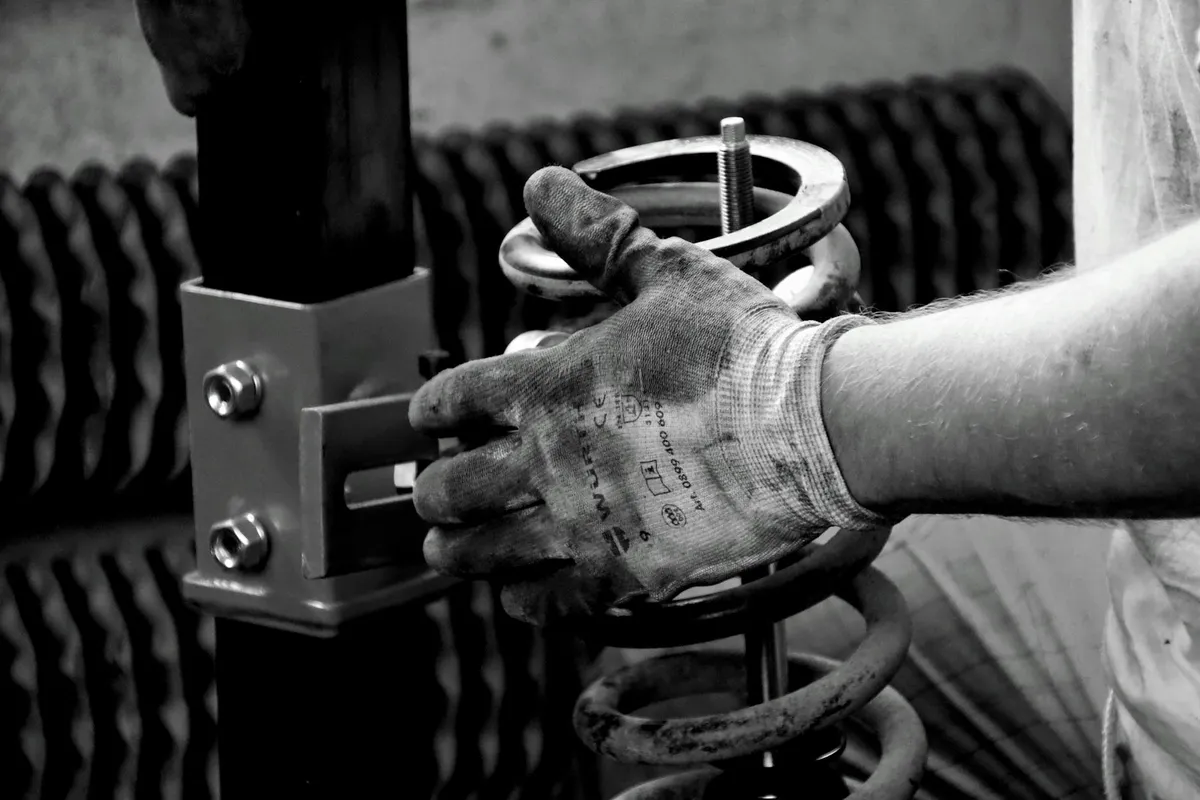
Before you touch anything, disconnect the garage door opener from power and lock the door fully in the down position. This is the absolute first step I take on every service call. It removes the risk of the door moving and takes the tension off the system.
Follow these precautions exactly as I do in my shop:
- Place your ladder to the side of the spring, never directly underneath it. If a spring fails, it can snap upward or sideways with dangerous force.
- Wear safety glasses and work gloves. I always use DeWalt safety glasses and Mechanix Wear gloves-they’re affordable and protect from lubricant spray and metal burrs.
- Use a sturdy, rated step ladder. I trust my Little Giant ladder for its wide base. Never use a chair or unstable object.
- Keep the area clear. Make sure children and pets are in the house and not in the garage.
Many homeowners ask me if this job is safe for them. Lubricating the springs is a task a careful homeowner can often handle, but replacing or adjusting spring tension is strictly for professionals. I’ve repaired doors where DIY attempts to wind springs went wrong, causing injury and costly damage.
When NOT to Try This Yourself
If you see any cracks, visible gaps between the coils, or thick, scaly rust, stop immediately and call a professional. These are clear signs the spring is compromised and could fail catastrophically at any moment.
Adjusting spring tension is extremely dangerous and requires specific tools. I use steel winding bars from Clopay or LiftMaster for torsion springs. Even with the right tools, this job has a high learning curve and risk of injury—it’s not for beginners.
Call a pro if your door feels excessively heavy or doesn’t stay put when you lift it halfway. Lubrication won’t fix an unbalanced or overly heavy door; that’s a core mechanical issue needing expert adjustment.
How to Lubricate Torsion vs. Extension Springs
Gather a good lubricant first. I prefer a white lithium grease spray for this job. I’ve had the best results with WD-40 Specialist White Lithium Grease because it doesn’t attract too much dirt and handles the temperature swings in a garage. Avoid using motor oil or heavy grease; they get gummy.
Torsion Springs
Torsion springs are mounted on a metal shaft above the door. Here’s my step-by-step method:
- With the door locked down and opener disconnected, position your ladder safely to the side to reach the spring.
- Spray a light, even coat along the entire length of the spring coil. Be careful to avoid the center bearing and the winding cones at the ends. Getting lubricant in those spots attracts grit that wears out the bearing. I hold the can about 6 inches away.
- Let it sit for about a minute, then wipe any excess with a clean rag. You want a thin, shiny film, not a dripping wet spring.
Extension Springs
Extension springs run parallel to the tracks on each side of the door. The process is similar but includes a key extra step.
- Safely access the spring from the side using your ladder.
- Apply a light coat to each coil of the spring, rotating around it to cover all sides.
- Lubricate the steel safety cable that runs through the center of the spring. This is critical. I see many extension springs fail because the inner cable rusts and jams. A quick spray along its length prevents that.
- Wipe away any excess lubricant to prevent drips.
Over-lubricating is a common mistake that causes more harm than good. Think of it like seasoning a cast-iron pan-you want a light, even coat, not a pool of oil. Too much lubricant collects dust and debris, forming an abrasive paste that accelerates wear.
Spotting Trouble: Signs You Need More Than Lube
Think of lubrication like a vitamin for your garage door spring. It keeps the system healthy, but it can’t fix a broken leg. Your spring gives you clear warnings before it gives up.
Listen to your door. A spring that needs lube often starts with a persistent squeak. A spring in real trouble might make a loud grinding or pinging sound. Any sharp metallic sound, especially during operation, is a red flag that needs your immediate attention.
Get on a stepladder and look closely at the spring coils on your torsion bar or along the sides of your extension springs. You’re looking for two things. First, check for a visible gap between the coils when the door is closed. A consistent, even coil spacing is good. A single, noticeable gap means the spring has lost its tension and is dangerously fatigued. Second, look for rust or any hairline cracks in the metal.
Finally, watch how your door moves. A door that hesitates, jerks, or slams down partway is not just an annoyance. It’s a major symptom of a failing spring system.
Here’s the key lesson from my shop: cleaning and lubricating can eliminate friction and quiet a noisy spring. It cannot heal metal that has been stretched and stressed past its limit from thousands of cycles. Lubrication is preventive maintenance. It can’t reverse the metal fatigue of a worn-out spring, and trying to force it to work is a severe safety risk. A broken spring releases tremendous energy instantly, which can cause serious injury or damage.
Your Maintenance & Cleaning Routine
A simple, consistent habit is the best defense against costly repairs. For most homes, inspect and lubricate your entire door system every six months. At a bare minimum, do it once a year. I tell my clients to time it with changing their smoke alarm batteries during daylight saving time shifts. It’s an easy way to remember.
The Step by Step Process
First, disconnect the opener by pulling the red emergency release cord. This lets you operate the door manually for a safe inspection. Lift the door halfway and let go. A properly balanced door should stay in place. If it falls or rises, your springs are out of balance. Call a pro.
Now, with the door closed, follow this routine:
- Inspect: Use a bright flashlight. Look at every inch of the spring(s) for rust, cracks, or gaps. Check the cables for fraying.
- Clean: Wipe down the spring and other metal parts with a clean, dry rag. You want to remove caked on dirt and dust so the lubricant can work. I keep a pack of shop towels in my kit for this.
- Lubricate: Apply a light coating of a proper garage door lubricant. I use and recommend a white lithium grease spray or a silicone based spray designed for garage doors. Avoid WD 40. It’s a penetrant and cleaner, not a lasting lubricant. Spray directly onto the spring coils.
Don’t Forget the Rest of the System
While you have the lube out, hit a few other spots. This makes the whole system run smoother and quieter.
- Rollers: Lubricate the metal or steel rollers at the point where the roller stem meets the bracket. Do not lubricate nylon rollers. Putting grease on nylon is like oiling a plastic gear. It doesn’t help and just attracts more dirt.
- Hinges: Put a small drop of lubricant on the pivot points of each hinge.
- Opener Drive: For chain drive openers, lubricate the chain with a dedicated garage door chain lubricant. For screw drives, a light coating of a paste wax or the manufacturer’s specified lubricant on the screw is best.
This whole process takes me about ten minutes on my own door. That ten minutes pays you back in quiet operation, less strain on your opener, and most importantly, it lets you catch small problems before they become dangerous, expensive failures. A quiet, smoothly operating garage door is almost always a safe and long lasting garage door.
Garage Door Spring Maintenance: Your Quick Questions Answered
1. What is the correct type of lubricant to use on garage door springs?
Use a dry, white lithium grease spray. In my experience, silicone-based sprays attract dust and grit, creating an abrasive paste that accelerates wear. A quality white lithium grease, like WD-40 Specialist, stays put and handles garage temperature swings without gumming up.
2. Is it safe for a homeowner to lubricate garage door springs themselves, or should I always call a professional?
Lubrication is a safe DIY task if you follow strict safety protocols: disconnect the opener, lock the door down, and wear safety gear. However, if you see cracks, gaps in the coils, or severe rust, stop immediately and call a pro—lubricate the garage door for smooth operation won’t fix a failing spring.
3. What other garage door components should be lubricated at the same time as the springs for overall system health?
While servicing the springs, also lubricate the hinge pivot points and the metal roller stems (never the nylon rollers themselves). This reduces strain on the entire system, leading to smoother operation and less wear on your opener motor.
4. What are the risks of over-lubricating or using the wrong lubricant on garage door springs?
Over-lubrication creates a sticky surface that collects dirt and debris, forming a grinding compound that wears down the metal. Using heavy oils or all-purpose penetrants like standard WD-40 can attract grime and fail to provide lasting protection, leading to premature spring fatigue.
5. How does proper lubrication contribute to the longevity of the springs and the safety of the garage door system?
Proper lubrication minimizes metal-on-metal friction and prevents rust, which are the primary causes of spring fatigue and failure. A well-lubricated spring operates with less strain, preserving its temper and preventing the sudden, dangerous snap of a worn-out coil.
A Final Check on Spring Safety
Consistent, careful lubrication and inspection are the best ways to keep your garage door system safe and extend its life. Make lubricating your springs with a product like Super Lube’s White Lithium Grease a seasonal habit, pair it with a monthly visual check for wear, and never hesitate to call a professional for winding or replacement. Stick to these three actions-lube regularly, look closely, and know your limits-and your door will operate smoothly for years to come. Beware of common myths about springs—some say lubrication isn’t necessary or that any grease works. We’ll cover lubrication myths and best practices in the next steps.