
What Are the Best Garage Climate Control and Air Conditioning Solutions for Homeowners?
Is your garage turning into a sauna every summer or a freezer each winter, making it unusable? I will help you cut through the noise and pick a system that actually works, based on what I have installed and lived with in my own shop.
We will cover sizing your space correctly, comparing mini split brands like Mitsubishi and Mr. Cool, practical insulation fixes, and balancing cost with comfort.
I have personally installed, repaired, and lived with these systems in residential garages for over ten years.
Why a Climate-Controlled Garage is More Than a Luxury
Thinking about garage climate control as just a comfort upgrade misses the bigger picture. It’s about protecting the time and money you’ve invested in your space. I learned this the hard way one summer. I had a beautiful, old set of hand planes I inherited from my grandfather stored in my uninsulated garage used for woodworking. The humidity that season warped the wooden totes and put a fine coat of rust on every polished steel surface. I spent a weekend I’d rather have spent on a project just cleaning and reconditioning them. That was the moment I stopped seeing climate as a luxury and started seeing it as part of tool maintenance.
Extreme cold is just as problematic. Trying to change your own oil when it’s 40 degrees Fahrenheit in the garage is miserable. Your hands are stiff, rubber gaskets and hoses are brittle, and you’re more likely to rush and make a mistake. A stable environment turns your garage from a seasonal storage shed into a year round workshop you’ll actually want to use.
Beyond your tools and comfort, climate control is about health and safety. A damp garage is a perfect place for mold to grow on stored boxes or even the wall framing. Many household chemicals, like paint and solvents, have specific storage temperature ranges listed right on the can. Keeping them in a stable, moderate environment is part of using them responsibly.
Your Garage Climate Control Pre Flight Checklist
Before you even look at a single heater or AC unit, you need to do some homework. This is the most important step, and it costs you nothing but an hour of your time. It will prevent you from buying a system that’s too weak, too powerful, or that you can’t even plug in. Grab a tape measure, I prefer my 25 foot Stanley PowerLock, and a notepad.
Start with the basics of your space. This directly answers the common question, “What factors should I consider when choosing a garage HVAC system?”
- Measure Everything: Get the exact length, width, and ceiling height of your garage. Multiply them (L x W x H) to get the cubic footage. This number is what HVAC sizing is based on, not just square footage.
- Catalog Openings: Count every door and window. Note their condition. A big, leaky overhead door is the single biggest source of heat loss or gain.
- Investigate Insulation: Go into your attic if it’s above the garage. Can you see insulation between the joists? For walls, you might need to remove a small outlet cover (with the power off) to peek inside and see if there’s insulation batting.
Next, figure out your power situation. This is non negotiable for safety.
- Identify Outlets: Do you have standard 120 volt household outlets? Is there a 240 volt outlet, like one for an electric dryer, that’s unused? A 240V circuit is required for most high capacity mini split heat pumps and large electric heaters.
- Find the Breaker Panel: Locate the panel that serves the garage. Open it and see if there are any open spaces (spare breakers) for a new circuit. Take a picture for reference.
- Check Local Codes: Call your local building department. Ask if pulling a permit is required for installing a permanent heating or cooling appliance. If you’re considering a natural gas heater, codes regarding venting and gas line extensions are strict and for good reason.
This checklist gives you the hard facts you need. Walking into a store or talking to a contractor with this information already in hand shows you’re serious and will get you a correct system recommendation faster.
Cooling Your Garage: From Simple Fans to Permanent A/C
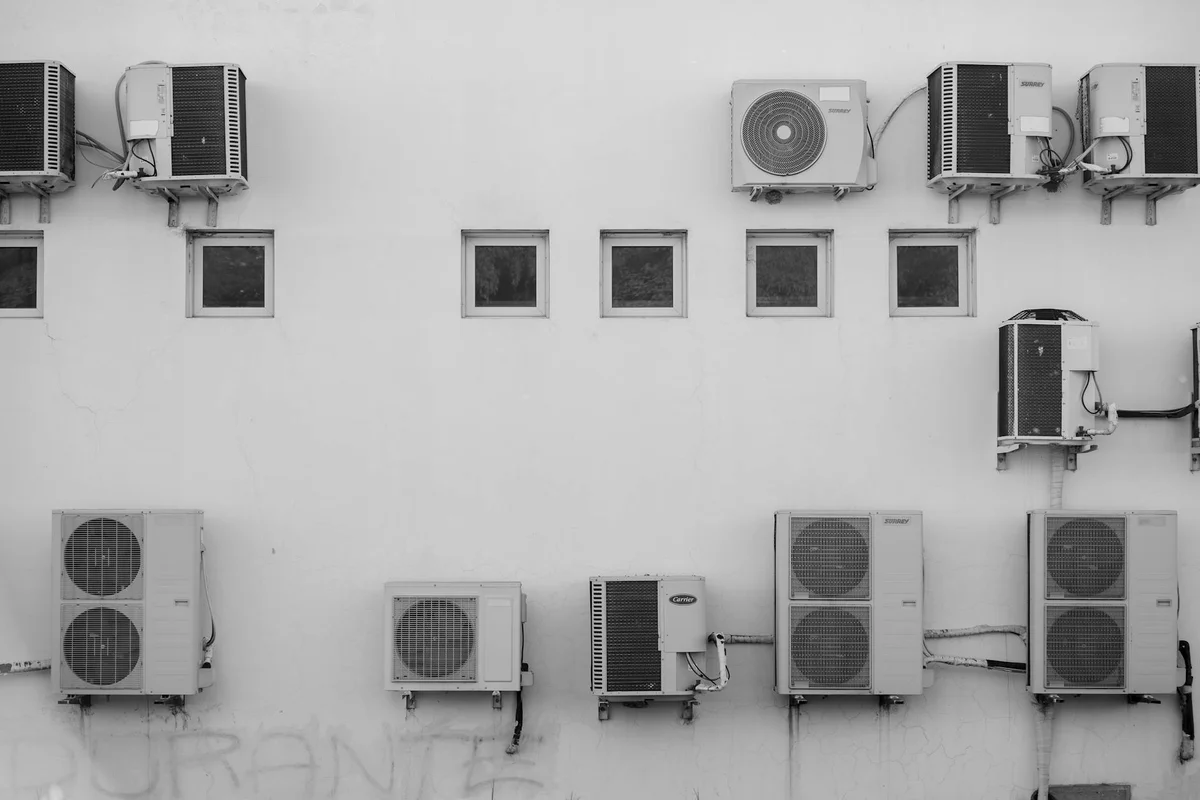
Think of your garage climate options like a ladder. You start on the lowest, simplest rung and climb to more complex, permanent solutions based on your budget and needs. Here’s a plain-language “good, better, best” look at what works when trying to control the temperature in your garage.
High-Velocity Fans and Ventilation
Moving air is your first and cheapest line of defense. It doesn’t lower the temperature, but it makes the heat far more bearable by evaporating sweat off your skin. A high-quality fan is often all you need if you live in a mild climate or only use the garage for short projects.
I’ve installed large wall-mounted units from Air King and MaxxAir in several garages. They move a serious amount of air and are built for continuous duty, unlike a box fan from a big-box store. The key is creating a cross-breeze. Mount one fan high on one wall to pull hot air out, and have another fan or an open door on the opposite wall to draw cooler air in.
- Good For: Mild summer days, occasional weekend work, improving general air quality.
- Not Good For: Actually cooling the air, managing high humidity, or making a Texas garage comfortable in August.
The Portable Air Conditioner Reality Check
Homeowners often ask me, “Can a portable AC cool a garage?” The short answer is yes, but with major caveats. Let’s break down the real-world pros and cons.
Portable units are just that, portable. You can wheel one in, plug it into a dedicated 120V outlet, and feel cool air. The big catch is venting. You must exhaust the hot air and moisture outside through a window or a custom vent panel you install in a service door. If you don’t have a nearby window, a portable AC becomes a non-starter. I’ve helped clients cut a neat hole in their metal man-door and install a proper vent kit, which works well.
You also need enough power. For a typical 2-car garage, you’re looking at a 14,000 BTU unit at a minimum. Now, the hose debate: most cheap units are single-hose. They pull your already-cooled garage air, use it to cool their condenser, and then blow it outside. This creates negative pressure, which sucks hot outdoor air right back in through every crack. It’s incredibly inefficient. A dual-hose model pulls outside air for its condenser loop, which is much better. In my experience, the extra cost for a dual-hose unit is always worth it.
- Good For: Renters, temporary needs, or garages with a perfect window for the exhaust hose.
- Not Good For: Large spaces, garages without easy venting, or as a permanent, efficient solution.
Mini-Split Systems: The Gold Standard for Garages
So, are mini-split systems a good option for garage climate control? In one word: absolutely. This is the “best” rung on the ladder for a reason. I recommend them to any homeowner who uses their garage as a serious workshop or wants year-round comfort.
A mini-split is called “ductless” because it doesn’t need any ductwork. It has two main parts: a quiet indoor unit mounted on your wall and a condenser unit that sits outside. Think of it like a window air conditioner where someone took the noisy compressor part and put it 20 feet away from you. You get powerful, targeted cooling (and heating) without the racket, and the installation is far less invasive than extending your home’s ducts.
Nearly all modern mini-splits are heat pumps, meaning they can heat your garage in the winter just as efficiently as they cool it in the summer. For professional installation, I’ve had great results with Mitsubishi units-they’re workhorses. For the savvy DIYer, brands like Mr. Cool offer pre-charged linesets that can make installation a realistic project.
- Good For: Permanent, efficient climate control, year-round use, workshops, and home gyms.
- Not Good For: Ultra-tight budgets or anyone unwilling to make a permanent installation.
Extending Your Home’s Central Air: A Complicated Maybe
This question comes up all the time: “Can I extend my home’s existing HVAC system to cool and heat the garage?” Technically yes, but almost every HVAC pro I’ve worked with advises strongly against it, and I agree.
Your home’s system is carefully balanced for the square footage and layout of your living space. Adding a large, poorly insulated room like a garage throws that balance off. It can cause pressure imbalances, making doors hard to close or affecting the cooling in your house. More critically, it’s a major code and safety issue. You should never share ductwork between your garage and living space because it can pull car fumes, dust, and chemical vapors directly into your home. Finally, it forces your home’s unit to work much harder, leading to premature wear and high utility bills. It’s usually more cost-effective and safer to install a dedicated mini-split.
Heating Options for a Comfortable Workshop
Heating a garage is a different beast than cooling it. I find it’s often simpler and cheaper to solve. You’re not battling intense humidity, and a little warmth goes a long way to make the space usable.
Electric Space Heaters: The Plug-and-Play Test
When you need heat right now, a portable electric heater is the easiest test. You have two main types. Radiant heaters, like infrared quartz models, warm objects and people directly-think of how the sun feels on your skin. Forced-air heaters, with a fan, work by warming the air around them, like a powerful hair dryer for your whole garage.
For steady, gentle warmth during long projects, I always recommend a simple oil-filled radiator. I’ve kept a DeLonghi brand unit in my shop for years. It has no fan, so it’s silent, and the oil holds heat well, providing even warmth without drying out the air. This makes it my top pick for all-night sessions, like when applying multiple coats of finish to a project.
Here is the critical safety rule I learned the hard way: respect your electrical circuit. Most 1500-watt heaters max out a standard 15-amp outlet. Never use an extension cord, and always plug directly into a wall outlet. Overloading a circuit is a fast track to a tripped breaker or, worse, a fire.
Wall-Mounted Electric or Gas-Fired Heaters
For a permanent, powerful heat source, look at wall-mounted units. Your main choices are 240-volt electric heaters or natural gas/propane models. I installed a 240V electric heater from Fahrenheat in my own garage. It was a straightforward job of running new wire from the panel, and now it delivers instant, reliable heat with the flip of a switch.
Gas-fired units, like those from Mr. Heater or Hot Dawg, cost less to run over time. My preference is for the simplicity of electric if you have the spare breaker space, but I always tell clients that gas wins for lower long-term operating costs in a frequently used space.
Installing a gas heater is 100% a job for a licensed professional. They handle the gas line connection and proper venting to prevent carbon monoxide buildup. This is not a place to cut corners or attempt a DIY fix.
Using a Mini-Split Heat Pump
This circles back to the most unified solution. A ductless mini-split heat pump is not just for cooling; it’s a highly efficient heater for moderate climates. It works by moving existing heat from the outdoor air into your garage, which uses less electricity than creating heat from scratch.
In a client’s woodshop, we put in a Fujitsu mini-split. For regions with mild winters, this one system provides quiet, effective heating and cooling all year, often cutting energy bills compared to running separate units. It’s a larger upfront investment, but the dual functionality and efficiency are worth it for a truly comfortable workshop.
The Foundation: How to Insulate Your Garage Properly
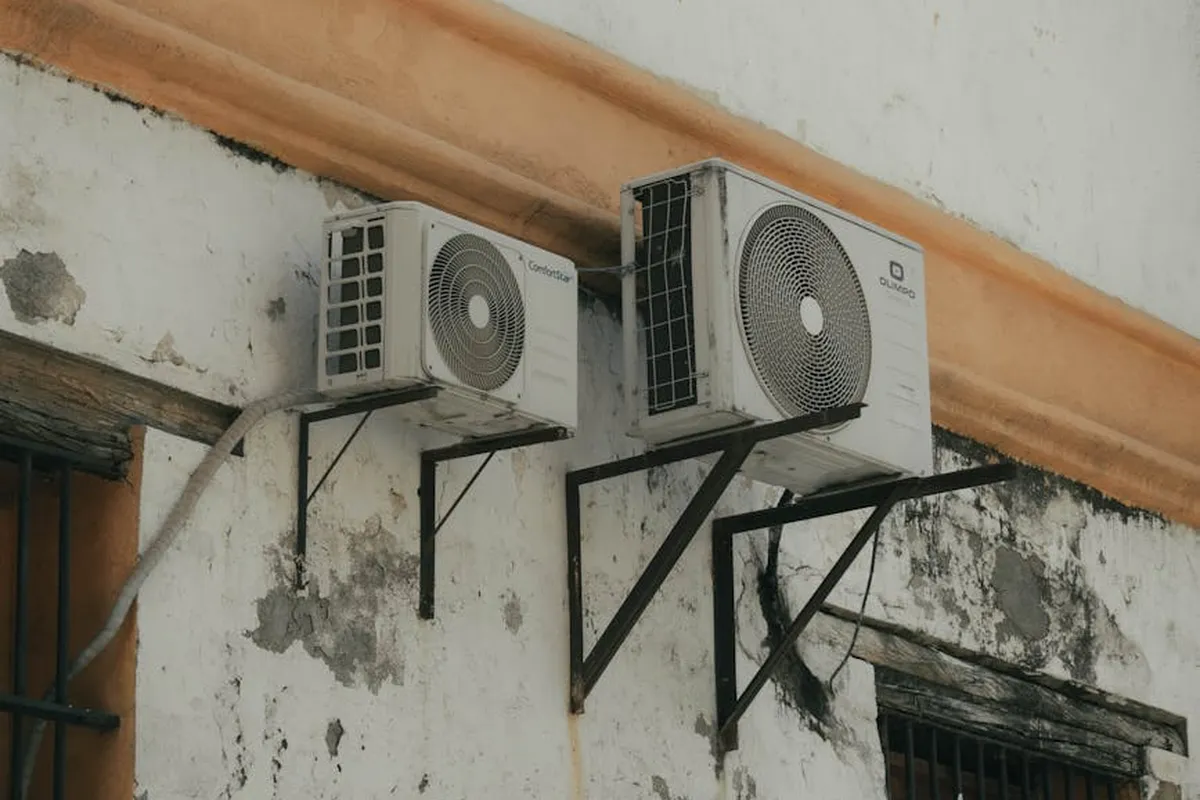
Before you spend a dollar on a heater or an AC unit, you need to address insulation. Installing a climate control system in an uninsulated garage is like trying to fill a bucket with a huge hole in the bottom; you’ll waste money and effort for a poor result. That’s where garage temperature control insulation comes into play—it’s the foundation that keeps your system efficient. In the next steps, we’ll cover the best insulation strategies for a garage and how to seal gaps for stable temperatures. A common question I get is, “How do I properly insulate my garage to improve climate control efficiency?” The answer is a layered approach: you tackle the walls and ceiling, then the garage door, and finally, you seal every gap you can find.
Garage Walls and Ceiling: Batt vs. Blown-In
For most unfinished garage walls with exposed studs, fiberglass batts are your best DIY bet. I’ve used paper-faced R-13 or R-19 batts from Owens Corning or Knauf for standard 2×4 walls countless times. The paper facing acts as a vapor barrier, which is critical. You simply cut the batt to length with a utility knife, press it into the cavity, and staple the paper flanges to the studs.
The key to working with fiberglass is your safety gear: wear a tight-fitting N95 respirator, safety glasses, and long gloves to prevent skin irritation. For a finished garage where the drywall is already up, blown-in cellulose is more effective but requires a pro with the equipment to drill holes and fill the cavities. It’s a better insulator and blocks air leaks well, but it’s not a beginner’s project.
The Garage Door: Your Biggest Weak Spot
A standard single-layer metal garage door offers almost no thermal resistance. The most practical fix is a DIY insulation kit. I’ve installed the foam board panel kits from brands like Insulfoam. They come with pre-cut polystyrene or polyurethane panels that you trim to fit each door panel with a utility knife and adhere with the included tape or adhesive.
Cutting the rigid foam can be finicky-score it deeply with a sharp blade and snap it cleanly for the best edge. One crucial warning: adding insulation increases the door’s weight. If you have a spring-balanced door, adding too much weight can strain the opener and springs. For heavier kits, it’s smart to check your door opener’s manual or consult the manufacturer to see if a spring adjustment is needed.
Sealing Air Leaks: Caulk and Weatherstripping
Insulation traps still air, but drafts ruin its effectiveness. Sealing leaks is the single most cost-effective thing you can do. Grab a tube of high-quality silicone caulk and a caulk gun. Here is your simple action list:
- Run a bead of caulk along the bottom of your framed walls where the wood sill plate meets the concrete floor.
- Install new rubber weatherstripping around the perimeter of your service door (the door into your house).
- Add a vinyl threshold seal to the bottom of that service door to block the gap.
Spending an afternoon with a caulk gun and weatherstripping will stop more drafts than you realize and is the highest return-on-effort task in this entire process. You’ll feel the difference immediately.
Installation Difficulty, Time, and Cost Breakdown
A common question I get is: what is the average cost to install a permanent air conditioning system in a garage? For a professionally installed ductless mini-split system, which is the gold standard, you are typically looking at a starting point of $2,500 to $4,000 for a single-zone unit for a standard two-car garage. That price can climb based on your location, the system’s BTU capacity, and necessary electrical upgrades. Let’s break down what you’re really signing up for in terms of effort, hours, and dollars.
Ease of Installation Rating (1-10)
Here’s my take on how much sweat equity each solution requires, with a 1 being plug-and-play and a 10 being a full pro job.
- Box Fan (Rating: 1): You plug it in. That’s the project. I keep a heavy-duty Lasko fan in my shop for quick air movement.
- Portable A/C Unit (Rating: 2): It’s mostly easy, but you must create a vent outlet. I’ve used a simple plexiglass kit to seal a window slider. The hose is a tripping hazard, which I don’t love for a busy workspace.
- Insulation & Sealing (Rating: 6): This is a messy, precise job. You’re handling fiberglass (wear a good respirator) or spray foam kits, cutting batts to fit, and caulking every seam. A sharp utility knife and a sturdy staple gun are your best friends here.
- DIY Mini-Split Kit (Rating: 7): This is serious DIY. Brands like Mr. Cool market “DIY” kits with pre-charged lines. The physical mounting is straightforward, but the electrical work is non-negotiable; if you’re not comfortable running a 220V line from your panel, hire an electrician. The most critical step is vacuuming the refrigerant lines with a quality pump and gauge set to remove moisture, which I’ve seen DIYers skip, leading to early system failure.
- Professional Mini-Split Install (Rating: N/A): You handle the estimate and check-writing. A licensed crew handles the rest, including pulling permits, which is a major benefit.
Active Work Time vs. Waiting Time
People often underestimate the “hurry up and wait” phases of garage projects. Here’s a realistic timeline.
Insulating a two-car garage is a classic two-weekend project. The first weekend is for walls: cutting batts, fitting them between studs, and installing a vapor barrier. The second weekend is for the ceiling and the detailed air sealing. The active work time is 12-16 hours, but you must account for drying time for caulk and spray foam sealant, which can add 8-24 hours before you can move to the next step. Once those steps are complete, the project shifts to finishing the garage—drywall, paint, and a durable floor finish. A proper insulated finish helps keep the space comfortable and energy-efficient for year-round use.
Installing a DIY mini-split kit is a concentrated effort. With a helper to lift the heavy outdoor condenser, you can complete the physical install in a full day. The second day is for the electrical hookup (by a pro if you’re not qualified) and the crucial line vacuuming and system check. It’s a fast, intense project compared to the drawn-out process of insulation.
Cost & Budget: Good, Better, Best
Your budget dictates your comfort level. I’ve worked within all these tiers for clients and my own shops.
- Good ($100 – $500): This is tactical improvement territory. Your money buys materials like R-13 fiberglass batts, a case of Great Stuff window & door spray foam, and a high-output fan like an Air King. You can also find a single-hose portable A/C unit in this range. It’s about managing expectations and reducing extreme temperatures, not eliminating them.
- Better ($500 – $2,000): Here, you invest in semi-permanent climate control. This budget fits a DIY mini-split heat pump kit (I’ve installed the 12k BTU Mr. Cool model in this range). It also covers a wall-mounted electric heater like a Dr. Heater, plus the $300-$800 cost for an electrician to run the proper 240-volt circuit. This tier delivers real heating and cooling.
- Best ($2,500+): This is the professional-grade solution. A licensed HVAC contractor installs a ductless mini-split system with a proper load calculation and warranty. Remember to factor in hidden costs: the permit your city requires ($50-$200), potential upgrades to your electrical service ($500-$1,500), and the cost to dispose of old insulation or equipment responsibly. You’re paying for expertise, code compliance, and long-term reliability.
Smart, Energy-Efficient Climate Control Habits
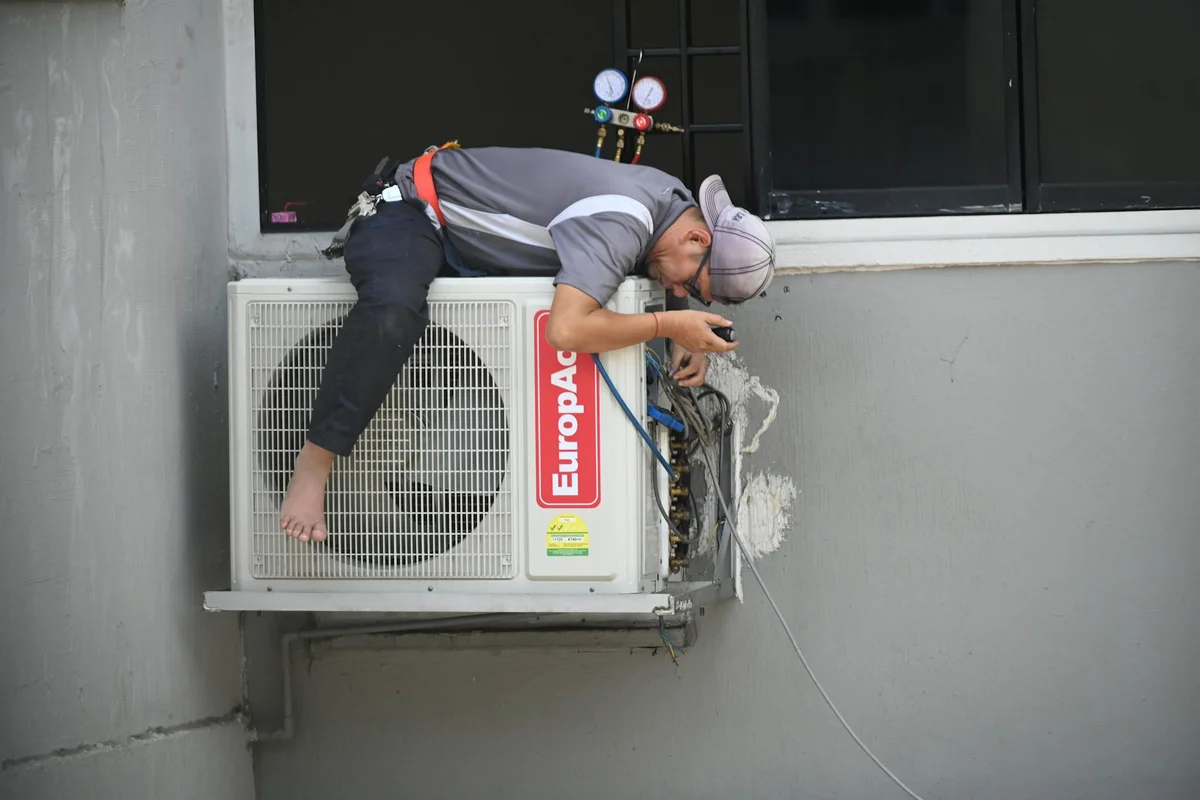
Let’s talk about how you use your system. The best equipment works poorly with bad habits. You asked: what are some energy-efficient garage climate control solutions? The answer is not just about buying a high-tech unit. It’s about smart operation and choosing the right tool for the job.
The most powerful and expensive system will waste your money if your garage is leaky or you run it nonstop for no reason. Think of climate control like a car. You wouldn’t leave your truck idling in the driveway 24/7 just in case you need to run to the store. You start it when you need it. Your garage systems should work the same way, especially when trying to maintain proper temperature and humidity levels.
Right-Sizing Your System and Using a Timer
Bigger is not better for air conditioning. I see this mistake often. A homeowner buys the biggest window unit they can find, thinking it’ll cool their two-car garage fast. What happens is it cools the air in five minutes and shuts off. This is called short-cycling.
A unit that short-cycles runs in very brief bursts, which strains the compressor and, more importantly, never runs long enough to pull moisture from the air. Your garage feels cool but clammy, which is worse for tools and projects than just being warm. A properly sized unit runs for longer, steady cycles, removing humidity and providing stable comfort. For most attached two-car garages, a 12,000 to 14,000 BTU mini-split or window unit is plenty if you’ve insulated and sealed first.
For heating, control is key. You probably don’t need a 240-volt heater running all winter to keep your garage at 70 degrees. I use a simple plug-in mechanical timer, like the basic Intermatic model from the hardware store. I set it to turn my 120V space heater on about an hour before I plan to be in the shop. When I walk in, it’s comfortable, and I’m not paying to heat an empty space.
The Role of a Garage Dehumidifier
Can a dehumidifier be used in a garage? Absolutely. In many cases, especially in humid climates, it’s the single best tool for protecting your space. While an A/C cools and dehumidifies, a dedicated dehumidifier just pulls water from the air, and it does it very efficiently. This is critical for rust prevention on tools, metal shelves, and your car.
I ran a Frigidaire 50-Pint dehumidifier in my Georgia garage for years. In the muggy summer, it was a game-changer. My drill press table stopped feeling damp. I recommend a basic model with a bucket you empty. The ones with built-in pumps that drain through a hose sound convenient, but that pump is another part that can fail. A sturdy bucket-emptying model is simpler, more reliable, and often less expensive. Just plug it into a GFCI outlet, set your desired humidity level (I keep mine around 50%), and let it run during the humid season. You’ll be shocked at how much water it pulls from the air.
Seal the Space, Then Condition the Air
This is the golden rule. It bears repeating. You must seal the space first, then condition the air. Conditioning a leaky garage is like trying to heat your house with the front door wide open. You are fighting a losing battle and burning cash.
Before you spend a dollar on an A/C unit or heater, walk your garage with a tube of caulk and some weatherstripping. Seal the top and sides of your garage door with a kit. Check for daylight around your service door. Insulate if you can. Every dollar you spend on sealing and insulation makes your climate control system twice as effective and half as expensive to run. Your goal is to turn your garage from a drafty shed into a tight, insulated box. Only then does adding conditioned air make real sense.
Keeping Your System Running: A Simple Maintenance Schedule
Installing a climate system is just the start. Treating it well is how you get 10 or 15 years of reliable service instead of constant headaches. I follow this same routine in my own garage.
A clean system runs easier, costs less to operate, and breaks down far less often.
Spring/Fall (Bi-Annual Check)
I do this quick check when I’m switching from heat to cool or back again. It takes 20 minutes and prevents most common problems.
- For mini-splits: First, power off the unit at the breaker or remote. Pop open the front panel-it usually just clips in. Pull out the foam filter and wash it in the sink with a drop of dish soap like Dawn. Rinse it thoroughly and let it air dry completely before putting it back. While it’s open, I use a soft brush attachment on my shop vac to gently clean the aluminum coil fins behind the filter. Don’t bend them.
- Clear the exterior unit. Go outside to your condenser. Clear away any leaves, grass clippings, or shrubbery within a 2-foot radius all around it. I keep a dedicated garden rake nearby just for this. Good airflow is everything for efficiency.
- Test the functions. Before you need it, turn on the heat for 10 minutes, then the A/C. Make sure it’s blowing the correct temperature air and not making new, strange noises. Finding an issue in March is better than in July.
For Portable and Window Units
These require more hands-on care because they’re simpler and draw in more dust from the garage air.
Clean the filter monthly during heavy use. For my portable Honeywell, that means unplugging it, pulling the filter from the back, and tapping it out over the trash. For a deeper clean, I rinse it with water. Let it dry fully. A clogged filter makes the unit work triple-time.
At season’s end, prepare it for storage. Unplug it, clean the filter one last time, and let the entire unit sit for a day to dry any internal moisture. I use a simple plastic garbage bag to cover my window unit to keep dust out. Store it indoors in a closet or on a shelf, never directly on a damp garage floor.
Annual Professional Service
Some tasks are not for homeowners. For any system with refrigerant lines or a natural gas connection, a pro tune-up is non-negotiable.
This is mandatory for permanently installed gas heaters and professionally installed mini-splits. I schedule mine every autumn.
The technician will do what I can’t: check precise refrigerant pressure with gauges, inspect electrical connections for corrosion, test the gas valve and heat exchanger for safety, and ensure all internal controls are functioning. I once skipped this on my garage heater and ended up with a cracked heat exchanger-a costly and dangerous lesson. That $150 service call is cheap insurance.
Garage Climate Control: Your Top Questions, Answered by a Pro
What are the most effective garage climate control solutions for homeowners?
The most effective solution is the one matched to your garage’s insulation and your usage. For a permanent, year-round workspace, a ductless mini-split heat pump is the top-tier choice. For occasional comfort, prioritize air sealing and use a portable heater or high-velocity fan as needed.
What factors are most critical when choosing a garage HVAC system?
Beyond the size of your space, your available electrical service is the biggest hurdle. Check your breaker panel for spare capacity and determine if you have 240V access. Next, honestly assess your insulation; a top-tier system is wasted on a leaky, uninsulated box.
Are mini-split systems a good option for garage climate control?
Yes, they are the best permanent option for most homeowners. They provide efficient heating and cooling in one unit with a quiet, targeted operation. Just ensure you have the proper electrical circuit and a suitable exterior wall for the condenser.
Can I extend my home’s HVAC system to the garage?
I strongly advise against it. It’s a code violation in most areas due to the risk of pulling fumes into your living space, and it strains your home’s system. A dedicated mini-split is a safer, more efficient, and ultimately more cost-effective path.
What’s one energy-efficient habit most homeowners overlook?
Using a simple plug-in timer on your heater. Set it to turn on 30-60 minutes before you plan to work. You’ll never pay to heat an empty garage again, which is the biggest source of energy waste I see.
Your Blueprint for a Cool, Controlled Garage
In my shop, the rule is simple: seal and insulate your garage thoroughly before you even think about buying a cooling unit, because no system can fight a drafty, uninsulated space efficiently.
- Match your tool to the task: For my own detached workshop, I installed a Mr. Cool DIY mini-split for its steady, quiet cooling, but a simple window unit like from Frigidaire works fine for a basic attached garage used occasionally.
- Prep work pays off every time: I use a Great Stuff foam gun and DAP sealant on all gaps; this step alone made my mini-split 30% more effective by stopping cold air leaks.
- Safety and airflow are non-negotiable: Always keep vents clear of storage, mount a Kidde carbon monoxide detector if you have any gas appliances, and follow the manual’s clearance rules to the letter to prevent fire hazards.
- Invest for the long haul: The higher initial cost of a quality mini-split beats a cheap, noisy portable AC that drips water and strains your home’s electrical circuit, saving you money and headaches over years.