
How Can I Control the Garage Temperature and Stop Humidity Problems?
If your garage feels like an oven in summer and a freezer in winter, you’re not alone. I’ll help you fix that with shop-tested methods I use regularly.
We will cover finding air leaks, upgrading insulation, installing ventilation fans, adding a heating source like a ductless mini-split, and using a dehumidifier.
My advice comes from over ten years of hands-on garage repairs and climate control installations for homeowners.
First, Figure Out What You Really Need
I tell every homeowner the same thing: don’t buy a single thing until you know your “why.” Your garage’s purpose dictates everything. Is it just a parking spot for your car? A woodworking shop? A home gym? Often, it’s all three, and each use has different needs.
The most honest test is a simple digital thermometer left out for a full week. I keep a cheap indoor/outdoor thermometer from Taylor out on my workbench. Write down the highs and lows. You’ll likely be surprised by the swing, especially if your garage faces the sun.
Now, match that data to your goal. For car storage, you might only need to keep it above freezing to protect your washer fluid and battery. That’s a modest goal. If you’re doing fine detail work with wood or electronics, you need stable, shirt-sleeve temperatures and controlled humidity. A home gym needs good airflow to prevent that musty, sweaty smell from setting in.
Getting this right saves you real money. I’ve seen folks install a massive mini-split for a garage they only park in, which is overkill. I’ve also seen a small heater struggle in a drafty workshop, never catching up. Your assessment is your blueprint.
Seal Every Gap and Draft You Can Find
Controlling climate starts with keeping the outside air out. Your garage is leakier than you think. The big culprits are always the same: the perimeter of the overhead door, any windows, the pedestrian door to your house, and the crack where the concrete floor meets the wall. That’s where climate-control for garages comes into play—focusing on temperature and humidity management. Controlling these factors helps protect stored items and keep the space comfortable.
Finding them is easy. On a windy day, light an incense stick. Slowly move it along all the seams and edges of your garage. Watch the smoke; if it wavers or gets sucked out, you’ve found a draft. This old-school trick never fails.
For the fix, I use a two-part system. For gaps wider than a quarter-inch, like where the framing meets the foundation, I stuff in foam backer rod first. Then, I seal over it with a high-quality silicone or polyurethane sealant. I’ve had the best results with GE Silicone II for windows and doors and Great Stuff Gap Filler for bigger voids. Wear gloves and work in a well-ventilated area.
The single biggest offender is almost always the garage door bottom seal. Over time, it gets brittle, cracks, and lets in a river of cold air, leaves, and even pests. Checking it is step one.
How to Seal a Garage Door Properly
Replacing the bottom seal is a straightforward job. You’ll need a new vinyl seal (often called a “T-style” or “bullet” seal), a flathead screwdriver, and a rubber mallet.
- Disconnect the garage door opener by pulling the release cord and manually lift the door about halfway up. Secure it with locking pliers on the track for safety.
- Go to the bottom of the door. You’ll see the old seal tucked into a metal or plastic retainer channel. Use the flathead screwdriver to gently pry one end of the old seal out of the channel.
- Once it’s started, you can usually pull the rest of the old seal out by hand. Clean out any dirt or debris from the channel.
- Starting at one end, insert the new seal’s “T” shape into the channel. Use the rubber mallet to tap it firmly into place as you work your way across. Don’t stretch it; just guide it in evenly.
For a complete thermal break, don’t stop there. Adding adhesive-backed vinyl side seals to the door jamb makes a huge difference. Brands like M-D Building Products make kits for this. You stick them to the inside of the door frame so the garage door closes tightly against them. This seals the sides and top, turning your door into a much better insulated barrier.
How to Insulate Your Garage Effectively

Insulation is your first and most important line of defense against the outside temperature. Think of it like putting a good winter coat on your garage. A lot of garages are built with zero insulation in the walls or ceiling, which makes any heating or cooling system work ten times harder. I always start by figuring out what’s already there. Use a stud finder to locate a wall stud, then carefully drill a small hole in the drywall to peek inside.
Choosing Your Insulation: Batt vs. Board vs. Blown
You have three main players for a DIY job. For your walls, it’s a showdown between fiberglass batts and rigid foam boards.
- Fiberglass Batts (like Owens Corning Pink): This is the familiar fluffy pink stuff. It’s cost-effective and you can find it at any big box store. I’ve used miles of it. The key is to install it perfectly-it must be cut to fit snugly around every stud, wire, and outlet box without any gaps or compression, or it loses its effectiveness. Wear a respirator, gloves, and long sleeves; the fibers are itchy.
- Rigid Foam Boards (like Dow Thermax or GPS Polyiso): These are my preference for garage walls. They come in 4×8 sheets and have a higher R-value per inch. The big win is that they act as their own vapor barrier when the seams are taped with foil tape. They are more expensive and you need a sharp utility knife or a fine-tooth saw to cut them, but they go up cleanly and block air infiltration better.
- Blown-In Insulation (like cellulose): This is almost exclusively for the attic or ceiling space above your garage. You can rent the machine from a home center. It’s fantastic for filling every nook in those awkward joist bays. This is a two-person job-one to feed the machine, one to blow-and you must wear a serious mask and goggles. Never blow insulation over recessed light fixtures unless they are rated IC (Insulation Contact).
Step-by-Step: Insulating Garage Walls
If your walls are open studs, the job is straightforward. If they’re already drywalled, you’re looking at a bigger project of removing it or injecting loose-fill, which I don’t recommend for a beginner.
- Prep and Safety: Clear the walls. Put on your respirator, gloves, and safety glasses. Check for any electrical wiring that needs to be moved or secured before you insulate around it.
- Install a Vapor Barrier (if needed): This is critical in humid climates. A vapor barrier, typically a plastic sheeting, goes on the warm-in-winter side of the wall to prevent moisture from inside your house from traveling into the cold wall cavity and condensing. In most of the US, that means it goes on the interior side, right over the studs before the drywall. If you use taped foam boards, they often serve this purpose.
- Measure and Cut: For batts, measure the cavity height and width. Cut with a sharp knife on a scrap board. For foam boards, measure and score with a knife, then snap.
- Place and Fit: Gently place the insulation in the cavity. Don’t pack it in. For batts, the paper or foil flange gets stapled to the face of the stud. Ensure no gaps at the top, bottom, or sides.
Your Garage Door: The Biggest Weak Spot
That big, thin, metal door is a giant thermal hole. Insulating it is often the single most impactful upgrade you can make, and it’s a perfect Saturday project.
I’ve used the kits from companies like Garage Door Insulation Kits Inc. or Frost King, and they work well. They contain pre-cut panels of polystyrene or reflective foam that fit into the door’s ribbed sections.
- Clean each door panel thoroughly with a household cleaner.
- Measure and trim the insulation panels to fit snugly inside each section. A utility knife and a straight edge are your best tools here.
- The kits use either double-sided tape or adhesive-backed panels. Press firmly for a full minute to ensure a good bond. If your door gets direct sun, the adhesive can fail; for those, I’ve used a few dabs of construction adhesive like Liquid Nails as a backup.
This upgrade alone can cut down on radiant heat in summer and stop that cold metal feeling in winter, making the space feel more comfortable immediately.
Can You Heat an Uninsulated Garage?
You can, but it’s like trying to fill a bucket with a hole in it. I’ve tried it with a powerful propane heater in my old, uninsulated shop. It would get warm right around the heater, but the walls and ceiling sucked the heat out as fast as I could make it. You’ll spend a fortune on fuel, create a lot of moisture, and never achieve a consistent, comfortable temperature. Always insulate first. Then, any heater or air conditioner you add will work efficiently and cost you less to run.
Choosing the Right Heater for Your Garage
Picking a garage heater isn’t one-size-fits-all. Your choice depends on your budget, your garage’s wiring, and how you use the space. I group them into three main categories you’ll find at any hardware store.
Portable Electric Heaters
These are the plug-in boxes or towers you can move around. They’re the easiest to start with because you just need an outlet.
- Best For: Taking the chill off in a small, insulated garage for a few hours while you work.
- Cost & Safety: They are the cheapest upfront, often under $100. The big safety rule is to keep them clear. Never place one near gasoline, paint thinners, or under a workbench where sawdust can collect. I keep mine on a clean, concrete floor.
- My Experience: I’ve used a simple 1500-watt ceramic heater from Lasko for years. It’s reliable for my 12’x20′ workshop on a moderately cold day, but it struggles in a larger, drafty space.
Forced-Air Propane Heaters
These are the torpedo-shaped heaters that roar to life. They burn a standard 20-lb propane tank and blast hot air with a fan.
- Best For: Rapidly heating a large, uninsulated space for a short period, like when you’re working on a weekend project.
- Cost & Safety: Mid-range cost (around $150-$300). They produce carbon monoxide and consume oxygen, so you must keep a large door or window open for fresh air. The exhaust is also very hot, so position it away from anything flammable.
- My Experience: My Dyna-Glo 50,000-BTU model is a powerhouse. I use it when I need to warm my 24’x24′ detached garage from freezing to comfortable in under 30 minutes. The smell of combustion and the noise are noticeable, so I don’t use it for long, relaxed sessions.
Hardwired Infrared or Unit Heaters
These are permanent fixtures, mounted high on a wall or ceiling and wired directly into your home’s electrical system or gas line.
- Best For: Regular, dependable heat. Set a thermostat and forget it. Infrared models are fantastic for spot-heating a workbench where you stand, like warming you without heating the entire air volume.
- Cost & Safety: Highest upfront cost (unit plus professional installation). They are also the safest for daily use. Electric unit heaters have no open flame or combustion gases. A properly installed gas unit vents exhaust directly outside.
- My Take: For daily comfort, this is my preference. I have a hardwired 240-volt electric unit heater from Dr. Heater in my attached garage. It’s wired to a simple wall thermostat. I set it to 50°F (10°C) to keep pipes safe and bump it up when I go out to work. It’s silent, there are no fumes, and I don’t have to think about it. It’s the most “house-like” solution.
No matter which heater you use, one universal rule overrides all others. Letting your car warm up in a sealed garage is dangerous due to carbon monoxide; always open the large door. This odorless gas from your exhaust can fill the space and seep into your home with deadly consequences. It’s a risk with any combustion, including propane heaters. Good ventilation is non-negotiable. Vent garage heater safety is essential too—make sure any heater is properly vented to the outdoors and installed according to the manufacturer’s instructions. Regularly inspect vents and keep pathways clear to ensure safe operation.
In my shop, I use the right tool for the job. The Dyna-Glo propane heater is my tool for “rapid heat.” But for the consistent, safe, and quiet warmth that makes a garage usable year-round, the investment in a permanently installed, hardwired heater is worth it every time.
Best Ways to Cool Your Garage in Summer

When summer hits, a garage can feel like an oven. I’ve spent enough time in sweltering shops to know you need a practical plan. Cooling isn’t just about comfort; it protects your tools from rust and your projects from heat damage.
Portable AC Units vs. Better Ventilation
A portable air conditioner seems like a quick fix, but the type matters a great deal. I bought a popular single-hose model years ago, and it was a lesson in frustration. A single-hose portable AC cools the air inside but has to pull in outside air to function, which often means sucking more hot air in through every crack and gap, making it inefficient for a space like a garage. It ran constantly and barely made a dent.
If you go the portable route, look for a dual-hose model. These have one hose to bring in outside air for the unit to use and another to exhaust hot air out, so they don’t depressurize your garage. They work better but are still a temporary, power-hungry solution compared to fixing the root cause: trapped hot air.
Install a Gable or Attic Fan to Pull the Heat Out
The most effective change I made was installing a powered gable vent fan. It actively exhausts the super-heated air that rises and gets trapped at the ceiling. I chose a QuietCool TR-56D gable fan because it moves a lot of air (1560 CFM) and is, as the name says, surprisingly quiet on its lower settings.
Here’s how I installed mine, a job most homeowners can handle in an afternoon:
- Turn off power at the circuit breaker for any lights or outlets in the garage attic space. Safety is non-negotiable.
- From inside the attic, center the fan’s mounting frame over the existing gable vent opening. Trace the frame with a pencil.
- Using a jab saw, carefully cut along your traced line to enlarge the opening for the fan housing.
- Slide the fan unit into place from the outside. From inside the attic, secure it with the provided screws into the surrounding wood frame.
- Run the included 14-gauge wire to a nearby power source. I connected mine to a switched outlet in the attic so I can control it with a simple wall switch in the garage. If you’re not comfortable with wiring, hire an electrician for this step.
- Seal the perimeter between the fan housing and the wall with a high-quality silicone caulk, like GE Silicone 2+, to prevent water and pest intrusion.
When you flip it on, you immediately feel it pulling the hot, stagnant air out. Pair it with cracking a window or door on the opposite side of the garage to create a cool cross-breeze.
Simple, Low-Cost Cooling Tricks
Before spending big money, try these effective methods I use in my own shop:
- Paint Your Floor a Light Color. A dark concrete floor absorbs heat like a battery. Painting it with a light gray or beige epoxy or floor paint, like the Rust-Oleum Rocksolid kit I used, reflects light and can lower the ambient temperature noticeably. It also brightens the whole space.
- Apply Reflective Window Film. If your garage has windows, the solar gain is huge. A static-cling reflective film, like Gila Heat Control, is a peel-and-stick solution that rejects a significant amount of solar heat. It’s cheaper than tinting and you can remove it if you change your mind.
- Use a Box Fan Strategically. In the evening, when outside air is cooler, place a sturdy box fan (I’ve had a Lasko Wind Machine for a decade) in a window or doorway blowing out. This actively exhausts hot air and pulls in the cooler night air to pre-cool the space for the next day.
Is a Mini-Split Air Conditioner Worth It?
For a dedicated workshop you use several times a week, a ductless mini-split system is the gold standard. It provides efficient, quiet cooling and can also heat. The upfront cost is significant, but for regular use, the comfort and climate control for your tools and projects justify the investment.
I helped a neighbor install a Mr. Cool DIY 24k BTU unit (the pre-charged lines make it possible for a skilled DIYer) in his woodshop, and the difference is night and day. He can now work year-round in perfect comfort. For a standard garage used only for parking cars and storage, however, the cost is hard to recommend. A ventilation fan and the simple tricks above will handle 90% of your needs for a fraction of the price.
Manage Humidity and Boost Ventilation
Your garage probably feels damp because it acts like a giant sponge. Moist air from rain-soaked cars, wet shoes, and even the concrete slab itself gets trapped inside. That constant moisture is the enemy of everything in your garage, quietly rusting metal tools and inviting mold to grow on walls and stored items. I’ve opened old toolboxes to find a wrench covered in fuzzy white corrosion, and it always starts with unchecked humidity.
First, Know Your Enemy: Get a Hygrometer
You can’t fix what you don’t measure. I keep a simple digital hygrometer on my workbench. The AcuRite model from Amazon is cheap, reliable, and tells you the temperature and humidity at a glance. Check it over a week. If you’re consistently reading above 50-55% relative humidity, you have a problem that needs active correction.
Choosing the Right Dehumidifier for the Job
Not all dehumidifiers are built for garage life. A small 30-pint unit from a big box store is fine for a spare bedroom, but it will struggle and likely freeze up in a cold, dusty garage.
- Small Consumer Units: I tried a Frigidaire 50-pint model in my attached garage. It worked okay in the summer, but when temperatures dipped near 50°F, the coils iced over and it shut down. It also filled up its bucket every day, which was a chore.
- Garage-Rated Models: For a real solution, you need a unit built for lower temperatures and larger spaces. I upgraded to a Thermastor Santa Fe Compact dehumidifier. It’s more expensive, but it runs efficiently down to 44°F and has a built-in pump to automatically drain the water through a hose. It’s a set-it-and-forget-it tool that actually protects your investment.
Ventilation is Your Constant Ally
Moving air stops moisture from settling. While a big box fan works, consider these more permanent options.
- Passive Vents: Installing simple louvered vents high on opposite walls creates a cross breeze. I used aluminum ones from Home Depot. They let hot, moist air escape naturally without any electricity.
- Gable or Roof Vents: If you have an attic space above the garage, a gable vent with a basic fan can pull a tremendous amount of stale air out. This is a more involved install but highly effective.
- The Simple Crack: Never underestimate the power of cracking your garage door open six inches when you’re working with solvents, painting, or running a gas-powered tool. It’s the fastest way to get fresh air in and dangerous fumes out.
Keep Your Garage Climate Consistent
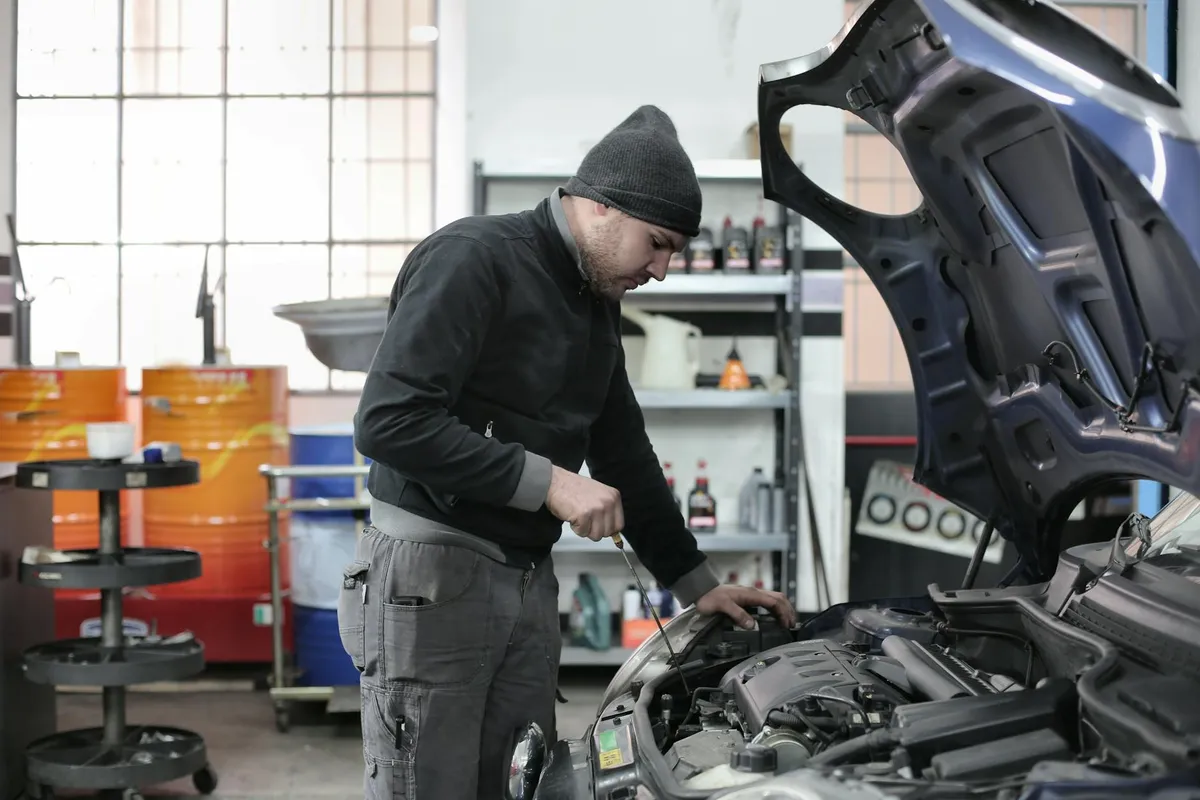
Once you have the right gear installed, keeping your garage’s temperature steady is about simple, regular habits. A consistent climate protects your belongings and makes the space more usable year-round. Paired with garage temperature control insulation, you can minimize fluctuations. It keeps temps steady and reduces energy use.
I treat my garage’s climate system like my truck’s engine; a little preventive care prevents major breakdowns. Start with a seasonal seal check. Once in the spring and again in the fall, run your hand slowly around the perimeter of your garage door and any walk-through doors. You’re feeling for drafts. A significant gap or a brittle, cracked seal needs immediate replacement. I keep a spare bottom seal kit from Genie on my shelf because they’re universal and a quick fix.
For any forced-air heater or mini-split AC unit, filter cleaning is non-negotiable. I set a calendar reminder for the first weekend of every month. For my wall-mounted heater, I vacuum the filter with a brush attachment. For mini-split filters, I pop them out, rinse them in the laundry sink with mild dish soap, and let them air dry completely. A clogged filter makes your system work harder, costs you money, and can even be a fire hazard.
Don’t forget about vents and exhaust ports. Go outside and make sure your dryer vent, heater exhaust, and any foundation vents are clear of leaves, bird nests, or snow. A blocked vent can back dangerous fumes into your garage or cause a system to shut down.
If your system is hardwired, swap out a basic thermostat for a programmable one. I installed an Emerson Sensi thermostat, and it was a game-changer. You can program it to lower the heat or raise the AC when you’re typically not in the garage, like overnight or during the workday, which cuts energy use without you lifting a finger. It prevents the system from fighting huge temperature swings, which is easier on the equipment.
Finally, think about what’s in your garage. Storing paints, solvents, and chemicals on open shelves is a bad idea when temperatures cycle. These products can off-gas or even become unstable. I moved all of mine into a sealed, ventilated storage cabinet. The Keter model I use has sturdy latches and contains fumes perfectly. This one step dramatically improves your garage’s air quality and safety.
Monthly and Seasonal Checkup Tasks
Here’s the quick checklist I run through to keep everything in top shape. It takes 15 minutes and gives you real peace of mind.
- Inspect Door Seals: Look and feel for daylight, drafts, or damage. A dollar bill should have slight resistance when pulled from under a closed door.
- Test Carbon Monoxide Detectors: Press the test button. If you don’t have one near a fuel-burning appliance, install one immediately. I only use Kidde units with a digital readout.
- Clean Fan Blades: Dust buildup on ceiling or exhaust fan blades reduces efficiency. Wipe them down with a damp microfiber cloth during your monthly filter check.
- Check for Condensation: Look for wet spots or rust streaks on walls, especially near the floor or corners. This signals a humidity problem that needs ventilation or insulation attention.
Recommended Products for Garage Climate Control

You don’t need expensive, complex systems to make a big difference. Start with the right materials and tools. Focusing on these few core product categories will let you seal, insulate, and monitor your garage like a pro.
A Good Quality Silicone Sealant
Your first line of defense is stopping drafts. For gaps and cracks in the framing around your garage door, windows, or where the walls meet the floor, a premium 100% silicone sealant is my go-to. I avoid latex or acrylic blends here because they can crack and shrink with the extreme temperature swings a garage sees. A pure silicone sealant stays flexible for years, creating a waterproof, airtight seal that keeps conditioned air in and pests out. Apply it with a standard caulking gun, smooth the bead with a wet finger, and let it cure fully.
Foam Insulation Boards
For insulating garage walls, especially if they’re unfinished, rigid foam insulation boards are a fantastic DIY solution. I typically use the extruded polystyrene (XPS) type-it’s moisture-resistant and has a high R-value per inch. You can cut it with a utility knife and fit it between the wall studs. The critical step is to use a can of spray foam to seal all the edges and gaps between the board and the framing; this stops thermal bridging and air leakage. It’s a straightforward upgrade that dramatically reduces heat transfer.
A Garage Door Insulation Kit
Your garage door is often the largest, least insulated surface in the space. A retro-fit insulation kit is one of the most cost-effective projects you can do. These kits usually contain pre-cut panels of reflective foam board. I’ve installed several, and the key is to clean the door panels thoroughly with rubbing alcohol first so the adhesive backing sticks properly. This single upgrade can noticeably reduce outside noise and make temperature control much easier, summer and winter. For an even bigger impact, consider insulating the entire garage door. It helps seal drafts and can improve year-round energy efficiency when used with these kits.
A Reliable Plug-In Hygrometer
You can’t manage what you don’t measure. A simple digital hygrometer that shows temperature and humidity is essential. I keep one plugged in near my workbench. Monitoring the humidity level helps you prevent tool rust and wood warping, telling you exactly when you need to run a dehumidifier. Look for one with a clear display and a memory function that records highs and lows so you can track conditions when you’re not in the garage.
A Durable, Oil-Filled Radiant Electric Heater
When you need active heat, safety is the priority. For my woodworking projects, I use an oil-filled radiant heater. It doesn’t have exposed, glowing-hot coils or a fan that blows dust and fumes around. The heater warms the oil inside, which then radiates heat steadily into the room. This makes it safe for unattended, overnight use when you’re letting a stain or finish cure, as there’s no open ignition source. Just ensure it’s on a dedicated circuit and kept clear of any flammables.
A Dual-Hose Portable AC Unit
If you decide air conditioning is necessary, skip the single-hose models. I learned this the hard way. A single-hose unit pulls your already-cooled indoor air to exhaust outside, creating negative pressure that sucks hot air back in through every crack. A dual-hose portable AC has a separate intake hose, so it uses outside air to cool its condenser, which is far more efficient and won’t depressurize your garage. Just be prepared to properly seal the vent kit in a window or a wall sleeve.
When to Call a Professional for Garage Climate Control
I love a good DIY project as much as anyone, but there are a few lines you shouldn’t cross in your garage. When you’re planning a garage conversion, the DIY vs pro decision is a big one. Knowing when to call a pro isn’t a sign of weakness; it’s smart planning that protects your home, your wallet, and your safety. We’ll compare these options in the next steps.
Installing a Mini-Split Air Conditioner
You can mount the indoor and outdoor units yourself and even run some of the conduit. The hard stop comes with the refrigerant lines and the final electrical connections. This isn’t like wiring a light switch. A licensed HVAC technician has the tools to pressure-test the system, pull a vacuum on the lines, and charge it with the exact amount of refrigerant. I once helped a neighbor who tried to DIY this and pierced a refrigerant line; the repair bill was triple what the professional install would have cost.
Extending Your Home’s HVAC System
If your garage is attached, tapping into your home’s existing furnace and AC seems logical. This is almost always a job for a professional HVAC contractor. They calculate the needed duct size and airflow so you don’t weaken the climate control in your home. More critically, they ensure the installation follows code to prevent backdrafting, where fumes from your garage or car could be sucked back into your home’s living spaces. It’s a serious health risk you don’t want to gamble with.
Dealing with Knob-and-Tube Wiring or Asbestos
If you open up a wall or ceiling in an older home and see old ceramic knobs with fabric-wrapped wires, or suspect fluffy, gray insulation, stop your project immediately. Knob-and-tube wiring can’t handle the load of modern heaters or AC units and is a fire hazard if modified incorrectly. Asbestos insulation requires specialized abatement. I won’t touch either. For these hazards, you need a licensed electrician or a certified asbestos abatement professional, period.
Any Doubt About Electrical Loads or Ventilation
Garage heaters, especially 240-volt units, demand a lot of power. Asking an existing circuit to handle more than it’s rated for can melt wires inside your walls. If you’re not 100% confident calculating loads or running a new dedicated circuit from your panel, hire an electrician. The same goes for ventilation for a propane heater or managing humidity. The fee for a one-hour consult is far cheaper than the cost of an electrical fire or a garage full of structural rot.
Garage Climate Control FAQ
What’s the single most effective upgrade for immediate comfort?
Without a doubt, air sealing and insulating your garage door. This massive, thin metal panel is your biggest thermal weak spot. An insulated garage door along with a DIY insulation kit and new bottom seal will dramatically reduce drafts and radiant temperature transfer, making any heating or cooling system work far more efficiently.
I only use my garage occasionally. Is a portable or permanent heater better?
For true occasional use, a portable electric heater is simpler. However, for safety and efficiency, a permanently installed hardwired unit is superior. It eliminates the risks of tip-overs and exposed coils near flammables, and provides consistent, thermostat-controlled heat without storing fuel or running cords.
How do I quickly know if my garage humidity is too high?
Buy a plug-in digital hygrometer. If it consistently reads above 55% Relative Humidity, you have a problem. Visual signs include rust on untreated tools, a musty smell, or condensation on walls and windows. This means you need to improve ventilation or add a dehumidifier.
Can I really cool my garage with just a box fan?
Yes, but strategically. A box fan is excellent for spot cooling and nighttime purge ventilation. Place it in a window or door blowing *out* to actively exhaust hot air, pulling cooler air in through another opening. For all-day summer heat, you’ll need a powered attic fan or mini-split to actively manage the temperature.
When should I absolutely call a professional instead of DIY?
Call a pro for any work involving refrigerant lines (mini-split install), modifying your home’s main HVAC ductwork, or assessing your electrical panel’s capacity for a new 240V circuit. Also, immediately hire certified experts if you encounter outdated knob-and-tube wiring or suspect asbestos insulation during any project.
Final Thoughts on Managing Your Garage Climate
Based on my years in the trade, the single most important step is to properly air-seal and insulate your garage first; this creates a stable base so any heating or cooling system you add doesn’t waste energy fighting constant drafts.
- Invest in quality insulation like Owens Corning Foamular rigid boards for the walls-in my shop, they outperformed fiberglass batts by stopping thermal bridging and resisting moisture.
- Control humidity with active ventilation; I’ve installed several Hurricane Classic exhaust fans for clients, and they reliably move air without the motor burnout I’ve seen in cheaper models.
- For consistent temperature, a ductless mini-split from Mitsubishi is my go-to; it’s more efficient and safer for permanent installation than trying to manage multiple plug-in heaters.
- Never overlook the garage door seal; I use and recommend the Incinolet P401 weatherstrip because its dense rubber compresses well for a long-lasting, airtight seal against the elements.