
How Do You Properly Store Paint in a Garage to Prevent Freezing, Spoiling, and Separation?
If you’re worried your garage will ruin leftover paint, I get it-I’ve wasted cans myself by storing them wrong. Let me walk you through the simple steps I use to keep paint ready for touch-ups.
We will cover selecting the safest garage location, sealing cans with a mallet and plastic wrap, and choosing affordable storage bins that work.
I’ve managed paint storage in my own garage for years, testing techniques on various brands to find what actually prevents waste.
First, Know Your Garage and Your Paint
Before you store a single can, you need to understand your garage’s climate. I always start by checking the temperature with a basic digital thermometer from Amazon, leaving it in different spots for a full 24-hour cycle. You’re looking for the coldest spot, which is almost always near the garage door or an uninsulated exterior wall. Humidity is another factor; a simple meter can tell you if moisture is creeping in from your concrete floor, which is especially important for climate control in garages.
This quick check tells you if you’re dealing with a mild, temperature-stable space or an environment that will aggressively ruin your materials.
Your paint type matters too. Latex (water-based) paint is the most common and is surprisingly resilient, but it will freeze and be ruined if it dips below freezing. Oil-based paints are a bit tougher in the cold but can thicken and become unusable. Aerosol spray paints are the most temperamental; the propellant is sensitive to both high heat and extreme cold.
So, can you store paint in a garage? The answer is a cautious “yes, if.” Your garage must stay above freezing in winter and below about 90°F in summer. A garage that gets very cold is a hard “no” for latex paint. A hot garage accelerates spoilage and separation for all types.
This logic applies to other chemicals too. I’ve seen people store bleach in a hot garage, and it’s a bad idea. The heat breaks down the sodium hypochlorite, making it less effective much faster. For safety and potency, store bleach and other cleaners in a cool, dark place inside your home.
The Garage Pro’s Step-by-Step Storage Method
Rushing to put a paint can away after a project is how you end up with a solid brick of useless pigment. Here’s my exact routine, developed after salvaging dozens of cans for touch-ups.
- Wipe the can’s groove and lid completely clean with a rag. Any dried paint here will prevent a proper seal. I keep a box of shop rags solely for this job.
- Place the lid on squarely. Using a rubber mallet, not a hammer, tap firmly around the entire perimeter. The mallet provides firm, even pressure without denting the can’s seal.
- Grab a paint marker, like a Sharpie Oil-Based Paint Pen. Label the can with the room, date, and sheen. Writing directly on the lid with the color name isn’t enough; you need the project details for future touch-ups.
- Give the sealed can one last, vigorous stir or shake. This re-incorporates the solids and liquids, fighting separation before it even starts during storage.
Choosing and Preparing Your Storage Container
You might be tempted to pour leftover paint into a fancy glass jar or a clean plastic milk jug. From my experience, stick with the original metal can. The metal provides a better barrier against air exchange than plastic, which can breathe over time and cause skinning. Glass is brittle and a safety hazard if dropped in the garage, especially when you’re painting metal surfaces like garage doors.
The manufacturer designed that can specifically for their product; it’s the most reliable container you have. If the original can is damaged, then transfer to a clean, sealable container designed for paint, like a dedicated plastic paint jug from the hardware store.
Spray paint needs special care. Always store it upright. I keep mine in a small, heavy-bottomed cardboard box on a shelf to prevent them from tipping over. The valve can clog if the can is stored on its side, and a falling can could damage the nozzle.
Finding the Right Spot in Your Garage
Where you place the can is as important as how you seal it. Never set paint directly on a concrete floor, especially when preparing it for painting. The floor is the coldest surface in winter and draws moisture, which leads to rust on the can. Get it up on a shelf.
Stay away from exterior walls and the main garage door. These areas have the widest temperature swings. Instead, look to the wall that connects your garage to your house–this is an interior wall. The thermal mass of your home helps buffer temperature extremes, making this wall zone the most stable spot in your entire garage. That stability makes it a prime location for any garage temperature control and insulation efforts.
A sturdy metal shelf unit placed against this interior wall is ideal. Store your paint cans on a middle shelf, not the very top (which collects heat) or the bottom (which is colder). Organize them by type: all latex together, all oil-based together, and all aerosols together. I also group them by project-all “Living Room Redo 2023” cans in one spot-so I’m not digging later.
Troubleshooting Common Paint Problems
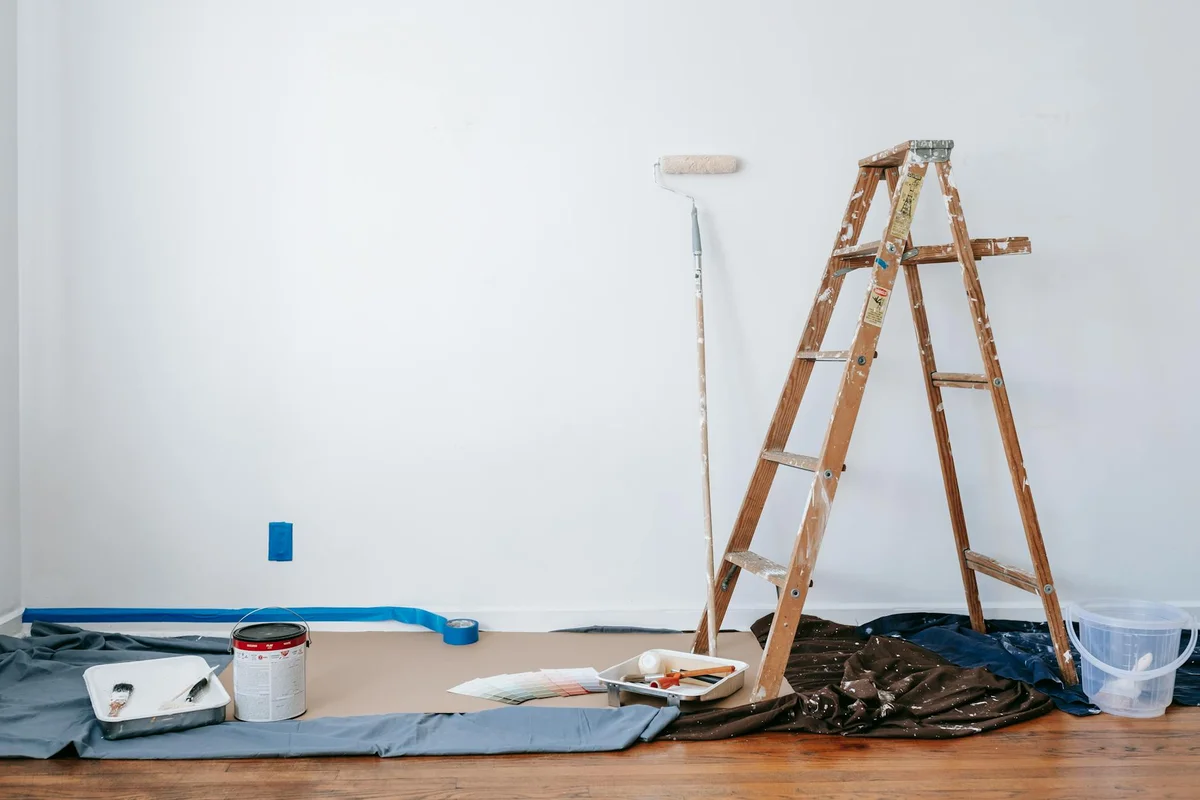
Here’s what you need to know about the three big enemies of stored paint and how to beat them.
How to Prevent Paint from Freezing
Freezing is the quickest way to ruin your leftover paint. The temperature danger zone starts at freezing (32°F) for water-based latex and acrylic paints. Oil-based (alkyd) paints can handle a bit more cold, but anything below 40°F is asking for trouble. If your garage is uninsulated and you live in a cold climate, it’s probably too cold for paint.
For a garage that only dips near freezing on the coldest nights, you can create a micro-climate. I use a simple insulated storage cabinet. A basic metal cabinet with some foam board insulation glued to the inside helps a lot. You can also use a small, cabinet-style electric heater set to a low, safe temperature if the space is insulated and you have a safe, dedicated outlet. To keep the space reliably within a narrow temperature band, consider a simple garage temperature control setup. Even a small thermostat or smart controller can help maintain a stable climate without daily adjustments. If your garage regularly gets below 20°F, it is not a suitable place for long-term paint storage, period.
How to Prevent Paint from Spoiling or Skinning Over
Spoilage and that thick skin on top happen because of air and gunk getting in the can. Every time you open it, you introduce contaminants. The lid seal is your first line of defense, and it’s often terrible.
This is where the plastic wrap trick saves the day. After you’re done pouring paint, take a sheet of plastic wrap and press it directly onto the surface of the paint. Push out all the air bubbles. This creates a direct barrier. Then, put the lid on and seal it. I use a rubber mallet to tap the lid edges evenly-it seals much better than hammering with a regular hammer. Spoiled paint has a foul, rotten smell, often with visible mold or an unusually chunky texture. If you see this, do not use it. You must dispose of it as hazardous household waste at your local facility.
How to Prevent or Fix Separated Paint
Separation is completely normal; the heavier pigments settle to the bottom over time. Your job is to mix them back together thoroughly. For a quart or gallon can, a simple wooden stir stick from the paint store works, but you have to scrape the bottom and corners aggressively. For anything larger, or if you have several cans, a drill mixer is the only real tool for the job. I keep a Jiffy brand mixer attachment for my drill for up to 5-gallon buckets.
Let’s put one old myth to rest: storing the can upside down does not prevent separation. Storing paint cans upside down often leads to a poor seal and dried paint around the rim, which guarantees a mess next time you open it. A good seal and an occasional gentle shake are far more effective.
Recommended Products for Garage Paint Storage
Having the right gear turns paint storage from a hassle into a simple routine. Here’s what I use and recommend.
- Heavy-Duty Shelving: You need sturdy, open metal shelves. I prefer brands like Husky or Gladiator with a welded, grid-style deck. They hold weight, resist spills, and let air circulate around the cans.
- Sealed Plastic Storage Bins: For small touch-up cans or spray paints, a clear, latching storage tote is perfect. It contains any drips and keeps dust off the containers.
- Climate Control for Insulated Spaces: If your garage is insulated but chilly, a small, oil-filled radiant heater or a specifically designed cabinet heater can maintain a safe temperature zone. Never use a propane or kerosene heater for this purpose.
- The Right Hand Tools: A dedicated paint can opener (the kind with a sharp end for prying and a rounded end for tapping lids) prevents lid damage. As I mentioned, a small rubber mallet is my secret weapon for getting a perfect, dent-free seal every time.
Maintenance & Cleaning Routine for Your Paint Storage Area
Your paint storage system needs a little attention to keep it working. Think of it like changing the oil in your car. A simple, scheduled routine prevents big headaches later.
I do a quick check every three months. It takes me about 10 minutes. Here’s my exact process.
- Put on a pair of nitrile gloves. Old paint can have nasty stuff in it.
- Pick up each can. Look at the lid’s seal for any rust spots or dried paint drips that could break the seal.
- Feel the bottom rim of the can for stickiness, which means a slow leak.
- Wipe down your shelves or rack with a damp microfiber cloth. Dust attracts moisture, and moisture causes rust.
- Finally, check your thermometer. Was there a night it spiked above 85°F or dipped near freezing? That tells you if your insulation needs help.
An annual purge is non-negotiable for a safe, usable garage. Once a year, I pull every single can out. I open any that are over three years old and stir them with a clean paint stick. If it’s chunky, smells sour, or has a thick rubbery skin, it’s done. This step is crucial as part of your garage declutter, deep clean, and organization routine.
For disposal, never just toss it in the trash. I take old paint to my local household hazardous waste (HHW) collection site. It’s usually free for residents. Check your county’s public works website for locations and dates.
Keeping the area clean and dry is your best defense. A rusty can will eventually leak and ruin the shelf and anything below it. I use a dehumidifier in the summer. A damp label falls off, and then you’re left guessing if that can is “Eggshell White” or “Barn Red.” A strip of clear packaging tape over the label protects it perfectly.
From the Log: A Pro-Tip on Lid Seals
Here’s a trick I learned after ruining a half-can of expensive exterior paint. The metal lid on a paint can never makes a perfect seal, no matter how well you hammer it. Air sneaks in and the paint starts to form a skin.
My fix is simple and costs pennies. Before I put the lid back on, I tear off a square of regular plastic wrap-the kind you use in the kitchen. I lay it flat over the open can so it completely covers the rim.
Then, I seat the metal lid on top of the plastic wrap and tap it home with a rubber mallet. The plastic gets compressed into every groove, creating an airtight, flexible gasket.
This secondary seal locks out air and moisture far better than the metal-on-metal contact ever could. I’ve used this method on cans stored for five years, and when I opened them, the paint was as good as the day I sealed it. It works on both water-based and oil-based paints. Keep a roll of plastic wrap on your paint shelf right next to your mallet.
Garage Paint Storage: Pro-Level FAQ
My garage gets cold. If I find a frozen can, can I thaw and use it?
For latex paint, no. Once frozen, the emulsion is permanently broken and cannot be re-mixed. For oil-based, thaw it slowly at room temperature and stir aggressively with a drill mixer. If it remains lumpy or grainy, it’s ruined and must be disposed of properly.
Beyond the plastic wrap trick, how do I keep my labels from peeling or fading?
Slap a strip of clear packaging tape over the entire label. This seals it against moisture and grime. For an extra pro move, also write the key details (room/date) directly onto the tape with a permanent marker so the info survives a spill.
What’s the fastest way to check if stored paint is still good without opening every can?
Do the “shake and listen” test. Shake the can vigorously. If you hear a solid “thunk” of a settled mass, it’s severely separated but may be salvageable. If you hear a sloshy liquid with no resistance, the consistency is likely fine. Any can that feels swollen or has a bulging lid should be handled with extreme caution and disposed of.
I sealed a can perfectly, but now the lid is rusted. What did I do wrong?
You stored it directly on a concrete floor or against a damp wall. Moisture wicks up and corrodes the metal. Immediately move all cans to a dry, middle shelf. Light surface rust on the lid can be cleaned, but deep rust compromises the seal-transfer the paint to a new, clean container.
Is a basic plastic storage tote enough insulation for a slightly chilly garage?
No. A plastic tote only contains drips and dust; it provides zero thermal insulation. For real cold protection, you need an insulated cabinet or a small, thermostatically-controlled space heater in an already insulated garage (proper garage insulation). The tote is for organization, not climate control.
You recommend a drill mixer for separation. What’s the technique to avoid a mess?
Use a low speed and insert the mixer at an angle before turning it on to prevent splashing. Slowly move it across the bottom and around the can’s edges for a full minute. For cans stored over a year, also run a putty knife around the bottom rim to dislodge any cemented pigment before mixing.
Your Plan for Perfect Paint Storage
The single most important thing you can do is treat your garage paint storage like a separate, climate-controlled project, not an afterthought. From my years of organizing workspaces, I’ve found that a dedicated, intentional system prevents almost every common paint problem and helps organize and declutter your messy garage. Your key takeaways are straightforward:
- Always store cans off the concrete floor on a simple wooden shelf or pallet to manage temperature and moisture.
- Use a basic thermometer to actively monitor your garage’s climate, because guessing will lead to ruined paint.
- Invest five minutes in labeling every can with the room, date, and sheen using a permanent marker-your future self will thank you.
- Dispose of old, unusable paint responsibly through your local hazardous waste program to keep your space safe and organized.