
What Do You Really Need for a Garage Gym?
Looking at your garage and feeling stuck on what to buy first? I will guide you through the practical accessories that build a durable, safe space without the guesswork.
We will cover flooring to shield your concrete, intelligent storage solutions, and the handful of tools that offer the most workout variety.
My advice comes from years of installing and maintaining garage systems, where I learned which products hold up and which ones fail.
Can I Turn My Garage Into a Gym?
You can, and it’s a fantastic project. The first step is a safety and space check. Don’t skip this part. It saves money and headaches later.
Start by taking basic measurements of your open floor space, width, length, and most importantly, your ceiling height. A standard power rack needs about 8 to 9 feet of clear height. Next, check for moisture. Feel the walls on a humid day and look for water stains or efflorescence (that white, powdery stuff) on the concrete. That tells you if you need to address a drainage or sealing issue first. Finally, note where your electrical outlets are. You’ll need them for fans, lights, and maybe a speaker system.
Assessing Your Garage Space and Structure
Now, let’s get specific about your garage’s bones. For large equipment like a power rack, measure twice. I use a 25-foot Stanley tape measure for this. You need to know the rack’s footprint and then add at least 2 to 3 feet on all sides for plate loading, safeties, and your own movement.
Garage door clearance is critical. Mark the full arc of your door’s path when it opens. I’ve seen people set up a bench press only to find the garage door track is right where they need to walk the bar out. It’s a frustrating mistake. You should measure the garage door opening correctly before placing any equipment.
Anything you hang from the ceiling or walls must be anchored into solid wood framing. Use a stud finder like my trusty Zircon to locate wall studs. For the ceiling, you’re looking for rafters or joists, not just drywall. If you plan to hang a heavy bag or gymnastics rings, you may need to reinforce the ceiling with a mounting plate that spans two joists. If your joists look thin or you’re unsure, consult a structural engineer. It’s cheaper than a collapsed ceiling.
Don’t forget your environment. Good LED shop lights, like the Barrina T5s I installed, make a huge difference for safety and motivation. Plan for a box fan or even a vent fan to move air, especially in summer.
Common Garage Gym Setup Mistakes to Avoid
I’ve fixed a lot of garage gyms. Here are the big three errors I see all the time.
First, placing equipment directly on bare concrete. Concrete is porous and abrasive. It will rust your barbell sleeves and chew up your bumper plates. It’s also brutally hard on your joints. Always use a protective floor.
Second, overloading storage. That slatwall panel from the big box store might hold tools, but it’s not rated for forty-five-pound plates. I once had a client hang a set of Olympic plates on a generic pegboard system; it pulled right out of the wall. Always check the manufacturer’s weight rating for any wall or ceiling storage system and follow it precisely.
Third, a poor layout that blocks function. Your garage door still needs to open. You might still want to park a car in there someday. Leave a clear path. If the door won’t open or close reliably, the layout might be the culprit. I sketch the layout with the door open and the car inside to be sure I’m not blocking critical access.
Planning Your Garage Gym Layout
A good layout is like a kitchen work triangle. It creates efficient flow between your key areas. I zone the space into three parts: the strength area, the cardio or functional area, and the storage wall.
For a powerlifting focus, your strength zone is king. Center your rack, platform, and bench. Your storage for barbells and plates goes right next to it. You need less open floor, but more dedicated space for heavy, static lifts.
A CrossFit or functional fitness setup is different. You need a large open area for dynamic movements like kettlebell swings, double-unders, and burpees. The rack is pushed more to a wall or corner. Your layout prioritizes a clear, central “pain cave” for the workout of the day.
Here’s a simple way to visualize a CrossFit garage: Imagine a “U” shape. One leg of the “U” is your storage wall with racks for weights, kettlebells, and a pegboard for bands. The base of the “U” is your strength area with a squat rack and bench. The other leg is your cardio corner for a bike or rower. The big open space in the middle of the “U” is your functional workout floor.
Creating a Floor Plan for Equipment and Movement
The best tool for this isn’t software, it’s a roll of blue painter’s tape. Pull your car out, clean the floor, and start taping.
Tape out the exact footprint of your power rack, your treadmill, your weight tree. Mark where the barbell will roll on the floor. This physical map shows you immediately if you have enough room to safely rerack a heavy squat or swing a kettlebell.
Once everything is taped, walk the space. Pretend you’re doing a workout. Can you move from the rack to the open floor without tripping? Is there a clear, wide pathway to get equipment in and out of the garage? I always leave at least a 3-foot wide “lane” from the main door to the back wall. This planning step prevents you from bolting down a rack only to realize you can’t get your new rower past it.
The Gearhead’s Checklist: Essential Gym Equipment

Building a garage gym is like assembling a toolkit. You start with the fundamentals that let you do 90% of the work. Everything else is a specialty add-on for specific jobs. My rule is to buy for the garage environment first, which means prioritizing rust resistance, easy cleaning, and tolerance for temperature swings.
Your non-negotiable basics are a sturdy rack, a good barbell, enough weight plates, and a solid bench. These four items form the unshakable core of any strength training space. The nice-to-have items come later, like specialty bars, cable systems, or dedicated machines, and should only be considered after your core is rock solid and your remaining space and budget are assessed.
Garage Gym Weight and Strength Equipment
This is where you invest. Cheap gear here isn’t a bargain, it’s a safety hazard. I’ve assembled and used racks from Titan Fitness, Rogue, and REP Fitness. Here’s the shortlist that works.
- Power Rack or Squat Stands: A full power rack is the safest single purchase you can make. It provides catch bars for failed lifts and anchor points for pull-ups and bands. I specifically recommend a bolt-together rack over a welded one for garage use. A welded unit is one rigid piece, and if your garage floor has even a slight slope or imperfection, you’ll fight to get it perfectly plumb. A bolt-together rack lets you adjust each upright independently during assembly to account for an uneven floor. The adjustability also makes it easier to move or reconfigure later if you change your layout.
- Barbell: Get a 45lb, 20kg Olympic bar. A basic black oxide or bare steel bar from Rogue or American Barbell is perfect. Avoid cheap chrome bars; the coating can chip in a garage setting and then rust forms underneath.
- Weight Plates: Bumpers (rubber) are great for deadlifts and Olympic lifts to protect your floor. For general use, I prefer cast iron plates because they’re more compact on the bar, letting you load more weight. A mix is ideal: bumper pairs for your heaviest deadlifts, and iron for everything else.
- Bench: A simple, flat, adjustable bench is incredibly versatile. Look for one with a wide, stable base and a thick pad. I’ve had a REP Fitness AB-3000 for years-it goes flat, incline, and decline, and the build quality handles heavy use.
- Adjustable Dumbbells: While not a strict “basic,” a set like PowerBlocks or Nuobells saves a tremendous amount of space compared to a full rack of fixed dumbbells. They are a game-changer for garage gyms where square footage is precious.
Conditioning and Cardio Accessories
You don’t need a fancy machine. Effective conditioning gear is often simple, durable, and easy to store against a wall when not in use.
- Jump Rope: A basic PVC speed rope is cheap, indestructible, and provides a fantastic warm-up or cardio blast.
- Kettlebell: One or two kettlebells (e.g., 35lb and 53lb) offer endless conditioning and strength circuits. Get powder-coated ones; the coating withstands being dropped on horse stall mats far better than painted finishes.
- Plyo Box: A wooden or sturdy metal plyometric box is fantastic for step-ups, box jumps, and dips. If you’re handy, you can build one from plywood. If buying, ensure the weight rating far exceeds your own.
- Rowing Machine or Bike: For sustained cardio, a Concept2 rower is the garage gold standard. It’s metal, has few moving parts, and can live in a corner. Air bikes like the Rogue Echo are also brutally effective and built like tanks.
For sports-specific training, like building a batting cage, the key is secure overhead anchoring and a quality net. You cannot rely on drywall or a single rafter. I helped a client set one up using a heavy-duty baseball net from a brand like Jaypro Sports. We used large eye bolts screwed into multiple ceiling joists to distribute the load, not just into the drywall. The net was then suspended from these anchors with aircraft cable and carabiners, creating a stable tunnel. The side nets were anchored to the wall studs using more eye bolts. It takes careful planning, but it turns dead garage space into a functional training lane.
How to Build a Bar for Your Garage Gym
A proper pull-up bar is the anchor of a serious home gym. While you can buy a standalone rack, building a bar directly into your garage’s structure is more permanent and saves precious floor space. The single most important factor isn’t the bar itself, but what you attach it to. Your home’s framing must handle the dynamic load of your entire body weight in motion, which is far greater than the static weight of the bar.
For this project, you have two main paths: mounting a bar directly between two wall studs or building a simple freestanding frame. The stud-mounted method is cleaner and uses your garage’s existing strength, but you must hit the studs dead center. The freestanding frame is more flexible in placement but requires more materials and floor space. Make sure you follow proper garage wall framing construction techniques if you choose the stud-mounted option.
DIY Chin-Up Bar Construction Steps
Gathering the right tools and materials before you start prevents mid-project frustration. Here’s what you’ll need for a basic stud-mounted bar:
- Tools: A reliable stud finder (I trust my Zircon multi-scanner), a 4-foot level, a power drill, a wrench set, and a pipe wrench.
- Hardware: 1/2-inch diameter galvanized steel pipe, schedule 40. I prefer a 1.25-inch outer diameter for a solid grip. You’ll also need two floor flanges and four 3-inch long, 1/2-inch diameter lag bolts with washers.
Mounting between studs is the most common and secure method for a garage gym. Follow these steps:
- Use your stud finder to locate two studs. Mark their exact center lines. Studs are typically 16 inches apart, center-to-center.
- Hold one floor flange against the wall, centered on the first stud. Use your level to ensure it’s perfectly plumb, then mark the bolt holes. Repeat for the second flange on the other stud.
- Pre-drill pilot holes at your marks, slightly smaller than your lag bolt diameter. This prevents the wood from splitting.
- Secure the flanges to the wall by driving the lag bolts through the flange holes and into the studs. Tighten them down firmly with your wrench.
- Screw the length of steel pipe into one flange. Thread the other end into the second flange. Use the pipe wrench to get it snug, but avoid over-tightening and stripping the threads.
You can simplify this process with a pre-made bracket kit from brands like Rogue or Titan Fitness. These kits include heavy-duty brackets and a pre-cut pull-up bar. The main advantage of a kit is guaranteed engineering and powder-coated finishes that resist rust and hand sweat. Building from scratch with pipe from the hardware store is cheaper and lets you customize the width and height exactly, but the finish will be bare metal, which can feel slick and may corrode over time.
Safety Checks for Homemade Gym Bars
Your work isn’t done once the bar is installed. A failure during a workout can cause serious injury, so you must verify your setup.
Before you hang your full weight, perform a progressive load test. Start by hanging on the bar with your feet still firmly on the ground, applying about 50% of your weight. Gently bounce. Listen for any creaking or cracking sounds from the wall. Next, do a dead hang with your knees bent, keeping your feet ready to catch you. Finally, attempt a slow, controlled pull-up. Watch the flanges and the wall for any movement. If anything shifts or sounds wrong, stop immediately and re-check your bolts and stud placement.
Hardware can loosen over time due to the repeated stress of workouts and normal temperature changes in your garage. I make it a habit to check and re-tighten all lag bolts on my homemade equipment every six months. Just a quick quarter-turn with the wrench is often enough to take up any slack. This two-minute check is the best insurance policy for your long-term safety.
Protecting Your Garage Floor from Equipment Damage
I see too many garage gyms set up right on bare concrete. It’s a fast way to ruin your floor and your gear. A dropped weight doesn’t just make a loud noise; it concentrates hundreds of pounds of force onto a coin-sized area. That’s like hitting your concrete slab with a sledgehammer over and over.
This shock can crack the concrete, creating a rough, pitted surface that will grind down the bottoms of your barbells and dumbbells. Beyond the damage, a proper floor layer makes your workouts safer and more comfortable, giving you a stable surface that absorbs impact.
You have three main options for gym flooring: interlocking rubber tiles, rolled rubber mats, and horse stall mats. Think of them in terms of shock absorption, durability, and cost. In rubber flooring garage gyms, these choices shine for protecting concrete and reducing noise. They also handle dropped weights and heavy equipment with ease.
- Interlocking Rubber Tiles: These are the puzzle-piece squares you snap together. They’re great for a clean, professional look and are easy to install over a weekend. The shock absorption is good, but they can shift over time if not perfectly locked or if you drag heavy equipment across them. I’ve used the 3/4-inch ProsourceFit tiles from Amazon for a client’s lighter home gym, and they held up well for kettlebell and bodyweight work.
- Rolled Rubber Mats: These come in long rolls, usually 4 feet wide. They provide a seamless look, which I prefer for larger areas, as there are no gaps for dirt to collect. The downside is they’re heavy and can be tricky for one person to maneuver. You often need to seam them together with special adhesive tape. For pure shock absorption on a budget, a 3/8-inch thick roll is a decent start.
- Horse Stall Mats: This is the shop-tested, pro secret for the best value. Sold at farm supply stores like Tractor Supply, these are 4′ x 6′ mats that are a full 3/4 inch thick. They are incredibly dense, durable, and designed to withstand, well, a horse. They will deaden the sound and force of a dropped barbell better than anything else in their price range. The trade-off is their weight-each mat is over 100 pounds-and a strong rubber smell that needs to air out for a week or two.
Choosing the Right Gym Flooring
For any serious lifting with barbells, especially olympic lifts or deadlifts where you plan to drop the weight, you need that 3/4-inch thickness. It’s the minimum I recommend to protect your concrete slab from long-term damage. Thinner mats might protect your equipment’s finish, but they won’t save your floor from the shock.
Let’s get into the real-world pros and cons I’ve seen after installing these for clients.
Interlocking Tiles: The main pro is the easy, tool-free installation. The main con is cost; covering a large area gets expensive fast. I also find the edges can curl up if a heavy rack leg isn’t fully on a tile. They work, but for a dedicated weight area, I usually steer people toward a more solid solution like epoxy flooring.
Rolled Rubber: The seamless surface is a major pro for cleanliness. The biggest con is the installation hassle. You need a very sharp utility knife-I use a Milwaukee Fastback with heavy-duty blades-and a straight edge to get clean cuts. If your floor isn’t perfectly level, you might see ripples.
Horse Stall Mats: The unbeatable pro is the price-per-square-foot for such a thick, industrial-grade material. The cons are the initial smell, the incredible weight, and the fact the edges are rarely perfectly straight, leaving small gaps. I use a standard utility knife with a fresh blade for every two mats, scoring them deeply several times along a chalk line before they’ll snap cleanly.
Installation is straightforward if you prepare. First, clean your concrete floor thoroughly. Sweep, then mop with a degreaser. Any dirt or oil will prevent the mats from laying flat. Let it dry completely.
Lay out your mats or tiles and let them acclimate to the room temperature for 24 hours; this helps them relax and lie flat. For horse stall or rolled mats, use a razor knife. A standard box cutter won’t be enough. I prefer a locking utility knife with a hooked “roofing” blade for thicker rubber-it glides through with less effort. Always cut from the textured side, using a metal straightedge as a guide. For interlocking tiles, you can usually score and snap them.
Finally, if you’re using multiple mats, butt them tightly together. You can use a rubber seam tape on the underside if you want to prevent any movement, but the weight of your equipment usually keeps everything in place.
Smart Storage for Your Gym Accessories
Keeping your floor clear is the number one rule for a safe and functional garage gym. A cluttered floor is a trip hazard, especially when you’re focused on your form. Your primary strategy should be to use every inch of vertical space on your walls and ceiling. I’ll show you solutions that work, whether you want a quick store-bought fix or enjoy the satisfaction of a custom build. You might also weigh the pros and cons of garage floor mats to see if they belong in your setup. They can protect against spills and provide cushioning, but may require extra maintenance or not fit every space.
Wall-Mounted Racks and Pegboard Systems
Your walls are your most valuable real estate. For most homeowners, a wall-mounted system is the best starting point. It gets gear off the floor without eating into your workout square footage.
I’ve installed a lot of slatwall, like the kind from brands such as NewAge or Garage Escape. It’s typically a PVC panel with horizontal grooves. The major advantage of slatwall is its flexibility; you can slide hooks and baskets anywhere along the groove to reconfigure your layout as your gear changes. For a proper install, you must screw the panels directly into your wall studs. I use a DeWalt stud finder to locate them every time. Once mounted to studs, a good slatwall system can handle 50 to 75 pounds per square foot, which is perfect for dumbbells, resistance bands, and accessories.
If you’re on a tighter budget, heavy-duty pegboard is a classic for a reason. Skip the flimsy stuff; look for a 1/4-inch thick, tempered hardboard panel. Secure it with spacers behind the board so the hooks have room to lock in place. I’ve seen too many pegboard hooks pop out because the board was mounted flush to the wall.
For a custom, industrial look that holds serious weight, building your own rack from lumber and black iron pipe is a weekend project I recommend. Here’s the basic method I use:
- Buy a 10-foot length of standard 2×4 lumber and a 3-foot section of 1-inch diameter black iron pipe from the hardware store.
- Cut the 2×4 into two 3-foot horizontal rails and two 1-foot vertical supports.
- Secure the vertical supports to your wall studs with 3-inch deck screws.
- Attach the horizontal rails to the vertical supports, leaving a gap between them slightly wider than your pipe.
- Cut the iron pipe into 12-inch pegs. Slide them into the gap between the two horizontal rails-they’ll rest securely without any fasteners, making them easy to remove. This rack will hold hundreds of pounds of weight plates without a second thought.
Overhead and Freestanding Storage Ideas
Look up. If your garage has exposed ceiling joists or rafters, you have a bonus storage area perfect for bulky, lightweight items. This can free up space for other household items that need a more accessible place.
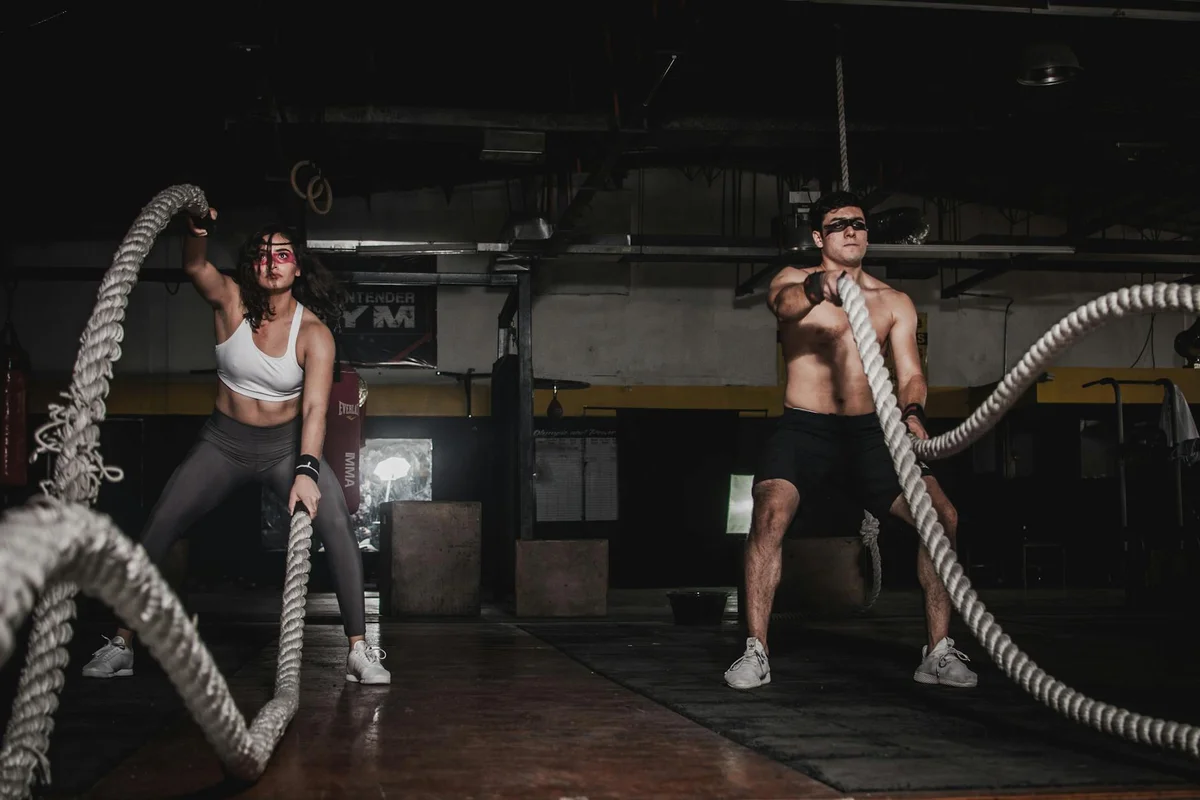
For storing things like yoga mats, gymnastics mats, or even long resistance bands, a simple pulley system is incredibly efficient. You can buy a ready-made “overhead storage rack” kit, or you can assemble your own with two pulleys, some rope, and a couple of large hooks screwed into a ceiling joist. I installed a system like this for my own battle ropes; I hook the ends together and hoist the whole coil up and out of the way when I’m done. Just be 100% certain you’re screwing into solid wood, not just drywall. For a tidier, higher-capacity option, consider an overhead storage rack pulley system that mounts to the joists and lifts bulky gear up and out of the way. These setups keep mats and ropes accessible while freeing floor space.
Not everything needs a permanent home. For items you use daily, like jump ropes or lifting straps, a portable solution keeps them handy. I keep a heavy-duty “fisherman’s hook” or a large utility hook on the side of my power rack. When I finish my workout, my rope just loops over it. You can find these hooks at any home center. This approach prevents the “where did I just set that down?” search and keeps the floor clear between sessions.
Maintenance & Cleaning Routine for Garage Gym Equipment
Your garage is a harsh place for nice things. The daily temperature swings and seasonal humidity changes create the perfect storm for rust and wear on metal equipment. A simple, consistent routine is the only thing that fights this off. Here’s the schedule I stick to in my own garage.
- Weekly: This is a quick 10-minute wipe-down. Focus on removing sweat and skin oils from bars, handles, and benches. A neglected weekly clean lets salt from sweat speed up corrosion.
- Monthly: This is your deep clean and inspection. Set aside 30 minutes. Check all bolts and fasteners on racks and benches for tightness. Inspect barbell sleeves and weight plates for any new rust spots. This is when you address small problems before they become big, expensive repairs.
Sticking to this simple weekly and monthly rhythm protects your investment from the garage’s tough environment.
Caring for Your Weights and Bars
Your barbell is the heart of the gym. I use a simple two-step process to keep mine in great shape. After every session, I run a dry microfiber cloth down the shaft to pick up moisture. For the knurling-the grippy part-I use a stiff-bristled horsehair brush, like the ones from Rogue Fitness. It gets the chalk and gunk out without damaging the metal.
For bare steel bars, not the shiny chrome or stainless ones, you need a light shield against rust. I keep a bottle of 3-in-1 Oil in my maintenance kit. Once a month, I put a few drops on a clean rag and give the bar a very light, even wipe. The key is a thin, barely-there coating; over-oiling will make the bar slippery and attract dust, creating a gritty paste you don’t want on your hands. If you have coated or stainless bars, you can skip the oil-just the dry wipe and brush is perfect.
Keeping Your Garage Floor and Space Clean
Rubber flooring is durable, but it traps dirt and moisture underneath if you don’t clean it right. First, always sweep. I use a simple push broom to get all the loose dust, chalk, and debris up. For mopping, mix a capful of a mild, pH-neutral floor cleaner (I use Simple Green) in a bucket of warm water. Avoid harsh chemicals or vinegar, as they can break down the rubber over time.
Wring your mop out so it’s just damp, not soaking wet, and go over the floor. The goal is to clean the surface, not flood it. Let it air dry completely. Twice a year, in spring and fall, pull up a corner of your flooring to check for moisture or condensation on the concrete slab. If you see any dampness or feel a musty smell, a small dehumidifier running a few hours a day makes a world of difference for your equipment and air quality.
Recommended Products for a Durable Garage Gym
Choosing the right gear is about longevity, not just a flashy start. The garage is a tough environment with temperature swings, dust, and moisture. Focus on materials that are easy to clean and resist corrosion from sweat and humidity, especially for camping and outdoor gear. From my own setup and helping others, here are the product categories that deliver lasting value.
- Rubber or Polyurethane-Coated Bumpers and Plates
- Powder-Coated or Bare Steel Racks and Benches
- Vinyl or Canvas Upholstery for Benches and Machines
- Galvanized or Stainless Steel Fasteners and Hardware
Flooring and Protection Products
Your floor is the foundation. A dropped 45-pound plate can crack concrete, and sweat will degrade plain mats. I’ve tested several options and keep coming back to two main types.
For the most durable and protective surface, 3/4-inch thick interlocking rubber tiles are my top pick. They are heavy enough to stay put, provide real shock absorption for lifts, and their seams allow for drainage and air circulation. I’ve had a set from a farm supply store in my own garage for five years; they’ve survived everything from deadlifts to oil spills and just need a hose-down to look new.
Rolled rubber matting is another excellent choice, especially for larger areas. Look for a smooth top surface; the textured diamond plate pattern is harder to clean. The seamless nature prevents sweat from seeping underneath. Rolled mats are perfect for creating a designated workout lane or covering a large space without visible seams.
An often overlooked accessory is the edge ramp. Moving a loaded weight sled or a heavy dumbbell rack across the lip of your flooring will tear it up quickly. A simple rubber transition ramp, which is just a thick, angled piece of rubber, protects your investment and makes moving equipment effortless.
Storage and Organization Products
Clutter is a safety hazard. Proper storage keeps your space usable and your equipment in good shape. I prefer systems that are open, accessible, and built to handle real weight without rusting.
For free weights, a weight tree is essential. Always choose a rack made of powder-coated steel over a chrome-plated one. In the humidity of a garage, chrome will eventually bubble and rust. Powder coating is far more resilient. My personal tree has a black powder coat, and after years of use, it still wipes clean with a damp cloth, with no signs of corrosion.
For barbells, specialty bars, and attachments, I rely on wall-mounted bracket systems. The key is to find one that uses standard hardware. Some proprietary systems lock you into buying only their expensive accessories. A simple, universal J-hook bracket mounted directly into your wall studs can hold multiple bars securely and costs a fraction of a branded system. This gives you total flexibility to add hooks, shelves, or other organizers as your gym evolves.
Garage Gym Maintenance FAQ: Expert Tips for Longevity
How do I prevent rust on my metal gym equipment in a garage environment?
Wipe down bars and weights with a dry cloth after each use to remove sweat and moisture. For bare steel, apply a light coat of 3-in-1 oil monthly; avoid over-oiling to prevent slippage and dust buildup.
What’s the safest way to secure a freestanding power rack?
Bolt the rack directly to the concrete floor using lag bolts and concrete anchors. Always follow the manufacturer’s specifications for bolt size and placement to eliminate any risk of tipping during use.
How can I control temperature and humidity in my garage gym?
Install a vent fan to circulate air and reduce moisture buildup. For winter, use a portable electric heater briefly during workouts, but keep it clear of equipment and flammable materials to ensure safety.
What should I do if my rubber flooring develops an odor or shows signs of wear?
Clean mats regularly with a mild, pH-neutral cleaner and allow them to dry thoroughly. For odors, sprinkle baking soda, let it sit, then vacuum; replace any severely worn sections to maintain floor protection.
Are there insurance implications for installing a home garage gym?
Notify your homeowner’s insurance provider to ensure equipment coverage and address liability concerns. Verify that all installations, like electrical or structural changes, comply with local codes to avoid policy issues.
Gearing Up for Your Garage Gym Journey
The single best thing you can do is start with a safe, protected floor and a few core pieces of versatile equipment, then build out your space over time based on your actual routine. I’ve set up enough of these spaces to know that a methodical approach always beats a rushed, crowded one. Your key takeaways are simple: protect your garage slab with durable interlocking tiles, invest in a quality rack and adjustable bench for foundational strength work, and use wall storage like slatwall panels to keep everything organized and off the floor. This creates a professional-grade space that lasts.
Evan Gunther
Evan is a general contractor operating in Columbus, Ohio servicing, maintaining and building residential and commercial garages for over two decades. He has personally redeveloped over 100+ garages and installed and reinstalled over 230+ garage doors in his long tenure. When it comes to giving your garage a face lift or fixing common issues, Evan's the pro. Feel free to reach out to him and follow his Garage Log blog for expert, fact based advice.