
What Is the Standard Garage Door Width for Your Home?
Getting the width wrong on a new garage door leads to costly reframes or a door that just won’t fit. I will explain the standard sizes so you can shop with confidence and avoid that headache.
This guide will walk you through the most common single-car and two-car garage door widths, how to measure your existing opening, and what to consider before you buy.
My advice comes from years on the job, measuring openings and installing doors for homeowners just like you.
First Thing’s First: Grab Your Tape Measure
You can’t guess this number, and you shouldn’t rely on the faded plans you found in a drawer. Even houses built at the same time can have slight variations. Ordering the wrong size door is an expensive mistake that wastes weeks.
You only need three tools: a good 25-foot metal tape measure (I trust my Stanley FatMax), a notepad and pen, and a safe step ladder. Don’t use a cloth tape; it can sag and give you a bad reading.
Here’s how to do it right:
- Set your ladder safely to the side of the opening. Measure the width of the rough opening-that’s the wood frame the door seals against, not the drywall or siding. Measure at the top, middle, and bottom.
- Write down all three numbers. Now, measure the height from the floor to the bottom of that same wood header. Measure on the left, center, and right.
- Write those down too.
Look at your numbers. For both width and height, you’re looking for the smallest, most consistent measurement. That’s your “sweet spot.” Door manufacturers size their doors to fit the smallest common opening to guarantee a proper seal, so we use that number, not the largest.
Finally, note two more spaces. “Side room” is the clear space from the side of the rough opening to any wall or obstruction-you need about 4 inches per side for the vertical track. “Headroom” is the space from the top of the rough opening to the ceiling or any beams; standard openers need at least 12 inches.
The Standard Single-Car Garage Door Explained
The most common width for a one-car garage door opening is 8 feet or 9 feet. It’s a simple answer, but the details matter, especially when considering the overall garage door dimensions for single, double, or RV doors.
An “8-foot door” is actually built to fit an opening that is 8 feet wide and 7 inches. That extra quarter-inch on each side is for the weather seal. So, if you measure your rough opening and get exactly 8 feet, an 8-foot door is your match.
For most newer builds and renovations, I recommend the 9-foot width. Cars have gotten wider, especially SUVs and trucks. A 9-foot door gives you a comfortable 6 to 12 inches of clearance on each side, which makes pulling in much less stressful and helps prevent dings.
The typical height has been 7 feet for decades, but that’s changing fast. Modern pickup trucks and SUVs often need more clearance. I’m now installing more 8-foot-tall doors than ever before. If you’re building new or doing a major remodel, go with the taller door. You’ll thank yourself later.
If you’re replacing a door, your new one must match your existing rough opening unless you’re ready for a major framing project. Changing the opening size means reframing the header, which involves structural work best left to a professional carpenter. Measure twice, order once.
Double the Cars, Not Just Double the Width: Two-Car Garage Doors
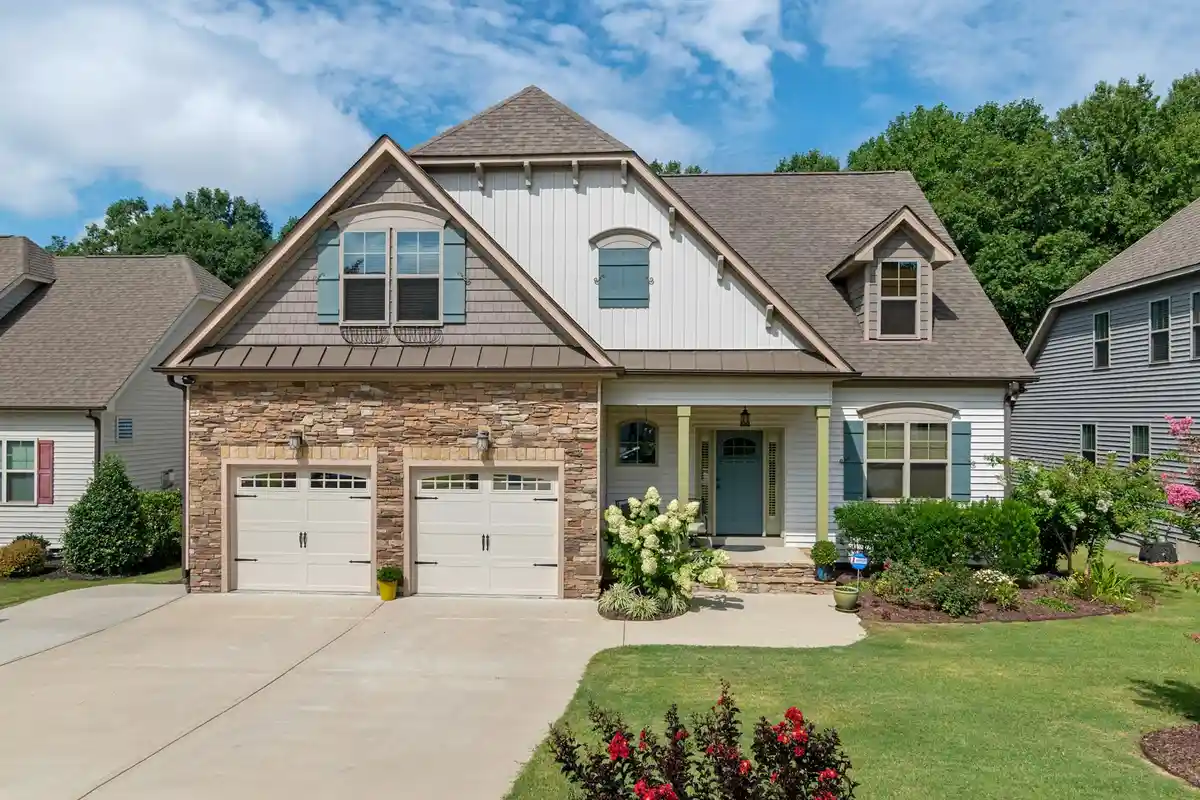
So, what is the standard width? A typical two-car garage door is 16 feet wide. You will find this size on countless homes. It is the default because it fits the standard garage footprint that builders have used for decades. Often, these dimensions are considered when planning the overall garage size for multiple vehicles.
This leads to another common question: how big is a 2 car garage in square feet? A 16-foot wide door usually serves a garage that is about 18 feet wide and 20 feet deep. Do the math (18 x 20) and you get about 360 square feet. That 18-foot width gives you a foot of wall space on each side of the door for framing and a bit of clearance when you pull in. Knowing the garage space square footage helps you plan storage, furniture placement, and the layout for more efficient use of the room. It’s a handy metric for budgeting upgrades and future changes.
Now, you have a choice: one 16-foot wide door or two separate 8-foot doors. I have installed both. The single 16-foot door gives you a clean, unbroken look with no center post to worry about when parking. My shop’s recommendation is the single door for its simpler appearance and because it eliminates the risk of clipping that center post with a mirror.
But it has a trade-off. A door that wide and heavy needs a robust opener. I always specify a commercial-duty opener, like the Chamberlain B1381, for these jobs. A standard homeowner model will struggle and burn out faster. Two separate 8-foot doors are easier on openers and let you open just one side, which can save energy. For larger trucks, SUVs, or just wanting more breathing room, an 18-foot wide double door is the upgrade. It is becoming more common as vehicles get wider.
Ease of Installation & Project Time
Let’s be direct about the work involved. On a scale of 1 to 10, with 10 being easy, I rate a full garage door replacement a 2 for a homeowner. It is a professional job. The high-tension springs are dangerous, and the weight of a 16-foot section is more than one person can safely manage during alignment.
Where you can help is in measuring and planning. That part is a 6 out of 10. A careful homeowner can do it. Get a good 100-foot steel tape measure, like a Stanley PowerLock. Measure the width of the rough opening between the framing, not the old door. Do it in three places: top, middle, and bottom. Write down the smallest measurement. Do the same for height.
Your active work for planning should take 1 to 2 hours. This includes measuring, noting any obstructions like light fixtures, and selecting your door and hardware. When the pros come, a two-person crew with experience will need 3 to 5 hours to remove the old door, install the new track and springs, and hang and balance the new sections.
If you are assisting, your job is to follow the lead technician’s instructions precisely. This is absolutely a helper-required job due to the length and weight of the door sections during installation. My last install on an 18-foot door required checking the concrete floor for level every four feet and using specific wedge anchors to secure the new track. This is not a place for guesswork.
Why Garage Door Height Is Changing (It’s Not Just 7 Feet Anymore)
For decades, the standard garage door height was 7 feet. If you have an older home, this is almost certainly what you have. I’ve serviced thousands of them. That height worked fine for decades of sedans and smaller trucks. However, when measuring your garage door opening, you’ll find that newer vehicles often require more clearance.
The new standard height for a single-car or two-car garage door is 8 feet. Builders have been using this as the default for new construction for the last 15-20 years. If you’re planning any garage door replacement in a modern home, you should expect to work with an 8-foot tall door, especially considering the standard garage dimensions used for ceilings.
The reason is purely practical. Vehicles are taller. Think of a modern full-size pickup truck like a Ford F-150 or a Chevrolet Silverado, or a large SUV like a Chevrolet Suburban. Their roof lines sit much higher. Now, add a roof rack or a cargo box for a family trip. That 7-foot door suddenly becomes a very expensive speed bump. I’ve seen more than a few fiberglass cargo boxes get sheared right off because someone forgot their garage was built to an old standard.
My rule of thumb is simple: measure your tallest vehicle, then add at least 12 to 18 inches of clearance. Grab a tape measure-I trust my 25-foot Milwaukee-and measure from the ground to the very highest point on your car, truck, or whatever you park inside. That includes antennae, roof racks, or loaded cargo boxes. Add that extra foot to a foot-and-a-half. That’s your ideal door height. It gives you a safe buffer so you never have to worry.
For homeowners with vehicle lifts, the conversation changes to “high-lift” track systems. A standard door track curves just above the door opening. A high-lift track extends vertically several feet up the wall before it curves, allowing the door to sit completely above a lifted vehicle. This is a specialized install, but it’s the only way to safely use a lift without your door being in the way.
Special Sizes and When You’ll Need Them
Not every house or need fits the common sizes. I see this all the time in my work. You might have a narrow lot, a special vehicle, or just want a certain look. Here’s what you need to know about the other options.
The “Almost Standard” 14-Foot Wide Double Door
Many older homes and townhouses on narrow lots use a 14-foot wide door. It’s a tight fit for two modern sedans or SUVs. You can get two cars in, but you’ll need to be careful opening doors.
This size is a compromise, giving you a two-car garage where a standard 16-foot door simply won’t fit in the building’s frame. If you’re replacing an existing 14-foot door, measure the rough opening carefully; swapping in a wider door is a major, costly structural project.
Standard 16-Foot Garage Door Dimensions
The true workhorse for most two-car garages is the 16-foot wide door. It usually comes in two heights: 7 feet or 8 feet. If you’re thinking about modifying the door’s width or height, plan ahead. Even small changes can affect framing, tracks, and clearance.
- 16′ x 7′: The classic size. It fits most cars, minivans, and smaller SUVs comfortably side-by-side with room to get out.
- 16′ x 8′: This is what I recommend for any new build or replacement if you have the headroom. The extra foot of height is perfect for taller SUVs, vans, or trucks with roof racks. It just feels less cramped.
In my own garage, I upgraded from a 7-foot to an 8-foot tall door, and the difference when backing my work van in was night and day. Always opt for more height if you can.
RV and Oversize Doors
These are for specialized storage. The singles are wide, and the doubles are extra wide.
- Single Oversize (10′ wide): Fits a large pickup truck with extended mirrors or a smaller recreational vehicle.
- Double Oversize (18′, 20′, or wider): Designed for full-size RVs, boats on trailers, or commercial vehicles. An 18-foot door is common for a “third bay” meant for an RV.
Installing an oversize door isn’t just about the door itself; it requires a heavier-duty opener, stronger springs, and reinforced framing, so factor that into your budget.
Non-Rectangular Shapes (Arch Top, Carriage House)
These doors add great curb appeal but change how you measure. A carriage house door with a faux hinge design or an arch top has a decorative shape inside the main rectangular panel.
You order these by the backing rectangle dimensions. For example, an arch top door will be listed as 16’x7′, but the arched section reduces the actual clear opening height in the center. You lose some functional space for that style.
Always look at the manufacturer’s specification sheet for the “clear opening” measurement on decorative doors. I learned this lesson early on when a client’s new truck antenna clipped the top of their beautiful arch door on the first try.
Maintenance & Inspection Routine
A garage door is the largest moving part of your home. A simple, consistent maintenance routine prevents most major repairs and keeps it safe. Here’s the schedule I use in my own home and recommend to clients.
Every 6 Months: The Listen and Look Check
Twice a year, take five minutes for a basic inspection.
- Operate the door and listen. Any new grinding, screeching, or popping sounds mean something needs attention, usually lubrication or a roller replacement.
- With the door closed, visually inspect the rubber weatherstripping along the sides and top. Look for cracks, tears, or brittle spots. Damaged seals let in drafts, dust, and pests.
Annually: The Lubrication Service
Once a year, give the moving parts a proper service. You’ll need a rag and a can of white lithium grease spray. I’ve tried a few brands and keep coming back to LubriMatic for its spray nozzle that gets into hinges easily.
- Disconnect the opener by pulling the red emergency release cord. Manually move the door halfway up.
- Spray a small amount of grease onto the hinge pins and the roller bearings at the end of each roller. Avoid getting grease on the door panels or the tracks.
- For the torsion springs (the big spring bar above the door), just a light spray on the coil is plenty. Never attempt to adjust or repair torsion springs yourself; the tension is extremely dangerous.
- Wipe down the bottom rubber seal with a damp rag to remove dirt and debris that can break down the rubber.
Monthly: The Safety Feature Test
This is the most important quick check. Modern openers have an auto-reverse feature to stop and reverse if the door hits something.
Test this feature every month without fail by placing a solid 2×4 piece of wood flat on the floor under the center of the door. Activate the door to close. The door must stop and reverse upward immediately upon contacting the wood. If it doesn’t, your opener needs professional service right away. This simple test could prevent a serious injury.
When NOT to Try This Yourself: Limitations & Safety
Knowing the right door size is one thing. Installing it is another. Some jobs are for pros only. Getting this wrong can lead to expensive damage, a door that doesn’t work, or serious injury.
Garage Door Springs Are Not a DIY Project
You should never, under any circumstances, try to replace or adjust the torsion springs on your garage door yourself. These are the heavy springs mounted on a metal bar above the door. They hold an extreme amount of tension to counterbalance the door’s weight. In my shop, we use special winding bars that are latched onto the spring cone. I’ve seen a cheap steel bar snap and whip across a garage. If that energy releases uncontrolled, it can break bones, cause lacerations, or worse. This is not a place to save a few hundred dollars. Hire a certified technician.
Never Install on a Compromised Frame
Think of the door frame as the foundation for your garage door. If it’s soft, rotten, or pulling away from the house, a new door is pointless. I was once called to a home where a homeowner installed a new Clopay door on an old, water-damaged wooden frame. Within months, the frame sagged, the tracks bent, and the door wouldn’t close. We had to tear everything out, replace the structural header and jack studs, and start over. Always fix the structure first, then install the door. Probe the wood around the opening with a screwdriver. If it sinks in easily, you’ve got rot that needs professional repair.
Call a Pro for Inconsistent or Out-of-Square Openings
If your careful measurements show the opening is more than an inch out of square (the top width is different from the bottom width, or the left height differs from the right), stop. Modern sectional doors need a reasonably square and plumb opening to seal and roll smoothly. I use a 4-foot level and a long tape measure to check. Trying to force a square door into a trapezoid-shaped hole means the rubber seals won’t touch, letting in drafts and pests. The opener will strain, and the door will likely jump off its tracks. A professional installer has the tools and know-how to shim and adjust the track system to compensate for minor irregularities, but major ones need a carpenter, not a door installer.
Converting from Single to Double is a Major Renovation
Swapping a single 9-foot door for a double 16-foot door isn’t a simple swap. You are altering the load-bearing structure of your home. The header (the beam over the door) holding up your house is now too small. This work always requires a building permit and likely a structural engineer’s stamp. A contractor must install a new, much larger header-often a laminated beam-and new support studs. I’ve helped homeowners navigate this process, and the door installation is the last, easiest step. Trying to skip the structural work is dangerous and illegal. Your city’s building department will not sign off on it, which can cause huge problems if you ever sell your home.
Making Your Final Choice: A Pro’s Checklist
You have the standard dimensions, but now you need to match them to your specific garage. This is where you make the smart choice that fits your life and your budget.
Your Five Key Decision Points
Don’t get overwhelmed by the brochure. Focus on these five practical items.
- Your Exact Rough Opening Size
I always use a metal tape measure, like a Stanley FatMax, because it stays rigid over long distances. Measure the width and height of the opening between the finished framing (the studs). Do this in at least three places-top, middle, bottom for width, and left, center, right for height. Write down the smallest measurement. This is your non-negotiable number when ordering a replacement door.
- Your Vehicle’s Height and Width
Grab your tape measure again. For height, measure from the ground to the highest point on your car or truck-this is often a roof rack, antenna, or satellite radio fin. For width, measure the widest point, usually the mirrors. Now, compare these to the clear opening size of the door you’re considering. You want at least 6 inches of clearance on each side and above. I’ve seen too many mirrors get clipped.
- Single vs. Double Door Style
This is about more than looks. A single, wide door (like a 16-foot wide model) gives you a completely unobstructed opening, which is great for backing in a boat or navigating a large truck. But it requires a heavier-duty opener and stronger springs. Two separate doors (two 8-foot or 9-foot doors) are more common, often less expensive to repair, and allow you to open only one side for small items, saving energy. Think about how you use the space daily.
- Insulation Value (R-Value) for Your Climate
If your garage is attached to your house or you use it as a workshop, insulation matters. A non-insulated steel door might have an R-value of 0, while a polyurethane-insulated door can reach R-17 or higher. Knowing insulation ratings helps you compare doors beyond price. Look at both R-values and U-factors to gauge how well a door resists heat transfer. In my cold climate, I always upgrade to an insulated Clopay door. It quiets the operation and keeps my workshop from becoming a freezer. If you live in a mild area, you might save the cost.
- Opener Compatibility
Not every door works with every opener. Torsion spring systems (the spring above the door) are the modern standard and work with all openers. Older extension spring systems (springs along the horizontal track) can be problematic with newer, belt-drive openers. Tell your installer or check the specs to ensure your new door’s spring system matches your existing or planned opener. I’m partial to Chamberlain belt-drive models for their quiet reliability.
Getting It Done Right: Hire or DIY?
Once you’ve chosen your door, you need a plan for installation. Garage doors are heavy and under high tension; a mistake can cause serious injury or damage. Even when using professional installation, it’s good to know what to expect during the process.
If you are replacing an entire system, I strongly recommend getting at least three written quotes from licensed, insured installers. Ask them to break out the cost of the door itself, the hardware (springs, cables, rollers), and the labor. A pro will spot issues with your track or framing that you might miss. They also handle the dangerous spring work and ensure the safety reverses are set correctly.
If you are a very experienced DIYer ordering just the door panel kit for a straightforward swap, buy from a reputable supplier like Grainger or a direct manufacturer distributor that includes detailed, step-by-step installation drawings. Do not rely on a one-page diagram. You need full schematics for spring tensioning and cable routing.
The right garage door should last 20-30 years. Taking the time to measure twice and understand your options saves money and headaches for decades. There are many myths about garage doors that can mislead homeowners. With garage door myths debunked, you can make informed, cost-saving choices.
Garage Door Sizes: Quick Verification & Pro Maintenance Insights
How can I quickly verify if my door is a “standard” single or double width?
Grab your tape measure. For a single door, an opening of exactly 8′ or 9′ wide is standard. For a double, 16′ is the classic benchmark. Measure the rough opening between the wood framing, not the old door. If your numbers are within an inch of these, you have a standard size, which simplifies replacement.
My rough opening isn’t a perfect standard size. What does this mean for maintenance?
It means your door was custom-built or the frame has settled. Ordering replacement parts like hinges or rollers requires precise measurements, not just “standard” guesses. Always reference the manufacturer’s label on the back of a door section or your original paperwork for the exact specifications when ordering components.
I have a single 16-foot wide door. Does this require different maintenance than two separate doors?
Yes, focus on the opener and springs. The weight on a single 16-foot door is concentrated on one opener and one spring system. Listen for motor strain and inspect the heavy-duty torsion springs (from a safe distance) for gaps. These components work harder and may require professional servicing more often than a two-door system.
Are standard-size doors easier to find parts for when something breaks?
Absolutely. Standard-width doors (8′, 9′, 16′) use common, off-the-shelf rollers, hinges, and weather seals. For non-standard sizes, parts often require custom orders, leading to longer repair times and higher costs. Sticking with common dimensions pays off in long-term serviceability.
Does upgrading from a 7-foot to an 8-foot tall door affect my opener?
It can. The taller door is heavier and may require a spring adjustment or replacement to rebalance the system. Before upgrading height, have a pro assess your current opener’s horsepower and the spring capacity. An unbalanced door will quickly wear out opener gears and springs.
What’s the one quick check I can do today to see if my door is the right size for my vehicle?
Perform the “2×4 test” for height and the “mirror check” for width. Place a 2×4 on your vehicle’s roof and slowly pull into the garage-if it scrapes, you need more height. For width, with the car centered, get out. If you can’t comfortably walk between the car and the door jamb, your door is too narrow for safe daily use.
Putting Your Garage Door Knowledge to Work
The single most important thing is to measure your opening with precision before anything else. Getting the width and height right isn’t just about fit; it’s the foundation for safe, reliable operation for years to come. Keep these points in mind as you plan:
- Always consult a certified installer for your final measurement and quote; their expertise is worth the call.
- Check the condition of your tracks, springs, and weather seal annually-a door that fits well must also be maintained well.
- Think about your future needs, like a wider vehicle or more storage space, when choosing a standard or custom size.
In my shop, I never trust a cloth tape for this job. I reach for a sturdy steel tape measure every time to avoid costly errors. A proper fit today prevents headaches tomorrow.