
How Do You Remove Oil Stains from a Concrete Garage Floor?
That dark, greasy spot on your garage floor is more than an eyesore; it’s a slip risk and can damage the concrete. Let me show you the reliable methods I use in my shop to clean it up safely and effectively.
I’ll break down the cleanup into simple, actionable steps. We will cover how to test the stain, choose the right cleaner like Simple Green or a dedicated degreaser, apply it with a stiff brush, and rinse without leaving behind a slick film.
I’ve maintained residential garage floors for over a decade, testing countless products and techniques on everything from new spills to years-old stains.
How to Tell If Your Oil Stain is Fresh or Set-In
Before you grab any cleaner, you need to figure out what you’re fighting. A fresh spill and a stain that’s been baking into the concrete for a year are two completely different enemies.
Here’s my shop-tested method. Take a plain white rag or paper towel and press it hard onto the center of the stain. Rub it around a bit. If it comes away with fresh oil on it or feels tacky, that spill is still active. Sometimes you can even hear a slight squish if there’s still liquid pooled in the pores.
An old, oxidized stain looks and feels different. It won’t transfer to a rag. The color is usually a dark brown or black shadow that’s seeped deep into the concrete. It feels dry and smooth, almost like part of the floor itself. These stains have had time to chemically bond, so you need a different strategy than you would for regular paint or fresh stains.
Your stain’s age determines your battle plan. A fresh spill is about absorption and immediate degreasing, while an old stain is about breaking a deep-seated bond. Getting this wrong means wasting time and product.
Gear You’ll Need to Clean Oil Off Your Garage Floor
You don’t need a pro shop’s worth of gear, but having the right tools makes the job faster, safer, and more effective. This is exactly what I keep on my service truck.
- A Long-Handled, Stiff-Bristle Brush: I prefer a brush with nylon or poly bristles set in a block, like the Oatey Heavy-Duty floor brush. The long handle saves your back, and the stiff bristles provide the agitation needed to work cleaner into the pores. A cheap household brush won’t cut it.
- Absorbent Material: For fresh spills, you need to sop it up fast. I use non-clumping clay cat litter (the cheap, unscented kind). It’s incredibly effective. Keep a bag in your garage. For smaller spots, a box of Oil-Dri or even a pile of sawdust works.
- Safety Gear: Never skip this. Wear heavy-duty nitrile gloves (I use the black Dynarex brand) and safety glasses. Good degreasers will dry out your skin, and you don’t want this stuff splashing in your eyes.
- A Pressure Washer (Optional but Helpful): For final rinsing, especially on large areas, a pressure washer is fantastic. You don’t need industrial strength. An electric model like a Sun Joe SPX3000 has more than enough power for garage floor work and is easier to store than a gas one.
Choosing your degreaser is the most important part. I keep three types on my truck for different situations.
For general use and fresh spills, a ready-to-use, biodegradable degreaser like Simple Green Pro HD or Krud Kutter is my go-to. They’re safe for most surfaces, work well, and don’t have overpowering fumes. For tough, set-in stains, you’ll want a concentrated, alkaline-based concrete cleaner. These are powerful. I’ve had great results with Zep Heavy-Duty Concrete Cleaner. You dilute it yourself, so follow the label directions exactly. For the absolute worst, weathered stains, a solvent-based cleaner like Goof Off Professional Strength Degreaser can break the bond. I use solvents as a last resort because they’re harsh, and you must have serious ventilation-I always open the garage door and use a fan.
First, Clear and Prep Your Work Zone

Think of this step like prepping for surgery on your garage floor. You need a clean, open, and controlled area. Rushing this is the number one reason DIY stain removal fails.
Get Everything Off the Floor
You need full, unobstructed access to the stain. Start by moving your vehicles out of the garage and parking them on the driveway. Give yourself at least two feet of clearance around the stain for moving supplies and scrubbing.
Next, relocate any items stored on the floor nearby. This includes toolboxes, storage bins, and lawn equipment. For heavy items like a rolling tool cabinet, I use a pry bar and some furniture sliders. Tilt the cabinet back, slide the sliders under the feet, and you can move it solo without scratching the concrete.
Sweep and Dry the Concrete
Any loose dirt or grit will turn into abrasive sludge once you add cleaner, which can scratch the surface. I always use a stiff-bristle push broom for this job. It moves more debris faster than a shop vac for this initial pass.
After sweeping, you must ensure the stain and surrounding area are bone dry. A wet floor will dilute your cleaning chemicals, making them less effective and creating a huge, messy runoff. If the stain is fresh, sprinkle a generous amount of plain clay cat litter or a commercial oil absorbent to soak up the wet oil first. Let it sit for an hour, then sweep it up.
For an old, dry stain, I’ll sometimes hit it with a leaf blower to ensure all dust is gone. Moisture is the enemy here.
Check the Forecast
This is a non-negotiable step I learned the hard way. You need at least 24 hours of dry, mild weather. Rain will wash away your cleaning solution before it can work. More critically, it can flood the chemicals into your driveway or, worse, into storm drains, which is an environmental hazard.
Plan your work for a clear day with temperatures above 50°F. Many chemical degreasers need warmth to activate properly. If you must work on a borderline day, have a large tarp ready to cover the work zone if an unexpected shower pops up.
How to Clean Up a Fresh Oil Spill Immediately
When oil hits your floor, you have about a ten minute window before it starts to soak in. Your goal isn’t perfection right now, it’s containment. The single most important thing you can do is smother the spill with an absorbent right away to pull the liquid out of the concrete’s pores. This quick action is honestly 90% of the fight and prevents the oil from becoming a dark, permanent stain.
The 5-Step Emergency Response
Grab your gear first: a box of cheap clay kitty litter, a dustpan, a stiff-bristle push broom, and some rubber gloves. Here’s exactly what to do, in order.
- Smother it. Pour a generous layer of kitty litter directly onto the spill. Don’t be shy. You want a pile about half an inch thick, completely covering the oil and extending an inch past its edges.
- Grind it in. Use the sole of your boot to grind and press the litter into the oil. This isn’t gentle work. You’re helping the clay powder make contact and start absorbing.
- Wait. Let it sit for at least 15 minutes. For a bigger spill, give it 30. I usually use this time to put my tools away or get the degreaser ready for the next step.
- Sweep it up. Use your broom and dustpan to collect the now-oily clumps of litter. Sweep thoroughly until you’re back to bare concrete.
- Treat the residue. You’ll still see a dark, damp spot. This is the soaked-in oil you prevented from going deeper. Pour a small puddle of a concrete-safe degreaser, like Simple Green or Zep Purple, directly on it. Scrub with a stiff brush, let it sit for 10 minutes, then rinse. This final step lifts the last of the surface oil.
Choosing Your Absorbent: My Shop-Tested Take
Not all absorbents are created equal. I’ve tried several over the years, and your choice depends on what’s in your garage right now.
Standard clay kitty litter is my go-to for a reason. It’s cheap, you can buy a huge bag at any grocery store, and it works. The fine clay powder is excellent at wicking up fluid. I keep a 20-pound bag of the generic, unscented stuff on a shelf just for this. The clumping kind can work, but it’s more expensive for the same job.
I prefer clay litter over dedicated oil absorbents made from diatomaceous earth. Those products, often labeled as “oil dry,” are fantastic absorbers, but they create a much finer dust that’s harder to sweep up completely. That leftover dust can make the floor slippery. Clay litter granules are heavier and easier to control. The one time I’d reach for the diatomaceous earth is for a truly massive spill, as it can hold more fluid per volume.
Never use sawdust or sand as a first response. Sawdust just makes a gummy mess, and sand doesn’t absorb, it just traps the oil on top of the concrete. You’ll push the oil around instead of pulling it up.
Using Household Items for Small or New Stains
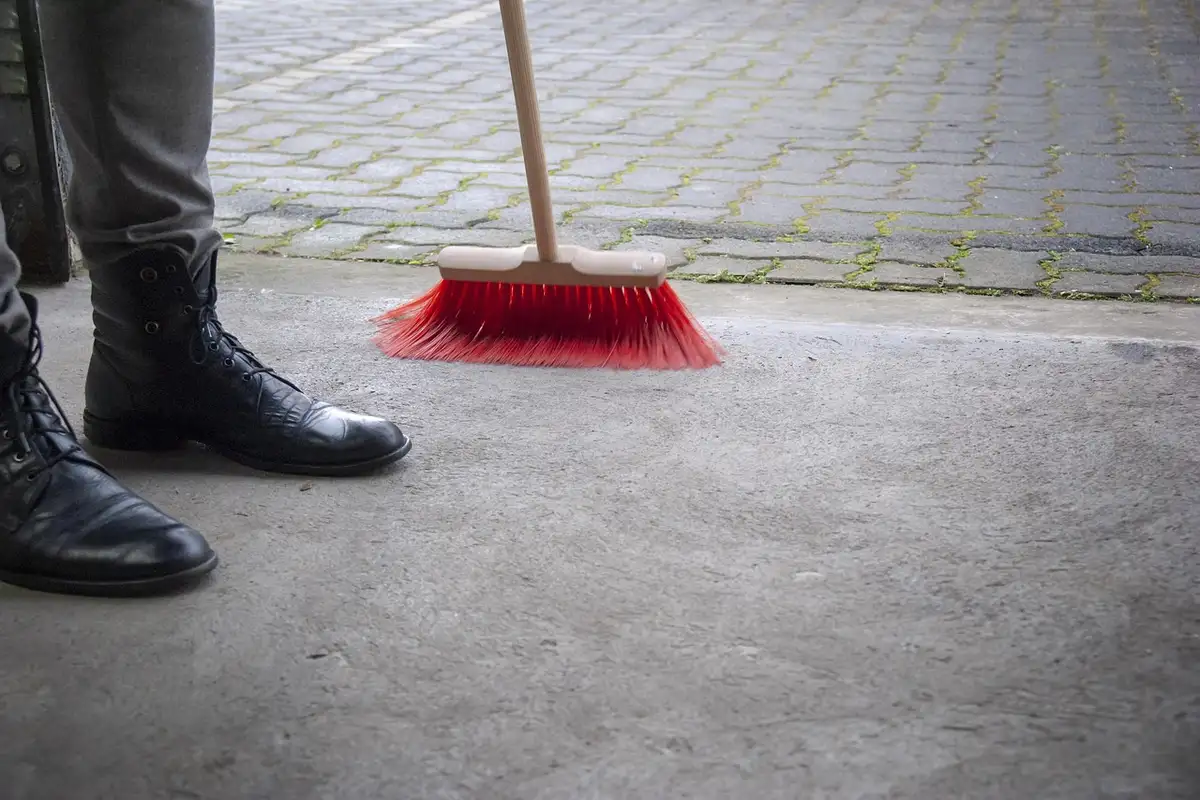
When you first see a fresh drip or a small spill, your kitchen pantry can be your best friend. I keep a small box of supplies in my own garage just for this purpose. For stains that are just hours or a couple of days old, these methods are a great first line of defense.
The Baking Soda and Vinegar Reaction
This is my go-to for small, fresh oil spots. The fizzy reaction helps lift the oil to the surface so you can scrub it away. This method is effective for spots about the size of a coffee cup stain, but don’t expect it to erase a large, old puddle.
- Cover the stain completely with a thick layer of plain baking soda. You want a pile about 1/4 inch thick.
- Slowly pour white distilled vinegar over the baking soda. You’ll get that satisfying fizz-let it work for 10-15 minutes until the reaction stops.
- Use a stiff-bristle brush, like a deck brush or a heavy-duty parts cleaning brush, to scrub the paste into the concrete. I use a brush with polypropylene bristles; it’s tough enough for concrete but won’t damage it.
- Let the area sit for another hour. Then, rinse thoroughly with hot water. A garden hose with a spray nozzle works, but for best results, I follow up with my electric pressure washer on a low setting (around 1,200 PSI) to blast away the residue.
The Dish Soap and Hot Water Scrub-Down
For light grease smears or a faint sheen from a new leak, a heavy-duty degreasing dish soap is surprisingly effective. I’ve had good results with Dawn Ultra Platinum. Its formula is designed to cut grease on dishes, and that same principle works here.
The key is using water as hot as you can get it and being prepared to put some muscle into the scrubbing.
- Pour a generous puddle of the dish soap directly onto the stain.
- Add just enough very hot water to create a thick, soapy lather. I use water from my utility sink that I’ve heated in a kettle.
- Scrub aggressively with a stiff brush for several minutes. You need to work the soap deep into the concrete’s pores.
- Let the soap sit for 20-30 minutes to break down the oil, but don’t let it dry out.
- Rinse with more hot water. You may need to repeat this process two or three times for a noticeable difference.
Why These Methods Hit a Wall with Old Stains
I’ve learned this the hard way on customer jobs. Household items clean the surface, but they can’t pull oil from deep within the concrete. Think of your garage floor not as a solid tabletop, but more like a hard sponge. New oil sits on top. Old oil has weeks, months, or years to seep down into all those tiny pores and cavities.
Baking soda, vinegar, and dish soap simply can’t penetrate and neutralize oil that has settled deep down. You might lighten the top layer of an old stain, but a dark shadow will almost always remain because the core of the problem is still trapped below. That’s when you need to move from kitchen chemistry to concrete-specific cleaners and techniques that can draw that oil out from within.
Choosing and Applying a Commercial Concrete Degreaser
When a spill happens, a commercial degreaser is your best tool. Think of it like a specialized soap that breaks down the bonds between oil and your concrete. The right choice makes cleanup simple. For garage oil leak spills, this approach helps lift the oil from concrete, making cleanup quicker and safer. In a garage setting, using the right degreaser speeds cleanup and prevents lingering stains.
Understanding Your Degreaser Options
You’ll find two main categories on the shelf: concentrated and ready-to-use. Concentrated formulas, like Zep Purple Industrial Degreaser, require mixing with water. I always go for a concentrate because you get more cleaning power per dollar and can adjust the strength for really tough stains. Ready-to-use sprays are convenient for small spots but get expensive for larger areas.
The chemistry matters too. Most consumer degreasers are alkaline-based. They’re great for breaking down organic oils and greases and are generally safer for you and your floor. Acidic cleaners, like some masonry cleaners, can etch concrete and are overkill for simple oil stains. Stick with an alkaline degreaser for this job.
My Shop-Tested Application Method
I use the same reliable process every time. You’ll need a pump sprayer for concentrates, a stiff-bristle push broom or brush, and a garden hose.
- Put on your safety gear first. I wear chemical-resistant gloves and safety glasses without fail. Good ventilation is a must.
- For a concentrate, mix it in your sprayer according to the label for heavy-duty cleaning. Don’t dilute it more than it says.
- Spray a generous amount directly onto the stain, ensuring it’s fully saturated. Cover an area about six inches wider than the stain itself.
- Let the product dwell. This is the most important step. I leave it for a full 10 to 15 minutes, letting it turn the oil from black to a muddy brown. Do not let it dry out.
- Agitate the area thoroughly with your stiff brush. Scrub in a circular motion to work the degreaser deep into the pores.
- Rinse completely with a strong stream from your garden hose. You might need to repeat steps 3 through 6 for very old, set-in stains.
Brands I’ve Used and Trust
I’ve tested many brands over the years. For a powerful, affordable concentrate, Zep Purple is hard to beat. It cuts through grease fast, but it has strong fumes. I only use it with the garage door wide open.
My current favorite for most jobs is Simple Green Concrete and Driveway Cleaner. I prefer Simple Green for its lack of harsh fumes and because it doesn’t leave a soapy residue that can make the floor slippery after rinsing. It’s a reliable performer that’s easier to live with while you’re working. For a ready-to-use option, the Spray-Nine heavy-duty degreaser works well on fresh spills, but I find it less economical for large or old stains.
Mechanical Methods for Tough, Set-In Stains
Sometimes, oil soaks deep into the concrete’s pores. For those stubborn stains that laugh at simple cleaners, you need to bring in the mechanical methods. These are the tools that do the scrubbing for you, and they require a bit more finesse.
The Right Way to Pressure Wash
A pressure washer is a powerful tool, but you can damage your concrete if you use it wrong. You’re not trying to carve a trench, you’re blasting away loose grime and old cleaner residues to reveal the stain itself.
You must use a fan-tip nozzle, like a 15 or 25-degree, to spread the force out and avoid etching the concrete. I keep a dedicated 15-degree nozzle just for concrete work. Hold the wand about a foot away from the surface and use a steady, sweeping motion. Getting too close with a zero-degree tip is a surefire way to leave permanent marks.
The real secret weapon is a detergent injector or a dedicated soap nozzle. You apply a degreaser, let it dwell, and then rinse. I’ve used the simple siphon feed on my Simpson pressure washer with TSP substitute or a dedicated concrete cleaner, and it makes a huge difference compared to just blasting with water.
Scrubbing and Grinding for the Worst Cases
When a stain has been there for years, surface cleaning often isn’t enough. You have two main paths here: aggressive scrubbing or actual grinding.
For a heavy, widespread stain, I’ve rented an electric floor scrubber from my local tool rental. You attach a stiff-bristle brush pad, pour a concrete-safe degreaser solution in the tank, and let the machine do the hard work. It’s loud and feels industrial, but it’s far more effective and less back-breaking than a push broom.
For the absolute worst stains-think transmission fluid that sat for a decade-you may need to remove a thin layer of the concrete itself. This is a last resort. I own a 4.5-inch angle grinder and a diamond cup wheel attachment specifically for this job. You work in small sections, keeping the grinder flat, and just kiss the surface to abrade the stained layer. It creates a tremendous amount of fine concrete dust, so a quality respirator, goggles, and hearing protection are non-negotiable. The area will look lighter and feel rougher, but the stain will be gone.
Drawing Out Oil with a Poultice
For a deep-set stain you don’t want to grind, a poultice can work wonders. Think of it like a plaster that draws the oil up and out of the concrete. Here’s how I make and use one.
- Choose an absorbent powder. I’ve had good results with cheap, non-clumping cat litter (crushed into a finer powder with a hammer) or diatomaceous earth.
- Mix the powder with a solvent in a glass or metal bowl. Acetone is very effective for this. You want a thick, spreadable paste, like peanut butter.
- Wet the stained area with clean water first. This prevents the solvent from sinking in too fast.
- Apply your paste over the stain, making a layer about a quarter-inch thick. Extend it an inch past the stain’s edges.
- Cover the paste with plastic wrap and tape down the edges. This slows evaporation so the poultice can work longer.
- Let it sit for at least 24 hours. The paste will darken as it absorbs the oil.
- Scrape off the dried poultice with a putty knife and dispose of it as hazardous waste. You’ll likely see a significant improvement, though very deep stains may need a second application.
This method requires patience and proper ventilation, but it’s a powerful chemical-mechanical action that can save you from more drastic measures.
Gearhead’s Checklist for Oil Stain Removal
I treat a tough oil stain like a three-phase repair job. You need the right tools for prep, application, and cleanup. Using the wrong brush or sprayer can turn a simple clean-up into a frustrating mess. This is my shop-tested list, built from fixing my own spills and helping neighbors with theirs.
Phase 1: The Prep & Scrub Tools
This is where you set the stage for the chemicals to work. A good mechanical scrub is half the battle.
- Degreaser: I keep a jug of ZEP Commercial Purple Degreaser on my shelf for fresh spills and heavy stains. For milder jobs or if you’re sensitive to fumes, Simple Green Pro HD is a reliable, less aggressive option.
- Stiff Nylon Brush: Do not use a wire brush here. Wire can scratch the concrete’s surface, creating tiny grooves for new dirt to hide in. I use a 16-inch floor scrub brush with tough nylon bristles, like the ones from Quickie. The long handle saves your back.
- Dustpan and Stiff Putty Knife: For scraping up any dried, caked-on gunk or loose concrete particles before you wet anything. A standard 1.5-inch metal putty knife works perfectly.
Phase 2: Application & Heavy-Duty Tools
For stains that laugh at a simple scrub, you need to bring in specialized materials. This is where you’ll see the magic happen.
- Poultice Materials: For deep-set stains, you’ll create a paste. I use one of two things: a dedicated concrete cleaner like Oil Eater Cleaner & Degreaser in paste form, or a DIY mix. My go-to DIY poultice is cheap, powdered laundry detergent (like Tide) mixed with just enough water to make a thick paste the consistency of peanut butter.
- Plastic Paint Scraper: For spreading the poultice paste over the stain. A plastic one won’t risk gouging the floor like a metal tool could.
- Pump Sprayer: A 1-gallon garden pump sprayer is non-negotiable for applying degreaser evenly over a large area. Spraying from a bottle is inefficient and leads to inconsistent coverage. I use a Chapin model.
Phase 3: The Cleanup Crew
Rinsing away the sludge and residue is critical. If you leave cleaner on the floor, it can leave a hazy film.
- Pressure Washer: A gas or electric pressure washer is the best tool for the final rinse. The key is using the correct nozzle: a 25-degree (green) tip. This provides a strong fan pattern that blasts away residue without etching or damaging the concrete surface like a zero-degree tip would.
- Shop Vac for Wet/Dry Pickup: After pressure washing, you’ll have a lot of dirty water. A good shop vac, like a Craftsman or Ridgid, is essential for sucking it all up so it doesn’t just settle back into the pores of the concrete.
- Stiff-Bristle Push Broom: Once the area is rinsed and vacuumed, use a dry push broom to direct any last bits of water out of the garage. This speeds up drying tremendously.
Your Personal Safety Kit
I never step into the shop for a job like this without my PPE. Concrete cleaners are serious chemicals.
- Nitrile Gloves: Not latex. Nitrile resists the chemicals in degreasers much better. I buy the heavy-duty, 8-mil gloves in a box.
- Safety Goggles: Splashes happen. A basic pair of sealed safety goggles protects your eyes from both chemical droplets and debris kicked up by pressure washing.
- Respirator: For indoor use with strong degreasers (like the ZEP Purple), a half-face respirator with organic vapor cartridges is a must. The fumes are potent. For outdoor work with milder cleaners, a simple N95 dust mask is sufficient.
- Knee Pads: This is a floor-level job. A good pair of gel-filled knee pads will make the scrubbing process far more comfortable.
Safety and Disposal Rules You Can’t Ignore
I’ve seen too many garage projects start with good intentions and end with a rash or a phone call to poison control. This step isn’t a suggestion; it’s your first task before you even open a cleaner.
Your Non-Negotiable Protective Gear
Treat chemical cleaners like hot engine oil-you wouldn’t grab that bare-handed. Your skin and lungs need a barrier. I will not touch a degreaser without putting on nitrile gloves, safety goggles, and long sleeves first. I learned the hard way that latex gloves can dissolve with some solvents, letting the chemicals right through. A basic pair of chemical splash goggles from a hardware store is perfect; they cost less than a doctor’s visit. For heavy jobs with strong acids or muriatic acid for etching, I also use a respirator with organic vapor cartridges-the kind you’d use for painting.
Mixing Chemicals: The One Absolute Rule
Mixing cleaners to make a “super solution” is a terrible idea. Chemical reactions can create toxic gases right under your nose. Never, under any circumstances, mix chlorine bleach with an acid-based cleaner or vinegar. This combination creates chlorine gas, which is extremely dangerous in an enclosed space like a garage. I only ever mix a cleaner with water, exactly as the manufacturer’s label directs. I use a dedicated plastic bucket, not one I’ve used for car washing, to avoid any hidden residues causing a reaction.
Responsible Cleanup and Disposal
You can’t just wash this mess down the drain. The oil and chemicals must be contained. For fresh spills or oily absorbents like kitty litter, I scoop it all into a heavy-duty plastic bag, seal it, and place it in my regular trash if my local waste rules allow. Always check your city or county’s household hazardous waste website for their specific rules on oily waste; dumping it illegally can lead to big fines. For the dirty runoff from pressure washing or rinsing, I use a wet/dry shop vacuum to suck it up from a contained area. I then take this contaminated water to a local hazardous waste collection facility. Letting it run into the storm drain contaminates local waterways, and that’s simply not responsible.
How to Prevent Oil Stains from Coming Back
Getting your floor clean is a great feeling. Keeping it that way is the real goal. These three strategies are what I use in my own shop to stop new stains before they start.
Use a High-Quality Absorbent Mat
The simplest and most effective step is to park on a good mat. A proper mat acts like a diaper for your car, catching drips before they ever touch the concrete. You don’t need anything fancy. I’ve tried the thick, carpet-like garage rugs, and honestly, they’re a pain to clean. The rubber-backed ones can trap moisture underneath and cause concrete to spall over time.
My go-to is a simple, heavy-duty PVC or nitrile rubber mat from a brand like RaceDeck or TurtleSkin. I find them easier to wipe down or even hose off. Make sure it’s large enough to cover the entire drip zone under the engine and transmission. This one purchase saves you hours of scrubbing later.
Seal or Coat the Concrete
For a more permanent barrier, you can treat the concrete itself. You have two main options: sealers and coatings.
Penetrating concrete sealers soak into the pores and make the surface more resistant to oil absorption. I use a silane-siloxane blend like Foundation Armor AR350. It’s invisible, doesn’t change traction, and lasts a few years. It’s perfect for a basic garage where you just want low-maintenance protection. The con is it’s not a perfect shield against a major, fresh oil spill. Moisture from a garage roof or damp concrete floors is another common issue. Sealing is part of moisture management.
A two-part epoxy coating creates a plastic-like shell over your entire floor. I’ve installed kits from Rust-Oleum EpoxyShield and Legacy Industrial. This is the gold standard for a garage that gets heavy use, like a workshop. Spills wipe right up. The downsides are cost, more complex DIY prep (etched concrete is a must), and it can be slippery when wet unless you add grit. For a DIY epoxy paint garage floor, thorough prep and proper ventilation are essential. If you’re planning a garage epoxy paint DIY, allow for curing time and consider adding grit for traction.
My advice: Choose a sealer for general protection. Go with a full epoxy coat only if you want a showroom finish and are ready for the work.
Establish a Monthly Floor Check
The best tool for prevention isn’t a product, it’s a habit. Spending two minutes a month looking for fresh spots stops small leaks from becoming permanent stains. Here’s my routine:
- Move the cars out on a sunny Saturday.
- Use a bright LED work light (I like the Braun foldable light) and walk the floor at a low angle. Wet oil spots will shine.
- If you see a fresh drip, mark it with sidewalk chalk. Clean it immediately with the degreaser method from earlier in the article.
- Then, look up. Trace the drip back to its source on your vehicle so you know what needs fixing.
This quick check saves you from the frustration of finding a huge, set-in stain six months later. It turns reactive cleaning into proactive maintenance.
Maintenance & Cleaning Routine for a Pristine Floor

A clean garage floor isn’t just about looks. It’s a safety surface that gives you a clear view of what’s happening with your car and tools. I stick to a simple rhythm: a quick weekly pass and a serious clean four times a year. This keeps small problems from becoming big, ugly ones.
Your Simple Weekly & Quarterly Schedule
Every Saturday morning with my coffee, I do a five-minute sweep. I use a heavy-duty garage push broom, the kind with thick synthetic bristles. I’ve found that brands like Quickie or Gorilla Grip hold up better than the flimsy ones that shed. I sweep from the back wall to the door, pushing everything out. For the dustpan, I prefer a wide, rolling metal one-it picks up more gravel and dirt in one scoop.
Every three months, I block off an hour for a deep clean. Here’s my shop-tested method:
- Clear everything off the floor. This is non-negotiable.
- Sweep thoroughly, getting into the corners and edges.
- Fill a bucket with hot water and a concentrated, alkaline concrete cleaner. I’ve had great results with Zep Neutral pH Floor Cleaner; it cuts light grease without being too harsh.
- Scrub the entire floor with a stiff-bristle deck brush on a pole. Don’t use a household mop-it just pushes dirt around.
- Rinse with a hose or, better yet, a pressure washer on a low, wide fan setting. I use a Greenworks electric pressure washer for this job; it has enough power without risking damage to the concrete.
- Let the floor dry completely before driving or parking on it.
How to Perform a Yearly Inspection
Once a year, usually in the spring, I do a walking inspection with a bright LED work light held at a low angle. The side-lighting reveals every flaw. I’m looking for two things: new stains and sealer failure.
For stains, I mark any new oil spots or discoloration with a piece of blue painter’s tape. For the sealer, I pour a few drops of water in different spots. If the water beads up, your sealer is still working. If it soaks in dark and disappears within a minute, the sealer has worn through and it’s time for a fresh coat. I keep a notepad to log what I find, so I can plan my repair weekend.
Your Immediate Action Plan for New Spills
The moment you see a fresh drip, act. Don’t wait until the end of the day. Fresh oil is a liquid; old oil is a stain. Here is my immediate spill drill:
- Contain and Absorb: Throw a handful of an absorbent like Oil-Dri or non-clumping cat litter directly on the spill. In my shop, I keep a bucket of clay-based absorbent by the door just for this. Let it sit for 10 minutes to soak up the pool.
- Scrub the Residue: Sweep up the soaked material. You’ll often see a dark, wet spot left behind. Pour a small amount of liquid dish soap (Dawn Platinum is my go-to) directly on the spot and scrub it in with a stiff brush and a little hot water. This emulsifies the remaining oil.
- Rinse and Check: Rinse the area well. If a faint shadow remains, you’ve likely prevented a permanent stain. You can hit it with a dedicated degreaser on your next quarterly clean.
This quick routine saves hours of scrubbing later. Keeping a spill kit-absorbent, brush, and soap-in your garage makes this a 90-second fix, especially when taking care of areas prone to moisture.
What to Do When the Stain Just Won’t Budge
I’ve been there, leaning on my push broom, staring at a faint but persistent shadow on the concrete. You’ve scrubbed, you’ve tried a product or two, but that stain is hanging on. Don’t get discouraged. This is where a little pro-level troubleshooting makes all the difference. Usually, the fix is one of three things.
Troubleshooting Your Failed Cleanup
Before you go nuclear, let’s diagnose the problem. Think of it like a doctor for your garage floor.
Reason 1: You used the wrong tool for the job. All-purpose cleaners or dish soap are great for fresh spills, but they lack the chemical muscle for a deep, old stain. You need a degreaser formulated for concrete. I keep a gallon of Simple Green Crystal or Oil Eater on my shelf for this exact reason. They’re designed to break the bond between the oil and the concrete pores.
Reason 2: You didn’t let it sit long enough. This is the most common mistake. Pouring and immediately scrubbing is like putting a bandage on a wound you didn’t clean. The chemical needs time to work, or “dwell.” For a tough stain, I saturate the area, cover it with a piece of plastic sheeting or a damp rag to slow evaporation, and let it sit overnight. That dwell time is non-negotiable.
Reason 3: Your concrete is sealed. Many garage floors have a clear sealant applied. If yours does, the oil is sitting on top of the sealant, not in the concrete. No amount of degreaser will pull it out from underneath. Test this by sprinkling a few drops of water on the stain. If it beads up, you have a sealed floor. Your battle just changed completely.
Last-Ditch Options for the Truly Stubborn
If you’re sure the concrete is unsealed and a proper degreaser failed, it’s time for the heavy artillery. Handle these with respect.
Industrial-Strength Degreasers: Products like Krud Kutter Concrete Degreaser or Zep Industrial Purple are a step up. They work faster and more aggressively. I use heavy-duty rubber gloves, eye protection, and ensure the space is ventilated. Apply, let dwell for 30-60 minutes (check the label), agitate with a stiff bristle brush, and pressure wash. These can sometimes etch very old concrete slightly, so test in a small corner first.
Stain-Hiding Products: When extraction fails, you can cover it. For a small spot, a concrete stain-blocking primer like Kilz Original or a dedicated product like Concrete Coatings Repair Flex Paste can work. For larger areas, I’ve had good results with a concrete resurfacer like Henry 555. You trowel it over the stained area to create a new, thin top layer. It’s a cosmetic fix, but it’s durable and looks clean. It’s like patching a hole in drywall.
Knowing When to Call a Professional
There’s no shame in this. My rule is simple: if the stain is large, deep, and you’ve exhausted safe DIY methods, or if you’re considering resurfacing the entire floor, get a pro quote.
Professional diamond grinding is the ultimate solution. They use a machine to physically remove a thin layer of the concrete, taking the stain with it. It’s messy, loud, and creates a lot of dust, but it works 100% of the time, especially for paint stains on concrete garage floors. For a severely stained or damaged floor, grinding followed by a new epoxy or polyaspartic coating is the gold standard. It’s an investment, but it transforms your garage for decades.
Calling a pro becomes the right choice when the cost of your time, repeated products, and rental equipment nears the price of a permanent fix. I’ve helped many homeowners make this call. Sometimes, the most expert move is knowing what not to do yourself.
Garage Care Pro’s FAQ on Concrete Oil Stain Removal
What’s the best household item for a fresh oil stain, and why does it work?
Plain, non-clumping clay cat litter is your best first move. The fine clay powder acts like a sponge, wicking the liquid oil out of the concrete’s pores through capillary action before it can set. Grinding it in with your boot maximizes contact and absorption, making the follow-up degreasing much easier.
When choosing a commercial degreaser, is concentrate or ready-to-use better?
For most garage jobs, a concentrate is superior. It offers more cleaning power per dollar and allows you to adjust the strength for set-in stains. Ready-to-use sprays are convenient for tiny drips but become expensive and less effective for larger or older stains.
What is the single most important step when applying any cleaner to a stain?
Letting the product dwell. Saturate the stain and leave the cleaner for a full 10-15 minutes (or as the label directs) before scrubbing. This dwell time allows the chemicals to penetrate and break the bond between the oil and the concrete-skipping it is the main reason DIY efforts fail.
Can a pressure washer damage my concrete during cleanup?
Yes, if used incorrectly. Always use a fan-tip nozzle (15 or 25-degree) and keep the wand at least a foot away from the surface. A zero-degree tip or holding it too close will etch and permanently scar the concrete. The goal is to rinse, not engrave.
What’s the most effective long-term strategy to prevent oil stains?
Park on a quality, fluid-catching mat *and* apply a penetrating concrete sealer. The mat catches immediate drips, while the sealer soaks into the pores to create an invisible barrier against absorption. This one-two punch is the core of proactive garage floor maintenance.
I’ve tried a degreaser and the stain remains. What are my next steps?
First, troubleshoot: ensure the concrete isn’t sealed and you allowed proper dwell time. If it’s truly stubborn, apply a poultice (like a paste of laundry detergent or kitty litter with water) to draw the oil out, cover it with plastic, and let it sit for 24 hours. If that fails, professional diamond grinding is the definitive solution.
Your Clean Floor and What Comes Next
The single best thing you can do is tackle fresh oil stains immediately with an absorbent like clay cat litter. For the work that comes after, remember these points. Your safety is the first priority, so always wear gloves and eye protection when using cleaners or acids. Start with the simplest method, like a dedicated concrete cleaner or a paste of baking soda and dish soap, before moving to stronger options. Always test your chosen cleaning method in a small, inconspicuous area first to prevent damage to your concrete’s finish. A clean floor is safer to walk on and makes every other garage project easier, including cleaning gasoline stains.