
How Can You Safely Remove Birds from Your Garage Without Harming Them or Your Property?
Finding birds nesting in your garage is a common headache that can quickly turn into a messy, stressful problem. I’ll help you solve it with clear, step-by-step methods I’ve used in my own shop that keep everyone safe.
This guide walks you through safely assessing the bird’s activity, choosing the right humane removal tools, preventing their return, and cleaning up without spreading debris or disease.
I’ve spent years maintaining residential garages and have successfully handled bird removals using specific, shop-tested approaches that prioritize safety and prevention.
First Things First: Assess the Situation and Plan Your Approach
Before you do anything, stop and watch for a few minutes. Stand quietly in a corner of your garage and listen. Is there frantic chirping from one spot, or the high-pitched peeping of chicks? A frantic single bird usually flies in erratic, panicked loops, while a family unit will have one or two adults repeatedly returning to a specific, sheltered area. A single sparrow or starling is a weekend job. A nest with babies means you likely need to pause and plan for a later date when the fledglings have left.
Timing is your best tool. Schedule your removal attempt for early morning or dusk. Birds are naturally less active and frantic during these times, making them easier to guide. I always do this work just after sunrise on a Saturday.
While you’re observing, scan the garage thoroughly for a nest. Check the top of open garage door tracks, on wall-mounted shelves, in the recesses of exposed rafters, and tucked behind stored boxes. Finding a nest changes everything. If you find an active nest with eggs or chicks, it’s often best to let the cycle finish, as disturbing it can be illegal under wildlife laws and is simply inhumane. To help keep bugs and pests out of the garage, seal exterior gaps and maintain tidy, off‑floor storage. These prevention tips will be covered in the next steps.
Finally, suit up. Put on a long-sleeved shirt and durable pants-I wear my standard Carhartt work pants. This isn’t just about bird scratches; it’s about protecting yourself from dust, insulation, and anything else that might be stirred up in your garage corners.
Step-by-Step Guide: The Two Main Removal Methods
You have two paths: passive and active. The passive method is always my first choice. It’s less stressful for everyone. The active method is for when the bird is exhausted, injured, or just won’t take the hint.
The Gentle Exit: Encouraging a Bird to Leave on Its Own
This method works more often than you’d think. Your goal is to make the outside more attractive than the inside.
- Open your main garage door completely. If you have a side service door or windows, open those too. You want to create the largest, most obvious exit possible.
- Turn off all interior lights. Close any interior doors to your house. You want to make the garage as dark as you safely can.
- Now, make the outside bright. If it’s daytime, the open door will be enough. If it’s dusk, turn on an exterior floodlight or even park your car just outside with the headlights on, pointing away from the garage.
- Leave the area. Go back into your house for 30 minutes to an hour. The bird will see the light source, calm down in the quiet, and often just fly out on its own.
For a hummingbird, which tends to fly upward and hover at the ceiling, you need a slight tweak. I prop a bright work light, like a Dewalt jobsite light, on a ladder just outside the open door, pointing up into a tree. Then I darken the garage. The hummingbird is drawn to the highest light source, which is now outside, and usually zips right out.
The Hands-On Approach: Safe Tools and Handling
When the passive method fails, you need to gently encourage the guest toward the door. This requires patience and the right gear.
Your best tool is a long-handled fishing or pond net. I keep a Frabill model with a soft, fine mesh bag specifically for this. It’s gentle on feathers. Move slowly, and try to guide the bird into a corner before gently scooping it up. A lightweight bed sheet or drop cloth is a great alternative. With a partner, you can slowly “walk” the sheet toward the open door, encouraging the bird to fly in the right direction without touching it.
A simple broom can be used for guidance, not hitting. Hold it parallel to the ground and slowly move it behind the bird to steer its flight path toward the open door. It’s about blocking its option to go backward.
Wear gloves for protection, but choose wisely. I use a pair of thin Mechanix Wear FastFit gloves; they protect my hands from a panicked peck but still let me feel what I’m doing if I need to handle the bird directly. Avoid thick, rigid gloves that will make you clumsy.
If you must contain the bird, do it calmly. Once in the net, gently fold the mesh over to create a soft, dark enclosure. Walk it well away from your garage, to a shrub or tree line. Open the net fully and step back. Do not try to “help” it out. Just let it fly away when it’s ready. Similar calm, humane steps can apply if bats or crickets are found in a garage. For those situations, seek humane removal guidance.
The Gearhead’s Checklist for Humane Bird Removal
Before you try to guide a bird out, you need the right tools. Trying to shoo one out with a broom is a great way to get a stressed bird flying into a window or to end up with a mess. I keep a dedicated bird-removal kit on a hook in my shop. It saves time and makes the job predictable.
Your Essential Tool Kit
This isn’t about fancy gear. It’s about having the right, simple tools to control the situation and protect yourself.
- A Fine-Mesh Insect Net with a Long Handle: This is your most important tool. I use a model from BioQuip. The fine mesh prevents a bird’s claws or beak from getting tangled, and the long handle (at least 3 feet) lets you keep a safe distance.
- Heavy-Duty Cleaning Gloves: I wear thick rubber gloves, like the ones from Playtex. Birds can carry mites or bacteria, and their droppings are a health hazard. Gloves are non-negotiable for clean-up, too.
- A Large, Light-Colored Bed Sheet: A plain white or light blue flat sheet is perfect. You’ll use it to gently guide and contain the bird, not to swat at it. Dark sheets can startle them more.
- A Powerful Flashlight: Birds often hide in dark rafters or behind stored items. A bright, focused beam from a flashlight like a Streamlight ProTac helps you locate them without having to climb and poke around blindly.
- Heavy-Duty Contractor Garbage Bags: You’ll need these for cleaning up nesting materials and droppings, which can contain harmful fungi. I buy the 3-mil thick bags in bulk.
Why a Net Beats a Broom (Every Time)
It’s tempting to grab whatever’s nearby. I’ve seen people try brooms, rakes, and even leaf blowers. These almost always backfire. A proper net is the safest tool for you and the bird because it provides a controlled, enclosed space.
When you wave a broom, the bird panics and flies erratically. It might hurt itself on a hard edge or exhaust itself. With a net, you can calmly and slowly guide it over the bird. Once contained, you can carry the net outside, hold the opening toward an open space, and let the bird fly free without ever touching it. An insect net is also much lighter and easier to maneuver than a shop broom, giving you better control. It’s a simple, purpose-built solution that respects the animal and your property.
Special Cases: Nests, Babies, and Injured Birds
This is where the job gets sensitive. You’re not just dealing with a pest, you’re dealing with a family. My rule is simple: if there are eggs or chicks, your removal project stops until they’re gone. Sometimes that shelter is a garage, and the stakes rise when a family is involved in a space you park in daily. If you’re dealing with raccoons in the garage, the next steps will guide you through a humane removal under the ‘remove raccoons garage’ section.
The Rule for Active Nests: Leave It Alone
In the U.S., the Migratory Bird Treaty Act makes it illegal to disturb or destroy the active nest of most native bird species. This isn’t just a suggestion. Removing a nest with eggs or chicks is against federal law and carries significant fines. Beyond the legal side, it’s just the right thing to do. I once had a robin build a nest on a shelf unit I was about to move. I taped off that corner of the garage and left it alone for five weeks until the chicks fledged. It was a minor delay for a project, but it was the only responsible choice.
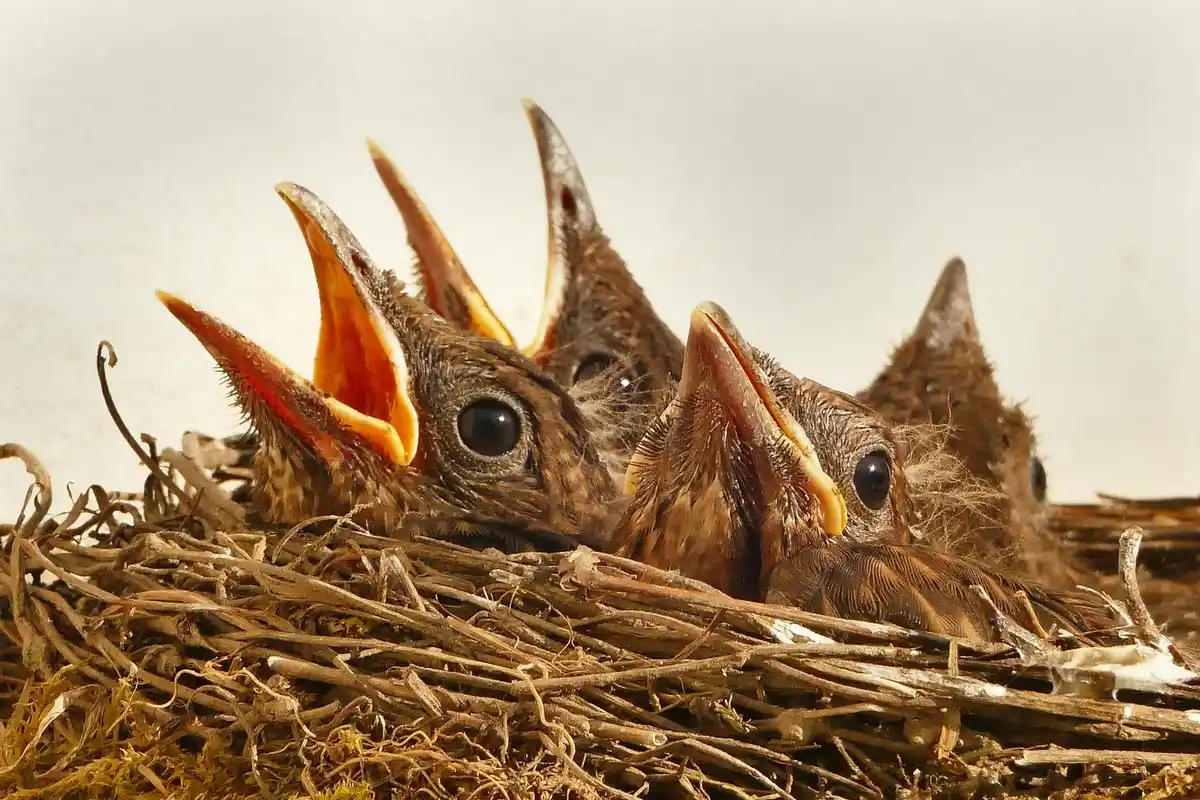
- Identify an Active Nest: Look for eggs, or chicks, or constant parent activity (a bird flying in and out every few minutes).
- Your Action Plan: Leave the nest completely alone. Keep garage traffic to a minimum near it. Plan to seal the entry point after the nest is confirmed empty and the birds have left for good.
- Timeline: From egg-laying to the chicks leaving the nest is typically 2-4 weeks, depending on the species. You’ll need patience.
Handling Injured Birds and Fledglings
Finding a hurt bird or a fluffy baby on your garage floor changes the game. Your goal is to get it to a professional, not to play veterinarian.
If you find a baby bird (fledgling): It likely has fluffy feathers and can hop around. This bird is probably fine and its parents are nearby. Fledglings spend days on the ground learning to fly. If it’s in immediate danger (like near where you park your car), gently pick it up with gloved hands and place it in a nearby bush or on a low branch. The parents will find it. Do not bring it inside.
If you find a naked or mostly featherless baby bird (nestling): This one fell out. If you can see and safely reach the nest, use gloved hands to put it back. The old tale about parents rejecting a chick touched by humans is a myth. If you can’t reach the nest, it’s time to call a wildlife rehabilitator.
If you find an injured adult bird: Your job is safe containment and transport.
- Put on thick leather work gloves.
- Get a cardboard box and punch air holes in the lid. Line it with a soft, non-fraying cloth like an old t-shirt.
- Gently place the bird in the box and close the lid.
- Keep the box in a warm, dark, and quiet place. Do not offer food or water.
- Immediately search for a licensed wildlife rehabilitator in your area and call them for instructions. I keep the number for my local rehab center saved in my phone for exactly this reason.
A Note on Protected Species
Nearly all native songbirds you’ll find in North America-robins, sparrows, finches, wrens, swallows-are protected under the law I mentioned. You cannot harm them or their active nests. Disturbing these protected birds isn’t just unethical; it can land you in serious legal trouble. Starlings, pigeons (rock doves), and house sparrows are common non-native exceptions, but it’s safest to treat every bird with caution. When in doubt, assume it’s protected and act accordingly. The goal is a bird-free garage, achieved humanely and legally.
Cleaning Up Afterward: Protecting Your Health and Garage
You got the birds out. Great work. Now comes the less glamorous, but just as critical, part: cleanup. Bird droppings aren’t just unsightly; they can pose real health risks and damage your garage’s surfaces if not handled correctly. Treat every cleanup job with the same seriousness as any other shop safety task, starting with your personal protective equipment. A quick pest-proofing check of the garage can help protect stored items and prevent future intrusions. Taking a moment to seal gaps and secure containers now saves headaches down the road.
Your First Line of Defense: Proper Gear
I never start this job without my N95 respirator and a pair of snug safety goggles. I learned this lesson early on. Years ago, I swept up some old, dry droppings without a mask and spent the next day with a headache and a scratchy throat-it was a dumb mistake. An N95 mask filters out the fine, harmful dust and fungal spores (like from Histoplasmosis) that can get kicked up. Forget the basic dust mask; you need the proper seal of an N95. Goggles keep that same debris and any liquid splatter from cleaners out of your eyes.
A Step-by-Step Guide for Safe Disinfection
Rushing leads to a half-done job and more risk. Follow this sequence to do it right the first time.
- Ventilate the Area. Open your garage door and any side doors or windows fully. You want a steady cross-breeze to carry dust and fumes away from you.
- Lightly Mist the Mess. Before you touch anything, use a standard spray bottle filled with plain water to lightly dampen the droppings and nesting material. This crucial step keeps dust from becoming airborne when you disturb it.
- Remove Debris. Wearing disposable gloves, use a putty knife or a dedicated dustpan to scoop the waste into a heavy-duty contractor bag. Tie it off securely and take it to your outdoor trash can immediately.
- Deep Clean the Surface. This is where your cleaner does its work. Apply your chosen disinfectant (see below) liberally and let it dwell for the recommended time-usually 5 to 10 minutes.
- Scrub and Rinse. Use a stiff-bristled brush for concrete floors or a scrub pad for shelving. I keep a dedicated bucket and brush for jobs like this. After scrubbing, rinse the area thoroughly with clean water. On a floor, a shop wet/dry vac makes quick work of the dirty water.
- Dry Completely. Allow the area to air dry completely. You can speed this up with fans. Lingering moisture is an invitation for mold and odors.
Choosing the Right Cleaner for the Job
You have two main, proven options. My go-to depends on the surface.
- Bleach Solution (for non-porous surfaces): Mix 1 part household bleach (like Clorox) with 9 parts water. I use this on sealed concrete, epoxy floors, metal shelves, and plastic bins. Bleach is a powerful disinfectant that kills bacteria and viruses on contact, but it can damage paint and some metals and has strong fumes. Always test in a small, inconspicuous area first.
- Enzyme-Based Cleaner (for porous surfaces and general use): Products like Nature’s Miracle or Simple Green Oxy Solve are fantastic. They use natural enzymes to “digest” the organic matter and odors at a molecular level. I prefer these on unsealed concrete, wood, and drywall, or for overall use if I’m sensitive to bleach fumes. They are safer for most materials and pets, but require a longer dwell time to work effectively.
My personal tool kit for this always includes a gallon of Simple Green Oxy Solve. It’s less harsh on my tools and storage items, and I find it tackles the stubborn uric acid in bird waste really well without the aggressive smell of bleach.
Stop the Problem for Good: How to Keep Birds Out of Your Garage
Getting a bird out is one thing. Making sure it’s the last one is the real goal. The only way to do that is to find and seal their entrance. I find most homeowners miss the smaller, less obvious gaps.
Find Every Crack and Hole: The 15-Minute Inspection
You need to think like a bird. They aren’t looking for a wide-open door, they’re looking for a small, sheltered crevice. Grab a notepad and a good flashlight. Here’s how I do it, every time. Make sure the garage door is securely closed when you’re finished. A securely closed garage door opening helps keep your space safe.
- Start from the outside. Walk slowly around your entire garage. Look up where the siding meets the roof line. Look down near the foundation.
- Pay special attention to any vents, including soffit vents, gable vents, and dryer vents. Look for torn screens or gaps around the edges.
- Inspect the garage door seal. Get down on the ground and look for daylight under the door. Check the vertical weatherstripping on the sides for tears or gaps.
- Go inside. With the main door closed and lights off, look for any pinpricks of daylight. That’s a bird highway. Common spots are around service doors, windows, and where utilities enter the wall.
If you can see light, a small bird can get through. Mark every spot you find with a piece of painter’s tape so you don’t lose track of them.
Choosing and Using the Right Sealant
Not every hole gets the same fix. Using the wrong material is a waste of time and money. Here’s my shop-tested breakdown of what to use and when.
For hairline cracks and gaps under 1/4 inch, a high-quality silicone caulk is your best friend. I prefer GE Advanced Silicone 2. It stays flexible for years, sticks to almost anything, and comes in a neutral color that blends well. Don’t cheap out on a $3 tube, it will crack and peel in a season.
For larger gaps-between 1/4 inch and an inch-caulk alone will sag and fail. You need to fill the void first. This is where foam backer rod saves the day. It’s a foam rope you press into the gap. For a 1/2-inch gap, use a 3/4-inch backer rod. It compresses to fit snugly. Then, run a bead of your silicone caulk over the top to seal it. This creates a durable, long-lasting seal that won’t shrink. That same approach works well for sealing gaps around a garage door. It helps block drafts and moisture at the entry.
Vents are a major entry point. You must keep them functional while blocking birds. I use 1/4-inch hardware cloth (it’s a stiff wire mesh). Cut a piece slightly larger than the vent opening, remove the old cover, and staple or screw the new mesh over the vent from the outside. The 1/4-inch holes are small enough to stop sparrows and starlings but still allow for crucial airflow to prevent moisture buildup. Avoid cheap plastic netting; birds peck through it and it degrades in sunlight.
Simple Visual Tricks to Change Their Minds
Sometimes, even after sealing, birds are creatures of habit and will keep trying to land in their old favorite spots, like on your open garage door track or a high shelf. A visual deterrent can break that habit.
The simplest method I’ve used is reflective tape. Birds are startled by the sudden flashes of light and movement. I buy the wide, metallic Mylar tape. Cut a few 2-foot strips and hang them near common landing areas-just dangle them from a nail or hook so they spin freely. The key is to move them every week or so. Birds get used to static objects, but unpredictable movement keeps them wary.
This isn’t a permanent structural fix, but it’s a great low-cost helper alongside your sealing work to encourage persistent birds to find a new hangout spot.
The “Log Entry” Pro-Tip
My first instinct with a trapped bird was always wrong. I’d grab the nearest thing, like a shop rag, and try to shoo it toward the open door. I once tried that with a sparrow. It panicked, flew straight over my head, and wedged itself behind my heavy-duty Gladiator shelving unit. What should have been a five-minute job turned into a forty-five minute ordeal of carefully moving boxes and tools.
I learned that birds see a flapping object like a rag as a direct threat, which triggers their panic and makes them fly erratically, often deeper into the garage. The goal isn’t to chase, but to calmly guide.
My go-to tool now is a simple, large, light-colored bed sheet. A white or light grey queen-size cotton sheet is perfect. The light color is less threatening than a dark one, and the large size lets you create a gentle, wide barrier.
Here is my step-by-step method.
- Open your main garage door completely. If you have side or rear doors, close them to leave only one clear exit.
- Turn off any interior lights. You want the open door to be the brightest, most attractive point in the room.
- Take your sheet and hold it by the top two corners with your arms spread wide. You are creating a calm, moving wall.
- Walk slowly toward the bird, keeping the sheet low to the ground if the bird is on the floor, or at its height if it’s perched. Do not make sudden movements.
- Gently use the sheet to steer the bird in the direction of the open door. You are not swatting. You are slowly narrowing its flight path toward the light. The bird will almost always choose the clear escape route.
This method works because it uses the bird’s natural instincts. They will move away from the quiet, advancing barrier and toward the open sky. I keep a dedicated “bird sheet” folded on a shelf-it’s a specific tool for a specific job, just like my DeWalt drill. It has never failed me and prevents damage to my tools or the bird from a frantic chase.
When Not to Try This Yourself: Time to Call a Professional
Even as someone who loves a hands-on fix, I know my limits. There are times when you need specialized tools and training that I don’t have in my shop, and that’s okay. Knowing when to call for backup is the sign of a responsible homeowner, not a failed DIYer.
Scenarios That Require a Pro
If you open your garage door and hear a cacophony of chirps from every corner, that’s your first big clue. Here are the specific situations where I pick up the phone instead of a ladder:
- A Large Infestation: We’re talking more than just a single nest. I once assessed a garage where starlings had taken over the entire back wall. The mess was extensive, and the risk of disease from the accumulated droppings was too high for a safe DIY cleanup.
- Birds in the Ceiling or Walls: If you hear scratching or cooing coming from inside a wall cavity or above the drywall ceiling, stop. Attempting to remove birds from inside your structure can cause significant property damage and may violate building codes if you disturb wiring or insulation. They’ve found a void, and extracting them requires specialized access tools and knowledge.
- Protected or Aggressive Species: In my area, birds like swallows or raptors are often protected by law. Disturbing their nests can carry heavy fines. Likewise, if you’re dealing with a territorial bird like a mockingbird or a goose that’s entered, the physical risk to you isn’t worth it.
- You’re Simply Uncomfortable: If the height of the nest makes you uneasy, or the thought of handling a live animal gives you pause, listen to that instinct. A fall from a ladder is a real danger, and a panicked bird can cause injury.
Who to Call (And Who Not to Call)
This is a common mix-up. You don’t want a standard pest control company that primarily handles insects and rodents. Their methods often aren’t suited for birds. Instead, look for these services: especially ones that deal with rats.
- Licensed Wildlife Removal Specialists: These are the experts. They are trained and equipped for humane live trapping and exclusion. A good one will not only remove the birds but will also identify and seal the entry points to prevent a return visit.
- Your Local Animal Control Agency: This is a good starting point, especially for injured birds or immediate hazards. Be aware that their mandate and resources vary; some may only handle domestic animals, while others have wildlife officers. They can almost always give you a referral to a licensed specialist.
Vetting the Professional for Humane Methods
Not all “wildlife” services operate with the same ethics. When you call, have a short list of questions ready. Their answers tell you everything. I always ask:
- “What is your live removal and relocation policy?” You want a clear answer that they do not use poisons or kill traps as a first resort for common birds.
- “Do you provide exclusion work after removal?” This is the most critical step. If they just remove the birds and leave the hole open, new ones will move in within days. A proper service includes sealing entry points with materials like hardware cloth or professional-grade sealants.
- “Can you provide a detailed estimate that includes cleanup and sanitization?” Removing the nest is one thing; safely cleaning the droppings (guano) is another due to health risks. Make sure this is part of their quoted scope of work.
A reputable professional will be transparent, prioritize humane solutions, and focus on the long-term fix, not just the immediate removal. Their job is to solve your problem permanently and responsibly.
Frequently Asked Questions: Garage Bird Removal
What’s the fastest way to identify the bird type for removal planning?
Observe size and nesting behavior from a distance. A small, solitary bird like a sparrow is a quick job, while repeated trips to a hidden spot indicate a nest, which changes your timeline and legal obligations completely.
Are some tools better than others for specific bird situations?
Yes. Use a fine-mesh net for a single, panicked bird. For a bird that keeps landing high up, a light-colored sheet used as a calm, guiding wall is more effective than chasing it with a broom, which often makes the problem worse.
How can I protect myself from health risks during the initial removal?
Always wear a long-sleeved shirt, pants, and sturdy gloves during the removal itself to protect against scratches. The serious respiratory protection (N95 mask, goggles) is mandatory for the cleanup phase after the bird is out.
What’s the most common mistake when trying to let a bird out on its own?
Not creating enough contrast. You must darken the garage interior completely while ensuring the exit door is the brightest, most obvious light source. Just opening the door with the lights on inside often isn’t enough. Sometimes the garage door can open by itself due to sensor faults or stray signals, which is why automatic opening will be addressed next.
My garage door seal looks fine. What other entry points am I missing?
Conduct a “light test” from inside with the door closed. Look for pinpricks of daylight around service doors, window frames, utility line entries, and especially at the top where the wall meets the roof-these are prime bird entryways.
When does a bird problem become a “call a pro” situation beyond legal nests?
Call a licensed wildlife removal specialist immediately if you hear activity inside walls or ceilings, see a large infestation (multiple birds/nests), or if the entry point is structurally complex or dangerously high for you to seal safely yourself. If you’re planning preventive steps, consider how different garage types are designed to deter animal intrusions. This can inform safer sealing and maintenance choices.
Wrapping Up Safe and Humane Bird Removal
The single most important rule is to work slowly and use passive, non-contact methods to encourage birds to leave on their own, protecting them and your garage. The same careful, non-intrusive approach can help keep mice out of the garage. Simple steps like sealing gaps and removing food sources also go a long way.
- Always create a clear exit and use gentle deterrents, like a shop light pointed at the roost, which I find works better than loud noises that can panic them.
- After they’re out, clean all debris and droppings with a vinegar solution and a dedicated shop vac, wearing an N95 mask and gloves I keep in my tool bag.
- Permanently seal entry points with hardware cloth or copper mesh, not just caulk, which I’ve seen birds easily peck through.
- For nesting birds or large infestations, call a licensed professional-I’ve made that call when dealing with protected species like swallows, and it saved me time and legal trouble.