
What Can an Insulated Garage Door Do for Your Energy Bills, Noise, and Wear?
If you’re weighing the cost of a new garage door against its real-world perks, let me clear up the confusion with shop-tested facts.
We will walk through the measurable energy savings on your heating and cooling, the tangible drop in outside noise, and the improved resistance to dents and weather step by step.
I base this advice on my years as a residential garage pro, having installed and serviced both types of doors in all seasons.
Let’s Get Clear: What is an Insulated Garage Door?
Think of an insulated garage door like a high-end cooler. A basic non-insulated door is more like a cardboard box. The insulated version has a core of rigid foam, usually polyurethane or polystyrene, sandwiched between two solid metal skins, typically steel.
This foam core is what creates the insulating properties, and it’s the feature that separates an insulated door from a standard one. Not every garage door has this. Many are simply a single, thin sheet of metal with hollow spaces inside, which offers almost no resistance to temperature or sound. For a simple boost, improving your garage door seal insulation can make a noticeable difference in comfort and energy use. Small updates like sealing gaps and upgrading weatherstripping can further reduce drafts and heat transfer.
You might wonder about glass garage doors. Yes, you can get them insulated. They use thermally broken frames and often double-pane insulated glass panels, but they are a specialty product and come at a different price point. For most homes, the insulated steel door is the workhorse.
Uninsulated vs. Insulated: The Core Difference
A standard non-insulated door is a simple, single-layer design. If you could see a cross-section, it would look like a metal panel with big, empty cavities. It’s lightweight and it does the basic job of closing the opening, but that’s about it.
Now picture the insulated door’s cross-section: two sturdy steel skins with a solid, uniform foam core filling the entire space between them. Some brands, like Clopay and Amarr, use a polyurethane foam that expands to fill every crevice, which I prefer for its rigidity and higher R-value.
This fundamental construction difference-hollow vs. solid foam core-is what drives every benefit in terms of temperature control, quiet operation, and strength. The uninsulated door is just a barrier. The insulated door is a true thermal and acoustic buffer.
The Heat Stays Put: Unpacking Energy Savings
To understand energy savings, you need to know about R-value. R-value measures resistance to heat flow. A higher number means better insulation. Think of it like the thickness rating of a winter coat. A light windbreaker has a low R-value; a heavy parka has a high one.
Here’s the critical comparison: a typical non-insulated garage door has an R-value of less than 1. It’s barely more insulating than a window screen. A quality insulated door ranges from about R-8 to R-18. That’s a massive difference in blocking heat transfer. Understanding which garage insulation materials deliver these R-values can help you plan upgrades. Different materials—from spray foams to polyiso boards—achieve different R-values.
For a home with an attached garage, this door acts as a primary thermal barrier for one entire wall of your house. In winter, it keeps your garage’s cold air from seeping into your living space. In summer, it blocks the blazing heat from a sun-baked garage. Your home’s furnace or air conditioner doesn’t have to work as hard to compensate.
This saving is most pronounced if you use your garage as a workshop, gym, or any space where you want some climate control. I’ve seen homeowners in Michigan who finished their garages report their space heaters run far less often after upgrading to an R-16 door.
Real-World Impact on Your Utility Bills
Your actual savings depend on three main things: your local climate, how you use your garage, and your home’s layout. If you live in Texas or Minnesota, the impact will be more noticeable than in a mild coastal climate. A garage under a bedroom will show more benefit than one under an unused attic.
I don’t have a universal percentage to quote, but the feedback is consistent. Homeowners tell me they see a drop in their heating and cooling bills, and their garages are noticeably less extreme in temperature. The garage feels more like a buffer zone and less like an oven or freezer.
So, from a pure energy perspective, an insulated garage door is absolutely worth the investment if your garage is attached to your home. That insulation also boosts garage door home temperature efficiency, stabilizing temperatures in adjacent living spaces. In short, when the garage is better temperature-controlled, your whole home uses less energy. It upgrades a weak link in your home’s envelope to a strong, efficient one. You pay more upfront, but you buy efficiency, comfort, and lower operating costs for the life of the door.
A Quieter Home: The Noise Reduction Bonus
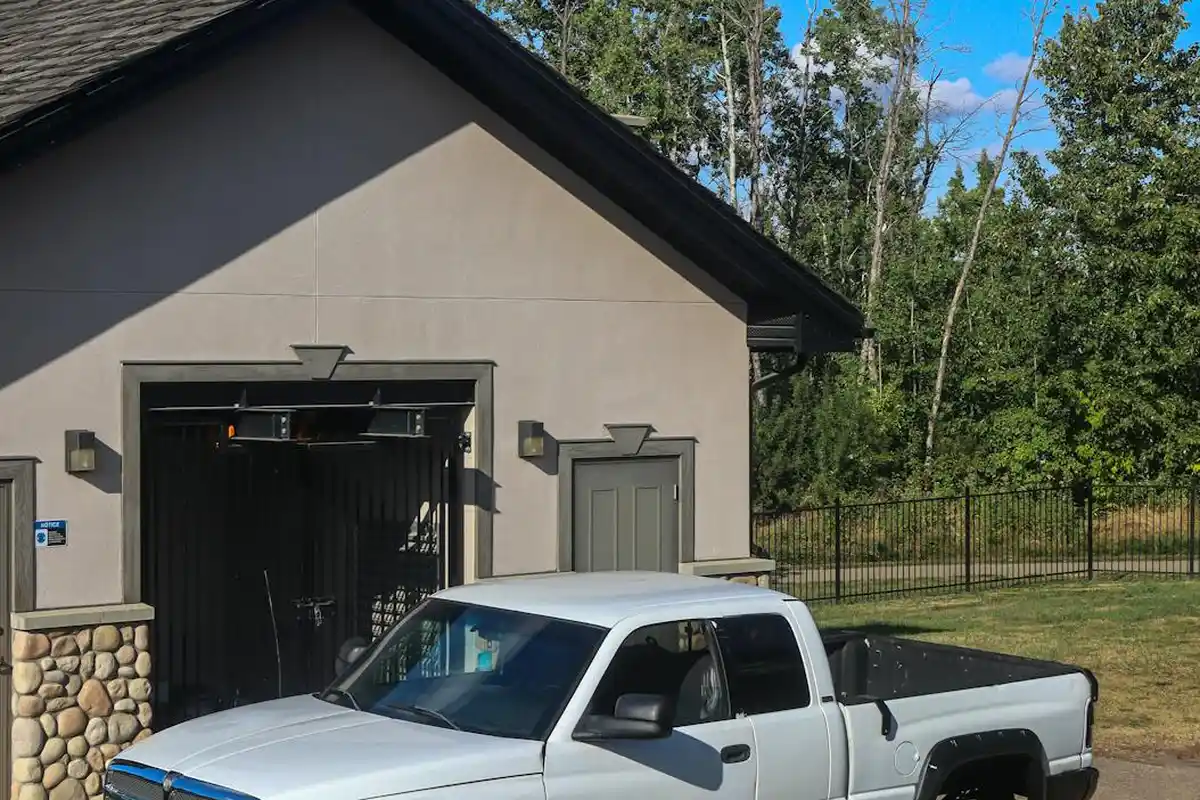
An insulated door acts like a sound barrier for your garage. The secret is in the dense polyurethane foam core sandwiched between the steel panels. Think of it like a high-quality mattress. A thin, flimsy mattress lets you feel every spring. A thick, dense memory foam mattress absorbs movement. That foam core does the same for sound waves.
It absorbs and dampens the vibrations from outside noise before they can travel into your garage and home. I’ve seen this firsthand on jobs where we replaced old single-layer doors.
- Street Traffic: The constant hum from a busy road becomes a distant murmur.
- Loud Trucks: The startling bang of a garbage truck or delivery vehicle is noticeably muted.
- Lawn Equipment: The roar of your own or a neighbor’s mower or leaf blower is significantly quieter.
- General Neighborhood Noise: It even takes the edge off of sounds like kids playing or, yes, noisy teenagers.
You also get a quieter door operation itself. Non-insulated doors are basically hollow metal boxes. When they roll on the track, they rattle and boom. An insulated door is a solid, filled unit. When I install a model like a Clopay or a Wayne Dalton with a good foam core, the difference is immediate. The door opens and closes with a solid, low “thump” instead of a loud, jarring racket.
Beyond Quiet: Peace and Practicality
This noise reduction translates directly to a more peaceful house. If your home office shares a wall with the garage, an insulated door means conference calls aren’t interrupted every time someone comes or goes. For bedrooms located above the garage, it’s a game-changer for light sleepers. An early morning departure or a late-night arrival doesn’t have to wake the whole house.
When you’re shopping, you might see a door’s Sound Transmission Class (STC) rating. This number tells you how well a building partition, like your door, reduces airborne sound. A higher number means better sound blocking. A basic, non-insulated steel door might have an STC rating around 20. A well-insulated door can have a rating of 28 or higher. Don’t get lost in the numbers, just remember: more insulation and a tighter seal generally mean a quieter garage. In my experience, any insulated door will provide a massive improvement over a non-insulated one for typical neighborhood noise.
The Durability Verdict: Built to Last
Let’s get straight to the point: an insulated garage door is a tougher door. The core principle is simple. That polystyrene or polyurethane foam core doesn’t just sit there; it adds serious structural rigidity. Think of it like the core of a high-end surfboard-it’s what keeps the shape strong and prevents flexing. There are plenty of myths and misconceptions about what makes a garage door durable, but this is one of the truths.
This internal skeleton is a game-changer for everyday wear. A non-insulated door is just two thin sheets of steel with air in between, and it can flex like a soda can if you push on it. The foam in an insulated model drastically reduces that flexing, which means fewer dents from errant basketballs or bikes and much less panel warping over decades of sun exposure and temperature swings. I’ve seen uninsulated doors develop a permanent wave in the middle panels after a few hot summers; that just doesn’t happen with a good insulated door.
So, are insulated garage doors better for long-term wear and tear? In my professional experience, absolutely. They handle the bumps of daily life better and maintain their appearance longer. You’re not just buying climate control; you’re investing in a door that won’t look beat up in five years. Even aside from the aesthetic benefits, insulation has its advantages.
Material Showdown: Steel, Aluminum, and Wood
Insulation benefits every door material, but in different ways. Here’s how it plays out on the job site.
Steel Doors: This is where you see the most dramatic improvement. Steel is strong but prone to “oil-canning”-that wavy, rippled look on large, flat sections. The foam core braces the steel skin from behind, preventing that unsightly flex. I’ve installed Clopay and CHI insulated steel doors, and that internal foam also helps them resist impacts better. A light bump that would leave a dent in a standard door often just bounces off the insulated version.
Aluminum Doors: Aluminum is lightweight and corrosion-resistant but can feel flimsy. Adding insulation transforms it. The foam provides the stiffness that the thin aluminum panels lack, making the whole door feel more substantial and less likely to dent or distort during operation. It turns a good-looking but delicate door into a viable, durable option.
Wood Doors: For wood, the benefit is all about climate stability. Solid wood is beautiful but it moves-it expands with humidity and contracts when dry, which can lead to cracks and sticking. The insulated core in a modern wood-composite or true wood door acts as a buffer, reducing that expansion and contraction that leads to seasonal problems. It helps preserve the door’s alignment and finish over time.
Weight and Hardware Considerations
This added durability comes with one critical trade-off: weight. An insulated door is significantly heavier than its non-insulated counterpart. You can’t just swap them out without planning.
The heavier door demands robust hardware to match. Your existing torsion springs may not have enough lift capacity, and extension spring systems are often inadequate. I always recommend a professional assessment for spring replacement; getting this wrong is a major safety hazard. The springs are the most dangerous part of your garage door system.
Your garage door opener matters too. Many modern openers, like the Chamberlain B970 or LiftMaster 8500W wall-mount, are rated for heavier doors. A basic 1/2-horsepower chain drive from ten years ago might struggle, strain, and burn out prematurely. Before you commit to an insulated door, check your opener’s specifications for its maximum lift capacity-this is a pro tip that saves costly callbacks. When in doubt, factor in a new, compatible opener into your project budget.
Cost vs. Value: Are Insulated Garage Doors Worth It?
Let’s talk numbers. A quality insulated garage door can cost 40% to 100% more upfront than a basic single-layer, non-insulated model. For a standard 16×7 door, you might see a basic steel door for $800, while a well-insulated version starts around $1,200.
That initial sting is real. But you’re not just buying a door. You’re investing in a thermal barrier. To see if it’s worth it, you have to look at what you get for that extra money. The value breaks down into three clear areas: energy savings, noise reduction, and durability.
Energy Savings: Your Garage as a Buffer Zone
Think of your attached garage as a giant cooler sitting against your house. A non-insulated door is the thin, flimsy lid. An insulated door is the thick, foam-filled lid. I’ve measured the difference with an infrared thermometer on winter mornings. The inside surface of an uninsulated door can be within a few degrees of the outside air. An R-12 insulated door stays much closer to your garage’s interior temperature. Understanding garage door insulation ratings, like R-value and U-factor, can help you compare doors beyond just thickness. Higher R-values and lower U-factors generally indicate better insulation and more consistent garage temperatures.
This thermal buffer reduces the cold (or heat) radiating into your home from the shared wall, which lessens the workload on your furnace and air conditioner. If you have rooms above or next to the garage, the comfort improvement is immediate. You won’t see your power bill cut in half, but for many homes, it’s a meaningful 5-10% reduction in heating and cooling costs. The better insulated your house walls already are, the more impact a good garage door will have.
Noise Reduction: The Peace of Quiet
This benefit is immediate and obvious. A non-insulated door is essentially a big, thin steel drum. When it closes, it bangs. Rain sounds like a snare drum solo. An insulated door has mass and dampening. The polyurethane foam core acts like a sound deadener.
I installed a Clopay insulated door for a client who lived on a busy street. The first time he operated it, he called just to say thanks for the quiet. The difference isn’t subtle. The solid ‘thud’ of an insulated door closing is quieter and feels more substantial than the sharp ‘clang’ of a standard door. It also blocks more external noise from traffic, lawnmowers, and neighbors, turning your garage into a calmer workspace.
Durability and Strength: A Door Built to Last
This is where the build quality shines. Non-insulated doors are often a single pane of steel that can dent if you look at it wrong. Insulated doors are a sandwich. Two steel skins are bonded to a rigid foam core, creating a structurally superior panel.
I use Wayne-Dalton doors with polyurethane cores for many installations. The panels are incredibly stiff. This design resists denting from bikes, garbage cans, or rogue soccer balls. The increased rigidity also puts less stress on hinges and rollers over decades of use. An insulated door isn’t just warmer and quieter, it’s a tougher product that will look better and operate smoothly for far longer.
Beyond the direct benefits, this all adds up to home comfort and appeal. A comfortable, quiet garage is usable year-round as a workshop or gym. When it’s time to sell, a premium, efficient door is a noticeable feature that signals a well-maintained home to buyers.
What About Garage Door Insulation Kits?
You’ve seen them at the home center: boxes of foam panels with reflective backing and adhesive strips. The idea is simple. You peel and stick these panels inside the sections of your existing non-insulated door. I’ve installed a few, including a Frost King kit, for clients on a tight budget.
Here’s my frank opinion as a pro. A DIY kit is a bandage. A factory-insulated door is the cure.
The kits create an air gap and add a bit of mass, which helps. But the foam panels are thin, often only R-4 to R-8. They aren’t bonded to the door skin, so they can trap moisture and eventually sag or peel. The biggest issue is the incomplete seal. The kits only cover the flat panel centers, leaving the edges, stiles, and rails uninsulated. These are major thermal bridges.
Let’s break it down clearly:
Pros of DIY Insulation Kits:
- Very low cost, usually under $200.
- It’s a DIY project you can finish in an afternoon with a utility knife and a tape measure.
- Provides a modest improvement in sound dampening and temperature.
Cons of DIY Insulation Kits:
- Far less effective than a factory door. The R-value is lower and coverage is incomplete.
- Can void your door manufacturer’s warranty. Adding weight and adhesive can affect spring tension and operation. I always tell homeowners to check their warranty paperwork first.
- It can be messy. Getting the adhesive to stick perfectly to clean, painted metal is tricky.
- It adds weight to a door system not designed for it, potentially straining older springs and openers.
- The finished look is often uneven and can appear cheap.
My advice is to use a kit only as a temporary, low-cost fix for a door you plan to replace soon. If your door is in good shape but just too noisy or cold, a kit can take the edge off. But if you want real performance, energy savings, and durability, invest in a proper insulated garage door. The difference in quality and result is night and day.
Your Maintenance and Cleaning Routine
An insulated garage door needs the same foundational care as any other door. The tracks must be clean, and the hinges and rollers need to stay lubricated. I always tell homeowners that the main difference is the need to protect the door’s insulating seal, which starts and ends with the weatherstripping. To take that a step further, consider insulating the garage door itself. Proper insulation, paired with good weatherstripping, helps prevent drafts and improves energy efficiency.
Your maintenance checks are simple but effective. I do this twice a year, usually when I change my smoke detector batteries.
- Clean the tracks with a dry, lint-free rag. Vacuum out any debris like gravel or leaves that can jam the rollers.
- Lubricate all moving metal parts. I use a white lithium grease spray for hinges and a silicone-based spray for the rollers and tracks. Avoid WD-40 for this job; it’s a penetrant, not a long-term lubricant.
- Test the door’s balance. Disconnect the opener by pulling the release handle and manually lift the door halfway. If it doesn’t stay in place, the springs are out of balance and need a professional adjustment.
Beyond these basics, the weatherstripping is your top priority. The foam or rubber seal along the bottom and sides is what keeps the cold air out and the warm air in. If it’s cracked, brittle, or has gaps, your insulated door might as well be a screen. Replacing worn weatherstripping is the single most effective maintenance task you can do for an insulated door’s performance.
For a seasonal inspection, I follow this quick checklist:
- Examine the bottom seal. Look for daylight under the closed door.
- Press on the side seals. They should be pliable, not hard or cracked.
- Check the top seal where the door meets the header. Feel for drafts.
- Look at the interior panel seams. On some doors, a bead of silicone can help seal minor gaps between sections.
How to Clean and Degrease the Surface
Cleaning an insulated door is straightforward, but you must avoid harsh chemicals. Strong detergents or acid-based cleaners can degrade the paint, damage the weatherstripping, and in some cases, break down the adhesives holding the insulation in place.
For a standard wash, I use a bucket of warm water mixed with a few ounces of a gentle, biodegradable cleaner. My go-to is Simple Green All-Purpose Cleaner. It cuts through light grime and road salt without being corrosive. Here’s my method:
- Rinse the door thoroughly with a garden hose to loosen surface dirt. Never use a pressure washer; the force can drive water behind seals and panels.
- Mix your cleaner in a bucket. Using a soft car wash mitt or a long-handled microfiber scrubber, wash the door from the top down, section by section.
- Rinse immediately with clean water from the hose.
- Dry the surface with a clean, soft towel or a squeegee to prevent water spots, especially on steel doors.
For tougher grease or oil spots-common if you work on cars in the garage-you need a dedicated degreaser. I’ve had good results with products like Krud Kutter or Oil Eater. Always test any cleaner on a small, inconspicuous area first, like the bottom corner of one panel, and follow the product’s dilution instructions carefully. Apply it with a rag, let it sit for the recommended time (usually just a minute or two), then scrub gently and rinse completely. This targeted approach prevents the whole door from being exposed to stronger chemicals.
Recommended Products for Your Project
When you’re shopping, don’t just get hung up on a brand name. I’ve seen great and terrible products come from the same manufacturer. Your goal is to understand the materials and construction.
Focus on the specifications and what the product is made of, not the logo on the box. This lets you compare apples to apples between different suppliers and often saves you money.
What to Look For in a Door
If you’re buying a new insulated door, you’ll see two main types of core insulation. Polystyrene panels, which look like thick, layered foam boards, and polyurethane foam, which is injected as a liquid that expands to fill every cavity.
For the highest R-value and best overall performance, I recommend you look specifically for polyurethane foam-injected doors. The expanding foam creates a more solid, rigid structure. It doesn’t just insulate; it makes the whole door section stronger and noticeably quieter when it operates. A door with a 2-inch thick polyurethane core often performs as well as a door with 4-inch thick polystyrene.
The bonding strength of the foam acts like an adhesive, making the door more resistant to dents and giving it a more solid, premium feel. In my own garage, I chose a polyurethane foam door, and the difference in sound deadening compared to my old uninsulated door was immediate and impressive.
Upgrading Your Weather Seals
A perfectly insulated door is only as good as the seals around it. Gaps at the bottom and sides let in drafts, dust, and pests, ruining your energy savings. You can upgrade these on most existing doors.
For the bottom seal, look for a high-density rubber seal, sometimes called a bulb seal or astragal. Avoid the flimsy, hollow vinyl types. The dense rubber conforms better to bumps in your concrete floor and lasts years longer. For the sides and top, a perimeter gasket kit that uses a durable rubber or thermoplastic seal is your best bet. It fits into a track on the door frame.
Before you install a new bottom seal, check your local fire code. Some areas require a specific fire-rated material for the bottom seal, which your hardware store or door supplier can provide. When I install these, I use a cordless impact driver with a magnetic tip to make driving the screws into the track quick and one-handed.
Considering a Retrofit Insulation Kit
If you’re not replacing the whole door, a DIY insulation kit can be a good project. You have two common material choices: reflective bubble foil (looks like layered foil with plastic bubbles) and rigid polystyrene panels.
I recommend you choose rigid polystyrene panels. They provide a real thermal break and have a defined R-value. The bubble foil types primarily reflect radiant heat and offer minimal true insulation value; they are better for a hot attic than your garage door.
The rigid panels are easier to work with. You measure your door panel, cut the foam to size with a utility knife, and press it into the frame. Most kits use double-sided tape or plastic retainer clips. I’ve used kits from companies like Garage Door Insulation LLC, and the key is ensuring the panel is cut precisely so it’s a firm, friction fit. A loose panel can eventually sag or rattle.
Garage Care Pro FAQ: Insulated vs. Non-Insulated Doors
How do I get the most energy savings from my insulated garage door?
Your door’s performance depends on its seal. Regularly check and replace worn weatherstripping on all four sides; this is the single biggest factor in preventing air leaks. For maximum efficiency, also ensure the door’s perimeter seal makes tight contact with a clean, level floor.
My insulated door is still noisy when operating. What should I check?
First, listen to isolate the sound. Loud grinding often points to dry rollers and hinges-lubricate them with a silicone spray. A general rumble or rattling usually means worn rollers or loose hardware, which a professional should inspect and tighten to protect the door’s structure.
What’s the key maintenance task to ensure my insulated door lasts for decades?
Beyond standard lubrication, proactively monitor the door’s balance and spring tension. An unbalanced door puts immense stress on all components. Test it quarterly by disconnecting the opener and manually lifting the door halfway; if it doesn’t stay in place, call a pro for a spring adjustment immediately.
Making the Smart Choice for Your Garage
From my shop experience, the single best move is to install an insulated garage door-it directly saves you money on utilities, cuts down noise, and stands up to daily use far better than a standard door.
- You will see lower energy bills. I’ve installed hundreds of doors, and models with polyurethane core insulation, like those from Clopay or Amarr, create a tight seal that noticeably reduces heat loss in winter and heat gain in summer.
- Your garage will be significantly quieter. The dense foam layer dampens sound from outside traffic and from your garage door opener’s motor, which I find essential for anyone using the space as a workshop or living area.
- You get a more durable door. Insulated doors have thicker, stiffer steel or aluminum panels that resist dings from kids’ bikes or hailstorms better than the thin, single-layer metal on non-insulated models.
- It improves your home’s overall comfort and value. A sturdy, efficient garage door is a upgrade I always recommend to homeowners because it enhances daily use and is a feature buyers appreciate.