How Much Does It Really Cost to Heat Your Garage?
If you’re tired of a freezing cold workshop or just want to protect your car and tools, you’re likely wondering about the real price tag for garage heat, from the initial install to your monthly bill.
This guide breaks it down with real numbers and shop-tested advice, covering the main types of heaters, what professional installation actually involves, and how to calculate your ongoing monthly expenses.
I’ve installed and maintained several systems in my own garage and helped neighbors choose the right one for their space.
What Are the Main Types of Garage Heaters?
You have a few reliable options to turn your cold garage into a comfortable space. Proper insulation and air sealing are essential for any garage build in cold climates. I group them into five main types based on how they create heat and where they work best.
- Forced-air electric: A fan blows air over hot electric coils, warming the entire room quickly; best for insulated shops you use regularly.
- Forced-air gas (natural gas/propane): Burns fuel to heat a metal exchanger, and a fan blows the warm air out; ideal for larger, well-ventilated spaces where gas is available.
- Infrared electric: Heats objects and people directly with radiant energy, like sunshine, instead of the air; perfect for spot-heating a workbench or where you stand.
- Portable electric: Plugs into a standard 120V outlet, often on wheels or as a small wall unit; good for occasional use in a small, semi-insulated area.
- Mini-split heat pump: An outdoor unit and indoor head that both heat and cool by moving heat; excellent for year-round climate control in a tightly sealed, insulated garage.
You might wonder about radiant floor heating, but I rarely suggest it for adding heat to an existing garage. The installation cost is very high, you have to tear up the concrete slab, and it’s complex to retrofit. It’s fantastic in a new build, but for most homeowners, the other options are more practical and affordable.
Comparing Garage Heaters: Pros, Cons, and Price Tags
Here’s a quick look at how the common types stack up. This table focuses on what you’ll notice first: the upfront price and what the install involves.
The big difference in feel is between forced-air and infrared. Forced-air heats all the air in the room, which is great when you need the entire garage warm fast. Infrared is different. It doesn’t waste energy heating empty air. Instead, it beams heat directly to you, your tools, and your workbench, making it feel warm almost instantly even in a chilly garage. It’s incredibly efficient for when you’re working in one spot.
In my own insulated workshop, I installed a ceiling-mounted electric forced-air heater from Fahrenheat. I chose it because my panel had room for a new 240V circuit, and I wanted reliable, set-and-forget heat for the whole room during winter projects. It’s been running strong for five years now. The install was straightforward, but running that 10-gauge wire through finished walls was a full afternoon’s work.
How Much Does a Garage Heater Cost? A “Good, Better, Best” Breakdown
Thinking in tiers helps manage expectations. Your total cost isn’t just the heater in the box. It’s the unit, the install, and the preparation.
The Basic Tier (DIY Portable)
- Unit Cost: $50 – $200
- Installation Cost: $0 (You plug it in)
- Hidden Costs: Higher long-term electric bills if used constantly. May require a dedicated 120V outlet to avoid tripping breakers.
This is your entry point. A portable heater like a simple 1500-watt box fan unit works for taking the edge off in a small storage area. It’s not for heating a two-car shop all day.
The Standard Tier (Professional Hardwired Install)
- Unit Cost: $200 – $1,200
- Installation Cost: $400 – $1,500+
- Hidden Costs: A new 240V circuit ($300-$800) or gas line extension ($500-$2,000). Permit fees ($50-$200). Potential need for upgraded insulation to make the system effective.
This is where most serious garage shops land. You’re paying for a permanent, powerful solution. The installation cost here is the big variable, which we’ll dig into next.
The Premium Tier (Full System Like a Mini-Split)
- Unit Cost: $1,500 – $3,500+
- Installation Cost: $1,500 – $3,000+
- Hidden Costs: Possible electrical panel upgrade. Absolutely requires excellent wall and door insulation. Higher permit fees due to HVAC work.
This is a long-term investment for a garage you use as a true living or workshop space year-round. Remember, projects like a new automatic garage door opener or installing electric garage doors are separate. A heater warms the space, but a well-insulated door is critical for keeping that heat in.
What Factors Change the Installation Price?
The heater itself has a price tag. What gets expensive is getting power or gas to it, and preparing the room.
The biggest cost driver is often the new circuit or gas line. Running a new 240-volt circuit from your main panel is common for electric units. If your panel is in the basement and the garage is on the other side of the house, an electrician has to run maybe 50 feet of thick, expensive cable through walls and ceilings. That labor and materials add up fast. Extending a gas line involves a licensed plumber, pipe, and strict safety tests, which often costs more.
Garage insulation is not an optional extra; it’s the most important factor for efficiency and controlling your monthly bills. Installing a 5000-watt heater in an uninsulated garage is like trying to heat your backyard. The heater will run non-stop, costing a fortune. I always advise clients to insulate the walls and upgrade to an insulated door first. It makes any heater you choose smaller, cheaper to run, and more effective. Understanding garage insulation requirements and benefits, including lower energy bills and improved comfort, helps you meet local codes while maximizing performance.
Finally, always account for local costs. Permit fees vary by town. Labor rates differ wildly. My standard advice is to get at least three detailed written quotes from licensed contractors. This shows you the real price range for your specific home and ensures the work is quoted correctly, including all necessary permits for your safety and home’s legality.
Can I Install a Garage Heater Myself?
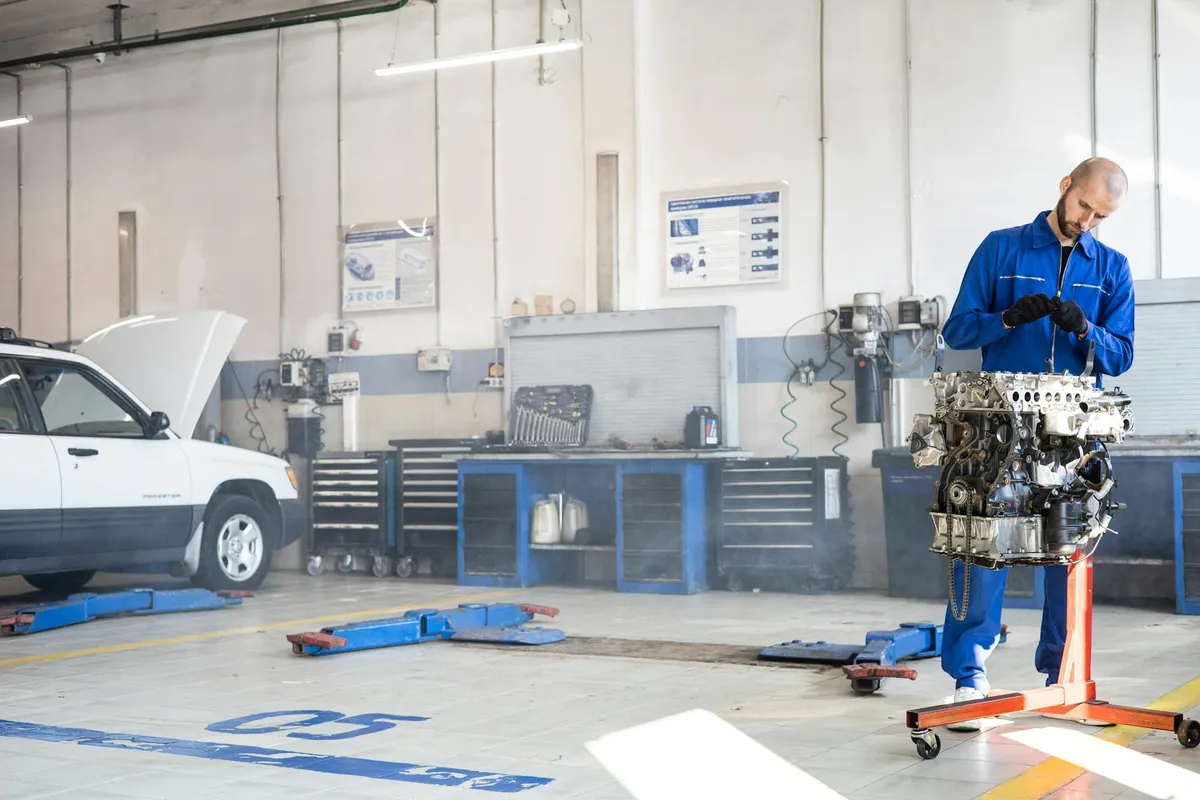
This is the first question I get from homeowners. My answer is always, “It depends entirely on the heater.” I’ve installed several myself and hired out for others. Your skill level and the type of heater determine everything.
Let me break down a simple DIY difficulty scale, with 1 being like plugging in a lamp and 10 being a full professional job.
- Portable Electric (110V): Difficulty 2. You literally plug it into a standard outlet. The only skill needed is not tripping over the cord. Active work time is zero. This is a temporary solution, not a permanent install.
- Wall-Mount Electric Forced Air: Difficulty 4 to 6. This is a common DIY project for a confident homeowner. You’re mounting a unit to the wall and connecting it to a new 240-volt circuit. If you have an open slot in your panel and are comfortable running conduit and wiring, you can do it. Active work time is 4-6 hours. The complexity jumps if your electrical panel is full and needs a sub-panel upgrade (that’s a pro job).
- Ceiling-Mount Infrared Electric: Difficulty 3 to 5. These are often lighter and plug into a 240V outlet. Hanging it securely from ceiling joists is the main task. I used a sturdy drill and lag bolts for mine. Active work time is 2-4 hours. You must be very sure about your joist locations.
- Gas Heater (Natural Gas or Propane): Difficulty 8 to 10. This is where you must stop. Running a new gas line or venting combustion fumes is not a DIY task. The risk of carbon monoxide leaks or fire is too high. The active work for you might be just mounting the bracket (1 hour), but you must factor in scheduling and paying for a licensed gas fitter and waiting for the inspection.
The non-negotiable rule from my experience is this: any new gas line work and any new high-voltage electrical service from your main panel must be done by a licensed professional. It’s a code requirement and a critical safety issue. Your homeowners insurance may not cover a fire caused by unpermitted work.
For floor-mounted units like some propane heaters, you also need to consider the pad. If you pour a concrete pad, you’re adding days for it to cure properly before you can even place the unit on it.
The Step-by-Step Installation Process
Whether you’re doing part of the job or just supervising a pro, knowing the process keeps you in control. This is the universal sequence I follow for a permanent electric or gas unit.
Before you buy a single thing, you must verify your electrical panel or gas meter can handle the added load. For electric, an electrician needs to confirm you have the amperage and an open double-pole breaker slot. For gas, a plumber checks if your meter and line size can supply the heater’s BTU demand while also running your furnace and water heater. Finding this out after purchase is a costly mistake.
1. Choose the Location and Check Local Codes
Heaters need space to breathe. Your manual will list clearance requirements from walls, the ceiling, and stored items. Think of it like the heater’s personal space bubble. I use painter’s tape to mark the proposed spot on the wall or ceiling. Then, I check my local building department’s website for any specific garage heater codes about mounting height, proximity to the garage door, or required disconnect switches.
2. Turn Off the Power (or Gas)
For electrical work, shut off the main breaker to the entire house to be safe. Use a non-contact voltage tester on the panel to be absolutely sure. For gas, the professional will handle shutting off the gas at the meter.
3. Mount the Heater or Bracket
This is the most hands-on DIY step. Find your studs or ceiling joists with a quality stud finder. For a heavy unit, you must hit the center of the wood. I pre-drill holes with a bit slightly smaller than my lag bolts to prevent splitting. A cordless impact driver, like my Makita, makes driving the bolts in much easier than a standard drill.
4. Make the Connections
This is the pro’s domain for gas and high-voltage. For a DIY electric install, this is where you connect the wires from your new circuit to the heater’s wiring box. You’ll match the wire colors (black to black, white to white, green or bare copper to the ground screw). Every connection must be tight. I then carefully tuck the wires into the box and secure the cover.
5. The Final Test and Inspection
Do not turn the heater on yet. Once all connections are made, the professional will turn the gas or power back on and test for leaks with a gas leak solution or check electrical connections. For a DIY job, you will schedule an inspection. The inspector will look for three key things: proper clearances all around the unit, secure mechanical mounting to the structure, and correct wire or pipe sizing supported to code. After they give the green light, you can finally fire it up and adjust the thermostat.
How Much Will a Garage Heater Add to My Monthly Bills?
Do electric garage heaters use a lot of electricity? The honest answer is yes, they can. Are electric garage heaters expensive to run? That depends entirely on how you use them. Think of it like your home’s air conditioner. Running it constantly is a budget killer, but using it for a few hours when you need it is manageable.
You can estimate the cost yourself with one simple formula. This is the same math I use when a homeowner asks me for a ballpark figure.
Your cost to run a heater equals its wattage divided by 1000, multiplied by the number of hours you use it, multiplied by your cost per kilowatt-hour from your utility bill.
Let’s put real numbers to it. Imagine a typical 2-car garage, about 500 square feet. You go out there to tinker for about 3 hours each evening after work. Here’s how different heater types might compare over a month.
- 5,000-Watt Electric Forced Air Heater: This is a common size. (5000W / 1000) x 3 hours x $0.15 per kWh = $2.25 per day, or about $67 per month.
- 30,000 BTU Natural Gas Heater: Gas is measured in BTUs, not watts. At a rate of about $1.20 per therm, a unit this size running for 3 hours daily might cost around $35 to $45 per month.
- 1,500-Watt Infrared Quartz Heater: This smaller unit heats people and objects directly. (1500W / 1000) x 3 hours x $0.15 = $0.68 per day, or just over $20 per month.
The single biggest factor in your bill isn’t the heater brand. It’s your garage’s insulation. A well-insulated garage is like a thermos, it keeps the heat you pay for inside. An uninsulated one is like a colander, it lets all that expensive warmth pour right out.
Smart Ways to Reduce Your Heater’s Operating Cost
You don’t have to just accept a high bill. I use these tactics in my own shop and recommend them to every client.
Start with your garage door. It’s the largest, least insulated surface. A DIY insulation kit from a brand like Owens Corning Foamular is a weekend project that pays for itself. It makes a dramatic difference in how hard your heater has to work. Pair that with insulating your garage door to seal against drafts, and you’ll see even bigger energy savings. This simple next step can further reduce heat loss and boost comfort.
Get a programmable thermostat. I installed a basic Honeywell model for my forced-air unit. I set it to come on 30 minutes before I usually go to the garage and turn off when I’m done. You’re not paying to heat an empty room.
Hunt for air leaks. Feel for drafts around the door weatherstripping, windows, and where the walls meet the floor. A cheap tube of silicone caulk and some fresh door bottom seals can plug those money-wasting holes.
Consider a targeted approach. Do you really need to heat the whole space? For years, I used a big heater until I realized I was only working at my bench. I switched to a 1500-watt Dr. Infrared heater pointed at my work area. It keeps me perfectly warm for a fraction of the cost of heating the entire volume of air.
A simple maintenance habit keeps any system running efficiently. For forced-air units, I vacuum the intake and burner areas every fall before the season starts. For infrared heaters, I wipe the reflectors and elements with a dry cloth to remove dust. A clean heater doesn’t have to struggle to do its job.
What Are the Critical Safety and Code Rules?
Before you pick up a single tool, you need to know the rules. I’ve seen too many garage setups that cut corners on safety, and it’s simply not worth the risk to your home or family. Treat this section as your non-negotiable checklist.
Follow These Must-Know Rules
The number one rule is to read and follow your heater’s installation manual-it’s not a suggestion. That booklet holds the specific, legally required instructions for your exact model. Here are the universal rules I enforce on every job.
- Clearance to Combustibles: Every heater needs space from anything that can burn, like wood studs, drywall, stored boxes, or that lawnmower you pushed into the corner. For a typical 45,000 BTU hanging gas unit, I often see a requirement of 1 inch from the sides and top and 3 feet from the front. Your manual will give you the exact numbers. I use a laser measure, like my DeWalt DW099S, to mark these zones clearly before I even unpack the heater.
- Proper Venting for Gas Units: This is the most critical step for gas heaters. You must vent combustion gases directly outside using approved, sealed metal vent pipe. Never use dryer vent hose or other improvised materials. The vent termination outside must be a specific distance from windows, doors, and soffits to prevent fumes from re-entering your home. I always use brand-name vent kits, like ProTech Systems or Hart & Cooley, designed for garage heaters.
- GFCI Protection for Electric Heaters: Any 120-volt or 240-volt electric heater in a garage must be plugged into or wired to a Ground Fault Circuit Interrupter (GFCI) outlet or breaker. Garages are damp, concrete-floored spaces where water is common. A GFCI will shut off power in a fraction of a second if it detects a fault, preventing a severe shock. I won’t install an electric heater without confirming this protection is in place.
When You Absolutely Need a Permit
This confuses a lot of homeowners. Any permanent installation-meaning a hardwired electric heater or a natural gas/propane heater-will require a building permit from your local municipality. Plugging a small 120V portable heater into an existing outlet typically does not.
Why bother with the permit? It’s not just red tape. A licensed inspector will come to verify my work (or your contractor’s work) meets the current electrical and fuel gas codes. This is a free double-check for your safety. I’ve fixed my own mistakes because an inspector caught them-it’s a valuable service. Skipping the permit can also void your homeowner’s insurance if a problem ever occurs, leaving you fully liable.
The Heat Sources to Avoid Completely
It’s tempting to use what you have on hand to warm up the space. Resist that temptation. Never use a wood stove, kerosene heater, or propane “buddy heater” designed for camping as a primary heat source in an enclosed garage.
These devices consume oxygen and produce carbon monoxide, an odorless, deadly gas that can build up quickly in a sealed space. They also pose a massive fire risk from open flames and high surface temperatures near stored gasoline, paints, and solvents. I was called to a garage where a kerosene heater tipped over; it melted through a plastic storage tub in minutes. The risk is real and immediate. A properly installed, vented garage heater is designed for this specific environment.
How Do I Choose the Right Size Heater for My Garage?
Choosing the wrong size heater is one of the biggest mistakes I see. A unit that’s too small will run constantly and never get warm. One that’s massively oversized will short-cycle, turning on and off too quickly, which wears it out. The goal is to find the right balance, and it all starts with a simple calculation.
For electric heaters, we size in watts. For gas heaters, we use BTUs. The math is the same principle. You need to know three things: your garage’s length, width, and insulation quality. Once you have those measurements, you can calculate the BTU requirements for your garage heater.
The Basic Sizing Calculation
First, calculate your garage’s volume in cubic feet. Multiply the length by the width by the height (from floor to the peak of the ceiling, not just the walls). A standard 2-car garage that’s 24 feet by 24 feet with an 8-foot ceiling has 4,608 cubic feet (24 x 24 x 8). This is especially important when you’re considering single versus double garage dimensions and ceiling height. Understanding these factors helps you plan storage, vehicles, and workspace for either setup.
Next, you apply an insulation factor. This is the most critical step, as an uninsulated garage needs over three times the heating power of a well-insulated one. Think of insulation like a winter coat for your garage.
- Well-Insulated: Garage has insulated walls and ceiling, a sealed garage door, and no major drafts. Use 2.5 watts per cubic foot (or about 8.5 BTUs per cubic foot).
- Moderately Insulated: Garage has some wall insulation but maybe an older door. Use 4 watts per cubic foot (or about 13.6 BTUs per cubic foot).
- Poorly/No Insulation: Bare stud walls, drafty door, no ceiling insulation. Use 5 watts per cubic foot (or about 17 BTUs per cubic foot).
Here’s the formula: Garage Volume (cubic feet) x Insulation Factor = Required Heating Power.
For that 2-car garage (4,608 cubic feet) with moderate insulation, you’d need: 4,608 x 4 watts = 18,432 watts, or an 18.5-kilowatt electric heater. For gas, it would be 4,608 x 13.6 BTUs = 62,668 BTUs. Energy efficient garage heating starts with good insulation, and smart controls help further reduce energy use.
Garage Heater Sizing Chart
This chart gives you a ballpark for common setups. Always do your own calculation for your specific space.
| Garage Size (feet) | Volume (cubic ft, 8′ ceiling) | Well-Insulated | Moderately Insulated | Poorly Insulated |
|---|---|---|---|---|
| 1-Car (12′ x 22′) | 2,112 | ~5,300 W / 18,000 BTU | ~8,450 W / 28,700 BTU | ~10,560 W / 36,000 BTU |
| 2-Car Standard (24′ x 24′) | 4,608 | ~11,500 W / 39,200 BTU | ~18,400 W / 62,700 BTU | ~23,000 W / 78,300 BTU |
| Oversized (30′ x 30′) | 7,200 | ~18,000 W / 61,200 BTU | ~28,800 W / 98,000 BTU | ~36,000 W / 122,400 BTU |
Why Slightly Oversizing a Forced-Air Heater Can Be Smart
Once you have your calculated number, I advise homeowners to round up to the next common unit size, especially for forced-air systems (like a hanging gas or electric furnace). Here’s why from my shop experience.
A unit that is perfectly sized will run almost continuously to maintain temperature on the coldest days. A unit that is slightly oversized, say by 10-15%, will reach the set temperature faster and then shut off. This might sound wasteful, but it’s often more efficient for comfort and equipment life.
Less continuous runtime means less wear on the fan motor and heat exchanger. More importantly, it recovers heat faster after you open the garage door. If you’re in and out working on a project, a slightly bigger heater will get the space back to comfort quickly without struggling.
The key is “slightly.” Do not jump from a calculated 45,000 BTU need to an 80,000 BTU unit. That will cause short-cycling. I typically recommend the next standard model size up from your calculation. If the math says 42,000 BTU, a 45,000 or 50,000 BTU unit is a practical choice. I’ve installed many Modine Hot Dawg and NewAir electric shop heaters using this logic, and they perform reliably.
Keeping Your Garage Heater Running Smoothly

Think of your garage heater like a car. A little regular upkeep keeps it safe, efficient, and saves you money on fuel and repairs. I set a reminder on my phone for the first Saturday after the first real cold snap hits. That’s my cue to spend ten minutes with each of my shop heaters.
A 10-Minute Fall Tune-Up
This quick routine is all you need to do yourself each year. Just make sure the heater is completely off and cool to the touch before you start.
- Visual Inspection: Look for anything obviously wrong. Are there frayed wires? Is there rust or soot around the burner or exhaust flue? For a gas unit, I always sniff for the rotten egg smell of a gas leak. If I see or smell anything odd, I stop and call a pro.
- Clean Dust and Filters: This is the biggest performance killer. Dust blocks airflow, making the heater work harder. I use the brush attachment on my shop vacuum to gently clean the exterior vents and intake. If your unit has a removable air filter (common in electric and some gas heaters), take it out, tap it clean outside, or wash it if it’s the reusable type. Let it dry completely before putting it back.
- Check Vents and Clearances: Ensure all exhaust and intake vents on the outside wall are clear of leaves, spider webs, or snow. Inside, move any boxes or stored items to maintain at least a three-foot clearance around the heater, especially the front.
- Listen Up: Turn the heater on and listen. You know what it normally sounds like. Hissing, popping, rumbling, or new buzzing sounds are a red flag. If you hear something new and concerning, turn it off.
In my experience, a can of compressed air is perfect for blasting dust out of fan blades and small crevices on electric heaters without needing to disassemble anything.
When to Call in a Professional
Some jobs are not for DIY. Knowing when to call a licensed HVAC technician protects your home and your wallet from bigger problems.
- You smell gas at any time. This is non-negotiable. Leave the area immediately and call your gas company or a professional from outside.
- You suspect an electrical fault, like a frequently tripping breaker, a burning smell, or visible damage to the wiring.
- The heater isn’t producing enough heat even after you’ve cleaned it, or it short-cycles (turns on and off rapidly).
- You hear new, persistent abnormal noises (scraping, loud banging) that simple cleaning didn’t resolve.
- For gas heaters, any servicing of the gas line, burner assembly, or heat exchanger requires a certified technician. I have a local guy I trust for this, and I won’t touch those components myself.
The Power of Prevention
Neglect is the fastest way to a $500 service bill. Dust buildup isn’t just dirty; it’s a fire hazard and makes the heater strain, shortening its life. That ten minutes each fall is cheaper than any repair. I treat it like checking the smoke alarm batteries-a simple, non-negotiable household safety task. Consistent, basic cleaning is the single most effective thing you can do to ensure safe operation and avoid the most common, costly failures. It makes the difference between a heater that lasts ten years and one that gives you trouble in five.
Garage Heater FAQs: Quick Answers from a Pro
I know the rough installation cost, but how can I reduce it?
The biggest savings come before the install. First, ensure your garage is fully insulated-this lets you buy a smaller, cheaper unit. Get multiple quotes and ask if you can save by mounting the unit yourself before the electrician or gas fitter does the final connections. Always verify if your electrical panel or gas meter has capacity to avoid costly upgrade surprises.
What’s the most common mistake when choosing a heater type?
Picking the wrong heating style for your use. If you’re often in and out or work in one spot, radiant infrared is far more efficient than heating all the air. For a space you occupy for hours, like a workshop, forced-air is better. Don’t just buy the cheapest unit; match the technology to your actual habits.
Can I really install a 240V electric heater myself to save money?
Only if you are truly skilled and your local code allows homeowner electrical permits. You can handle the physical mounting and running of conduit/wire. However, the final connection to your main service panel should be done by a licensed electrician for safety, insurance, and to pass inspection. Never DIY gas line connections.
Beyond the wattage, what most impacts my monthly bill?
Your garage’s insulation quality and air sealing are the dominant factors. The largest heat loss is through an uninsulated garage door. Before worrying about heater efficiency, spend a weekend sealing drafts and adding insulation. This simple step can cut your operating cost by 30% or more immediately.
What’s your top maintenance tip to avoid a costly repair?
Clean it every fall without fail. Dust and debris are the primary causes of inefficiency and failure. For forced-air units, vacuum the intake and burner areas. For infrared, wipe the reflectors. A clean heater runs safer, lasts longer, and doesn’t waste energy struggling for airflow.
Why is a permit truly necessary if I’m using a licensed pro?
The inspection is a free safety audit. The inspector verifies clearances, venting, and wiring to current code-catching mistakes even good contractors can make. More critically, unpermitted work can void your homeowners insurance if a fire occurs, leaving you fully liable for all damages.
Making the Right Garage Heater Choice
The most important step is planning your project completely before you buy a single part or call an installer. From my experience, the homeowners who are happiest with their garage heat took the time to work through these key points first:
- Balance the upfront equipment cost with the long-term operational expense of your chosen fuel type.
- Match the heater’s BTU output to your garage’s size and insulation; bigger is not always better.
- Treat installation as a critical safety procedure, not a DIY afterthought.
- Verify your electrical panel has the capacity for the new circuit your heater will require.
Turn these decisions into a concrete garage heating system installation plan. A licensed installer can ensure safety, code compliance, and optimal performance.